Tyler Childers was born in 1991 in Lawrence County Kentucky, an area of the state that in many ways typifies rural Appalachia in the national imagination. He’s lived all of his life just down the road from Butcher Hollow, the home of Loretta Lynn and the setting for the song, and later the film, “Coal Miner’s Daughter.” Like Lynn, Childers’ father was a miner. Growing up he says “I sat around a lot with my dad—around hunting clubs, and outside of church and barbershops—listening to fellas older than me tell tall tales and flat-out lies.” Given of the stories he tells through his songs, he adds puckishly that “I guess some of that rubbed off on me.”
While neither parent was musically inclined, music was never all that far away. Childers recalls that his father’s truck had two cassettes in it: a Ralph Stanley album and a Hee Haw gospel collection. At home, there was a closet with more cassettes and broader choices, ranging from traditional country to crossover bands that brought country themes and ideas into pop and classic rock. He’d listen to Creedence Clearwater Revival, Alabama, and Lynyrd Skynyrd, sometimes playing along using a coat rack to stand in for a guitar and a microphone.
The culture of music was always nearby as well. Whatever the region may have lacked in economic wealth it gained in a rich cultural heritage stretching back to the arrival of the Scots Irish who first settled the region. This is where Appalachian folk gave birth to Bluegrass, barn dances, and ultimately Nashville’s music row and the Grand Ole Opry. US Route 23, known as Kentucky’s Country Music Highway, runs directly through it. Childers says “Straight as the crow flies, I grew up 20 minutes from 23.”
He first learned to sing in the church choir. When he was five, his grandfather bought him a guitar and had a friend teach him the basic chords. By 13 he was writing songs and singing them for friends at his high school in Paintsville, Kentucky. David Prince, a musician and English teacher who taught Childers in 9th Grade, recalls that “he was just a wired little kid with a guitar running around and singing Johnny Cash.” On a school trip to Louisville, says Prince, “I remember we told him he couldn’t have any more coffee, so he didn’t stay up late drinking it and writing songs.”
Childers wanted to be a baseball player, though spent more time on the bench than on the field. That’s where he sat one day when an assistant coach was dragging the field in his truck and blaring John Prine’s “Please Don’t Bury Me.” Childers was captivated, and the coach began bringing his guitar and teaching him John Prine songs after practises. Years later, Childers would open for Prine on tour, joining him on stage for “Paradise” and “Please Don’t Bury Me.”
He went to university for a semester, then moved a program at community college before dropping out. He wrote songs between landscaping jobs, playing in bars and roadhouses throughout the area and beyond. In 2011 Childers released his first album, Bottles and Bibles, recorded in a friend’s backyard studio. It was followed by two EPs recorded at Red Barn Radio, a radio show in Lexington, Kentucky. He sold the recordings at gigs, in time building a following in Kentucky and West Virginia. Then, as in the years to follow, he gained an audience largely from singing to them—while his songs caught many ears, few of them were of radio DJs.
Then, in a bingo hall just outside Vestal County, Kentucky, he met Sturgill Simpson. Simpson was older, perhaps wiser, and more experienced in the music industry. He also shared a perspective of on what country music could be, and what it could do. (He once told a reporter that “In country music, nobody is thinking about how to move people.”)
Childers gave Simpson a demo recording and his email address, and Simpson got in touch the next day saying “call me when you’re ready.”
He did, inaugurating one of the most important professional relationships of his life. His second album, Purgatory, was produced by Simpson and Dave Ferguson, Johnny Cash’s engineer. After completing the sessions, Simpson said “‘This might do something. You might be able to make a land payment. You’ll never see the land,” due to the demands of constant touring “but it’ll be there!’” The album quickly rose to number 28 on the Billboard 200, and was chosen by NPR as one of the best albums of 2017. Margo Price tapped him to open two of her shows at the Ryman Auditorium where he received his first standing ovation. As the audience rose, Childers simply stared out at the audience clutching his guitar.
Childers was drawn to the voices of the region—he would ask “Why am I trying to find my voice? I am blessed to be in a place that has its own.”—in music as well as Kentucky writers such as Silas House and Jesse Stuart. It was a voice that he knew well, yet also felt was largely misunderstood. When he was in high school, Diane Sawyer profiled East Kentucky in a segment for the television news program 20/20. Childers, and certainly many others, felt that her report was critical of Eastern Kentucky life in ways that only served to reflect northern stereotypes, exploiting them for the purposes of the show. He never forgot it. In his songs he doesn’t shy from the realities of life in the region. But he likewise doesn’t shy from the complexity of the lives lived in the coalfields and the hollows. The people of his songs, such as the bus driver in “Bus Route,” wouldn’t have found an easy place in Sawyers’ report.
“It’s songs for us,” he says of his writing. They sit in contrast to the hayseeds of The Beverly Hillbillies or Hee Haw. They are human, modern, and varied. He’s said that “there are different pockets of the rural US and each one of those has their own colour, their own language, the things they’re worried about.” He writes about them: the miners, the fox hunters, the barflies and the millworkers. “By being honest and trying to share my life experience,” he says, “it can hopefully bridge a gap” between that experience and his audience.
The settings are often autobiographical. His song “Country Squire” tells the story of a trailer he bought on Craigslist, intending to use as a home until he and his wife could build something more permanent. “Lady May” and “All Your’n” are love songs written for his wife, Senora May. Musically, Chidlers’ purposefully draws from a larger palette than many writers might, drawing on all the music that, as a child, he found in the cassettes in his father’s closet.
His latest release continues the theme. While on tour, his fiddle player had two fiddles, though one would often go missing. He’d then find Childers squirreled away with it somewhere, learning the tunes and techniques of old-time fiddling. Despite playing fiddle for less than a year his latest release is a collection of mostly old-time and bluegrass fiddle tunes. Titled, Long Violent History, the album ends with a title track—the only vocal song included—that meets the discord of the current cultural moment head on. He sings, “Could you imagine just constantly worrying, kicking and fighting begging to breathe?” In a video released to accompany the release he sits alone on a chair discussing his intention which, perhaps he expects, is likely to be misunderstood. On October 3, 2020, it reached #1 on Billboard’s Americana/Folk chart.
It’s not what you have. It’s what you do with what you’ve got.
I was asked recently by an editor for Toronto Life about what kind of technology resources Rosseau Lake College offers students. In the popular imagination STEM is about stuff, which is why every media presentation of it shows 3D printers, snap circuits, and robots. The reason that we see so many photos of learning technologies is because they photograph well; it’s easy to take a photo of a robot; it’s hard to take a photo of inspiration, or insight, or being lost in thought
And that’s what the editor was asking: What stuff do you have? At Rosseau Lake College, we have lots of it. These days, most schools in Canada do. But I still think it’s the wrong question. You can have all the stuff in the world and still not deliver on the promise of what STEM represents, and why it’s needed. The goal isn’t to have more 3D printers, it’s to allow kids to explore, to make new connections, to ask new questions, and to seek creative answers to the questions they raise. It isn’t what students are learning with but how they are learning that’s most important. And those are the better questions: How are the students accessing the curricular content? How are they interacting with others? How much are they able to exercise their curiosities? The editor didn’t ask those questions, and, again, I can appreciate why. Though I wish she had, because that’s what STEM is really about. It’s about helping young people get lost in thought.
Where did STEM come from?
In many ways the antecedent to the whole STEM concept is what Jonas Salk created in San Diego in 1960, and later styled as the Salk Institute. Salk called it a “crucible of creativity,” and it was an expression of his belief that “most of the exciting work in science occurs at the boundaries between disciplines.” It was (and is) about bringing different perspectives together, allowing people to think creatively beyond disciplines. Today, as throughout its history, the Salk Institute invariably ranks among the top academic institutions in the world in terms of research quality and output and program quality. The reason isn’t stuff, it’s academic culture.
Salk knew, too, that we learn as much from those next to us—our peers—as we do from those standing at the front of the room. MIT’s Building 20 is another great example. It was a plywood building, essentially the place where people set up their labs when there wasn’t room elsewhere. As a result, there were physicists, neurophysiologists, linguists—Noam Chomsky worked there—even the MIT train club. They all swapped ideas, train club members too, simply because they kept running into each other in the halls and the common spaces. The building ultimately encouraged the work of eight Nobel prize winners, among much else.
STEAM learning—adding that Arts component—has some important antecedents, too. At the time of Leonardo Da Vinci, the arts and the sciences were essentially one in the same, as was philosophy and medicine, which allowed for all sorts of innovative thinking. “Learning how to think like an engineer is very powerful,” says Domenico Grasso, provost at the University of Delaware. “But other disciplines also have very powerful approaches to thinking.”
How does RLC support STEM learning?
That’s the kind of STEM program that RLC seeks to be, and indeed that’s what it’s been since before STEM was even a thing. One that stresses academic literacy, but in an interdisciplinary way. The spaces are a-traditional (that’s one of the technologies we offer, actually) and instruction is cross-disciplinary. Programs, such as Discovery Days and Term Courses were designed to amplify what had been happening prior, namely bringing disparate ways of thinking together, allowing students to apply everything they’ve learned to a topic of personal interest. They reflect the best of what was happening at the Salk and Building 20: allowing people to work meaningfully at the boundaries between disciplines on problems that are important to them.
We also require that all students go out on canoe trips. Which, admittedly, may not seem technical. But it is. A canoe is a technology, and travelling together in one, or a few, is the apex of experiential, group learning. Students are required to interact effectively with each other, to solve technical problems together in real time, and to stay focussed on the job at hand. In that sense, canoe trips encourage all the same kinds of postures that STEM labs are built to access: creativity, collaboration, application, and a sense of agency.
Why are STEM courses important?
One of the goals of STEM is to reorient students’ relationship to science, namely through working in teams to solve real-world problems. Especially in the past, scientists were thought of as lone geniuses. Einstein, for example, devising the theory of relativity while riding a bicycle through the Swiss countryside; Newton sitting beneath a tree; Pythagoras cogitating in his cave; or Darwin scribbling away in his berth on the Beagle. There is some truth to those ideas. Einstein very famously did work alone, though not necessarily because he chose to. So did Gregor Mendel and Marie Curie. Many, however, didn’t. Thomas Edison for example, had a staff of over 200 working in six different buildings.
More than ever before, science and technology aren’t fields dominated by lone geniuses squirrelled away ruminating on finite problems. Rather, they are a celebration of the community of people around the world that, working together, will solve the problems that we face and, together, make the greatest advances. They also require a broad range of experience, expertise, and perspective. “Engineers focus on how it works,” says Jenni Buckley, associate professor of mechanical engineering at the University of Delaware. “Artists focus on the user experience.” It’s one thing to have a good idea, and quite another to explain it effectively to others, and still another to lead a team of collaborators to bring that idea to successful fruition.
Yes, at the end of the day there is a certain amount of resources that a school requires in order to have a strong STEM program. Just as you need computers to have a quality IT program, or art supplies to have a quality fine art program, you need some key learning resources to build technological fluency. But, how learning tools are positioned within instruction is as important as the tools themselves. Pictures, after all, don’t paint themselves, they require a space for ideas to happen, and a culture that will encourage them to grow.
Extending the promise of STEM
That’s true for tech, too. Ideas need a culture to encourage them, and spaces for them to grow. The creation of a STEAM lab at Rosseau Lake College is a chance to extend all the possibilities that STEM offers. The spaces will be multi-use, open. The furniture and walls can be used to create small group spaces one day, and converging larger groups the next. One instructor, when looking at the preliminary designs, commented that she loved that you can’t tell where the front of the room is, or where the teacher is. Which is precisely the point. The spaces reorient the relationships within them, getting away from some of the traditional hierarchies. Teachers become mentors and guides, rather than the sage on a stage. Students don’t sit quietly, taking notes, but learn through being involved, trying new things.
Likewise, the spaces, and the focus on project-based learning, reorients the students’ relationship to the material. Rather than, say, encountering math problems about cars, or goats, or red balls, they are using the curricular content in situations that are meaningful and purposeful for them. Outside of projects, they might be given to ask “why do I need to know this?” or “is this going to be on the exam?” But if they’re designing a trebuchet to hit a target, the math is key to their success. The “why” questions become moot: they have to do the math for the project to be successful.
Inspiration is important, too. The spaces will be inspiring, granting a sense of momentum, of participation in active creation, rather than passive comprehension. Students will see what others are doing, just as others will see what they are working on. There will be interfaces with nature, an abundance of natural light—these will be spaces for people to linger and within. They take all the important lessons of the Salk Institute and Building 20—blurring the boundaries between disciplines–while improving on the spaces themselves, making them comfortable and, frankly, beautiful.
Do the students need all those things? Yes, in fact, they do. It is our responsibility to create the setting in which they can express themselves, develop their ideas, and work together. They need that, because the world needs them. And it begins with creating the space, establishing the culture, and granting them the time to get lost in thought.
“My dad showed me a map of where it was,” says Martin Birthelmer ’87. “I was ‘What’s all that stuff around it?’ And he says, ‘The woods.'”
“It’s a lifestyle,” says Graeme Smith. “Outdoor education isn’t separate from education or environmental education. It’s all interwoven.” Smith is the Outdoor Education Lead at Rosseau Lake College, a role he’s filled since 2017. When I ask him, Ok, but what is it, he says, “It’s the title of my class, for one. I teach outdoor education, which is an extension of the curriculum plan.” He does, and it is, though of course it’s more than that. “You can think of outdoor education as having three facets,” he continues, “education of the outdoors, education for the outdoors, and education in the outdoors.”
Education of the outdoors is often what people think of first. It’s learning how to canoe, and applying that skill to navigating from one place to another. It’s the lessons that come from physical exertion, and the satisfaction of reaching a goal. Education for the outdoors is learning about the environment, about what is happening to the ecosystems, or understanding the geography of the region by travelling across it. “We are integrating concepts of the outdoors into our classes. For example, in geography we relate it to something like maple syrup, we can tie the two concepts together and make it experiential. … the content directly relates to the outdoor environment.”
Education in the outdoors is just that: a math teacher taking her class outside on a sunny day to learn math, or an English teacher taking his class outside to discuss a book. There are outdoor classrooms and learning spaces scattered across the campus, including a teepee and a natural amphitheatre by the water’s edge, which instructors make consistent use of. A signature spot is the Knot, a dais set on a hill overlooking the water’s edge. Windows line the indoor spaces, so even there, nature is never all that far away. One day this past winter the snow iced over, making moving between buildings a challenge, though a shared one, delightful in its way. Former head of school Joe Seagram once said, “Nature is a great leveller.” It’s also a source of a unique joy. Says a recent alumnus, “Almost without fail, every spare I had in the winter, I’d throw on my snow pants, my big winter coat. I’d find someone else who had spare, and we’d go sledding; we’d go build snowmen. One of my favourite pictures I have from RLC is this big snowman I built on a spare in between my math classes. We had 50 minutes, and we just went outside and built a snowman.” After a pause he adds, “Winter is awesome.”
And then there’s the lake itself. One week this past spring temperatures were unseasonably warm. It was the first hint of the summer that was on its way and the faculty decided that they’d get the entire school out on the lake, together. And they did. Students, teachers, administrators. The head of school was out there, too. Using dozens of kayaks, canoes, stand-up paddle boards—they literally used everything available—they made their way out and around the lighthouse and back. It wasn’t perhaps the most academic experience, but it was galvanizing, joyful, and energizing all the same.
“There’s education in the outdoors and there’s education for the outdoors, and they’re both related. It includes everything from reading under a tree to mastering survival skills.” —Graeme Smith
Where learning occurs
The value of all those various experiences can be hard to perceive in the moment. But again, as Smith says, outdoor education is a lifestyle. “I hate to preach to my students,” he says, clearly indicating that he does. “But one of the biggest issues facing the generation coming into the workforce is an inability to focus. Focus, resiliency, working effectively with others—those things that are at a higher level of skill and critical thinking that you get through being immersed in those difficult, new, out-of-your-comfort-zone situations. Which is a huge component of outdoor ed: pushing yourself out of your comfort zone. Because that’s where learning occurs.”
It’s easy, perhaps, to see outdoor education as somewhat quaint. You don’t need to use a compass, for example, to get to navigate the subway. You don’t need to know how to tie six different knots in under 5 minutes to do, well, anything. A cynical person might say that these aren’t the skills that employers are looking for. When I ask Smith about that, he says that anyone who thinks that is missing the point; the lasting lessons are many, a sense of accomplishment prime among them. “The fact that you can.” Little victories are victories all the same. “Even things like knot tying,” says Smith. “A lot of kids struggle with the tactile process of tying a knot. But once they learn a couple and realize the applications, it’s really simple stuff, but it becomes really important and useful to them.”
Smith says that people often focus on the hard skills, but what the working world wants, increasingly, are what he thinks of as the “warm skills”: problem solving, decision making, critical thinking. Lessons that, he feels, nature has a knack of teaching, efficiently and effectively. “You know, ‘which knot do I tie,’ or ‘it’s pouring rain, should we get off the lake or continue to our campsite.’ All those skills—it’s maybe hard to see them when they’re in the context of a canoe trip—but if you’re in a situation where you need to think quickly on your feet, those experiences, those skills, they transfer over.” The experience of triaging, of thinking on your feet, teaches you to think effectively on your feet; finding calm in the midst of a challenge teaches strategies for finding calm. “It’s hard to see those lessons in the moment,” he admits, “but there’s a transfer of learning. You know, six months down the road that resiliency piece becomes apparent. You’re prepping for exams, and thinking, well, nothing is as bad as it was when I was portaging through pouring rain and bugs on a canoe trip.”
And empathy. “You know, it’s pretty easy to put yourself in someone else’s shoes when you’re both miserable, struggling through a portage together. So, there is that power of going through a challenging experience with someone else, and it fosters that empathy piece. For me, personally, I want to work with colleagues who are empathetic. So, it’s developing those social skills that seem to be fading with things like social media and screen time. And I hate to be like the older generation and come down on them, but I’m now 15 years into my career of working with children, and even in that time I’ve seen a change from pre-smartphone to now.”
“ … we were outside, at the lake, studying the physics of canoes—learning about Newton’s three laws and how they apply to canoeing. It definitely made it a lot more enjoyable than just sitting in a classroom and working by textbook all day.” —Grade 9 student
That’s why we’re here
Some students enrol at RLC because they are keen, experienced outdoors people, but most aren’t. “Some students arrive and they’re just completely out of their element,” says Smith. He mentions a student who arrived never having been to Canada, or been in a canoe, and or lived in an English-speaking environment. Then, two days off the plane, she’s on an outtrip paddling across a rugged portion of the Canadian Shield.
Smith clearly loves these kinds of stories. “They’re getting on a boat for the first time that isn’t big. It’s a little boat. And it’s being propelled by something that isn’t a motor. And to see those moments really click, where they’re going, ‘Wow, this is fun, it’s exciting!’ They’re learning new things, taking part in a completely different style of education than they’ve experienced before.“That’s what I love about my job,” he says. “When you get the people who don’t think they’re inclined, or feel that they’re not ready for outdoor ed, who then participate and see the benefits of it when they’re done.”
When I ask Smith what he hopes students take away with them from their experience at RLC, he says, “I want them to get a strong academic education. That’s why we’re here.” This is a preparatory school, after all. Students enrol to gain the skills, postures, and behaviours that will allow them to succeed in post-secondary programs, in Canada and around the world. But, as Head of School, Dave Krocker has said, “if we’re only preparing students for the next four years, then we aren’t doing our jobs.”
From the core curriculum, to character, to self-discovery, that’s what outdoor education offers. By the time students graduate from the school they have earned a world-class degree, and have been accepted to the post-secondary programs of their choice. They’ve also spent 40 nights on outtrips and overnights, explored hundreds of kilometres of trails, and paddled some of the most beautiful lakes and rivers in the world. They’ve experienced struggle and success, and learned something of themselves. They’ve used a compass and tied knots. They’ve seen the northern lights, and they have felt the joys of working together, closely, to solve real problems. They’ve learned what it means to be in the world, and to change the world. Some wonder who outdoor education is for. But at the end of the day, for Smith, it’s the same as wondering who education, in and of itself, is for. It’s for everyone.
A graduating student reflects on why she came to RLC, and what she’s taking with her
A sign of spring at Rosseau Lake College are the community talks given by the Grade 12s. Each has a chance to speak to the whole school, and the talks tend to be very personal, thoughtful. During a recent one, Judy Chen ’22 spoke about how she came here four years ago, from China, to begin Grade 9. She arrived a bit late that year, just after opening day, so the following day she set out on a canoe trip, this despite the fact that she’d never been in a canoe before. Days after uprooting all that she knew—friends, family, country, coming half a world away—she was in Killarney, paddling a portion of the CanadianShield. As Graham Vogt said recently, “she didn’t even blink an eye.”
Judy admitted that coming to RLC wasn’t part of a grand plan. Even the country itself—studying in Canada—wasn’t part of any plan. “You could say that ending up in Rosseau was an accident,” she says. “Luckily, it was one of those good ones.” It began at home, during her Grade 8 year, when a friend was attending an RLC admittance interview. Judy asked if she could tag along, maybe curious as to what Rosseau was all about, or why her friend would consider going there. While at the interview, she heard that a spot was available, and was asked if she would like to take it. “I was not prepared at all,” she says, “butI just thought, ‘why not?’ It could just be fun.” Two months later, give or take a day or two, she was in that canoe, on that trip, not blinking an eye. A door had opened, and she had walked through it.
During her talk, she said that her story is about “holding on to those great opportunities.” “If I didn’t just go for it at the beginning, there is no way that I’d be sitting here today, and talking with all of you.” She feels that coming to understand why Rosseau was the right place for her, even after she’d spent some time here, “is another piece in my journey.” “We have the opportunity to do stuff, like sleep out, field trips.Fun activities, like animal tracking, and so on.” She adds, “the experience that this place can provide to us is the reason why I chose to stay. And I know that there is less and less opportunity out there to do the things we do hereafter I graduate.”
Judy concluded her talk addressing her peers directly, saying that, “I really wish that all of you enjoy the time you spend here. And when it comes to the day when you need to leave this place, you leave with the unique experience, valuable memories, and meaningful relationships. Really just make your time here worth it. … I believe that, here, all of us are given a chance to have our own magic, which helps us not only determine who we are, but also find the ones we really care about.”
The end of the school year is a time of goodbyes, but also of new beginnings. Next year, Judy is off again, heading to university. There will be more experiences, other journeys, and part of RLC will go with her.
RLC students have partnered with the Friends of the Muskoka Watershed to address a decades-long problem. And it’s working.
First the bad news: the forests and lakes in Muskoka are in decline due to the leaching of calcium, the result of decades of acid rain. Now the good news: researchers at Trent University, in partnership with colleagues around the world, have learned that there is something that they can do about it: spread ash. Non-industrial wood ash is 30% calcium (who knew?) and when spread on the forest floor it raises calcium and reduces acidity. One application is enough for decades.
It’s a seemingly simple solution to an intractable global problem: climate change. “The healthier forest will sequester carbon faster than anything else you can do,” says Tim Kearney, Project Director for ASHMuskoka, an initiative begun in 2019 by the Friends of the Muskoka Watershed. “The 2 Billion Trees project that the government wants to do, that’s a great project. But you have forests here,” he says. The point being that adult trees are already capturing carbon at rates that seedlings can only aspire to. “How about getting that existing forest healthy again?”
Playing a role
On Earth Day this April, RLC took part in exactly that. Working with ASHMuskoka and Shelby Conquer, a researcher from Trent University, they distributed ash in a forest just outside Bracebridge. It was, in some senses, a national milestone. As Conquer notes, all distributions prior were done as part of an ongoing study to gauge viability, amounts, and rates of success. This distribution was the first—both here and in Canada—not done as part of an investigation, but solely for the benefit of the trees themselves. “We know it makes a difference,” says Kearney. This thanks to the work of people like Conquer. “We’ll still monitor it, we’ll still measure it, but we know it’s going to work.”
For the students, and for the school, the day marked the beginning of an ongoing relationship with local and international agencies to, quite literally, change the world. In the months and years ahead, students will distribute ash and test leaves and soil at regular intervals to gauge results. Come the fall, they’ve been invited to attend advisory meetings of the Friends of the Muskoka Watershed. “We’d like to see students report on the work that they’re doing, and any issues they may behaving,” says Kearney. “It would be nice to develop that relationship, so that they can communicate back to the advisory team, and we can see if there are ways we can help them out.”
“It’s about putting solutions into the hands of people. I don’t know of too many people that don’t want to be involved. It’s more a problem of ‘How do I get involved? What can Ido?’ Doing things like this is really beneficial, and it brings the community together.”
—Shelby Conquer, Trent University School of the Environment
Leaving a legacy
It’s an example of taking learning out of the classroom and applying it to real-world problems. With teacher Emily Windrem, the students gain insight into how calcium affects pH, and the solubility of the various elements involved.
Of course, it’s also a lesson in stewardship, and citizenship, and what it means to play a role. “When I see this work done, and I look at this forest,” says Kearney, “I feel like I’m leaving a legacy.And I think that boils down to the kids, too. They know that we have a problem in this world, and it’s called climate change. But when they look at it, it looks so huge, so big, that they don’t know what to do. … Things like this, kids can relate to it. And they can see that it’s not that difficult to participate.”
The data gathered by students will be used in classroom learning, but will also inform recovery efforts, locally and beyond. Interacting with the Friends of the Muskoka Watershed—the group includes leading researchers as well as dedicated volunteers—for many students will be a particularly galvanizing experience. “This is a long study that we’re going to be a part of,” says John Dinner, Foundation Years teacher and lead on the ash initiative. “It’s the start of a beautiful friendship.”
Glenlyon Norfolk School (GNS) is an independent, coed day and boarding school offering Grades JK through Grade 12. The Beach Drive campus—the only Junior School with an oceanfront campus in the country, as far as we know—houses JK through Grade 5. The Pemberton Woods campus houses the Grade 6 through 12 program.
The first thing that really distinguishes the school campuses, at least from the parking lot, is how different they look. Were you to ask someone to draw a school, many would likely draw a two- or three-story, symmetrical building with a stairway going up to a front entrance and a flagpole out front. In Canada, there are lots of public schools that look just like that. Buildings like that reflect their eras, though they also reflect an intention, an idea of what school was meant to be.
Private schools, of course, don’t follow that pattern. They each stubbornly grow of their own accord, guided by their unique intentions and lifted up by their communities, and changing with the people and the ideas that pass through them. That’s true here. GNS doesn’t look like any other school you’ve ever seen, and indeed it isn’t like any other school you’ve ever seen. In addition to the two campuses there is a boarding house located in the Oak Bay neighbourhood, so the school’s physical boundaries are somewhat amorphous. These aren’t grand campuses with high walls and gated entrances. Rather, they are integrated into the neighbourhoods within which they live.
The school is in the midst of a period of significant capital development. In the last strategic plan, the school set out to enhance the teaching spaces with an eye to the needs specific to the delivery of the International Baccalaureate (IB) programme. It began with a redesign of the Beach Drive campus, which included the creation of two learning pavilions for the early years programs completed in 2019 and a new main school building for Grades 1 to 5 completed in 2020. There has been a lot of time, care, and thought put into the development. It’s a study in how to be sympathetic to the environment, the school program, and the history of the property. At one point second grade teacher Kathryn Wild noted that, initially, she was a bit concerned with how the development of the Beach Drive campus would unfold. When she first came to the school, it felt like a little village, with a number of buildings set across the property. She liked that feel, with kids walking between environments. The buildings showed their age, but also their character. However, Wild admits that she was pleasantly surprised. The development is different and the spaces are more integrated, though she feels it was done in a way that retained that village feel.
A key architectural element of the Beach Drive campus is Rattenbury House, built by Francis Mawson Rattenbury, architect of the Empress Hotel and the provincial Parliament Building. It’s a stunning historic building, though not necessarily in the way that you might expect. If all you knew about Rattenbury were the buildings mentioned above, you’d expect piles of stone. But those were made for history, to house the mechanisms of the province. Rattenbury House was completed in 1898 to serve as a family residence. It was made for family, and that’s how it looks and feels. More cottage than castle. The school moved to the property in 1935, and the building remains responsible for the look of the campus today, sitting on the original survey on a two-acre lot on the water.
It’s a building that the school rightly treasures. “We did research with other schools and we looked at how they incorporate their history with their students,” says head of school Chad Holtum. “One of the recommendations that we received was, if you have a historic building, don’t take classrooms out of it.… don’t go sticking the administration in the historic building, because the kids need to walk it, and they need to feel it.” So during the development for Rattenbury House they created a 28,000 square foot addition to house teaching and learning. “We wanted to bring the outside in—because the site is so epic. And we wanted to bring that in, to bring the light in, to bring the woods in, and have the kids be part of that environment.” The interiors retain the original feel, with kids learning in spaces that reflect the history of the space and the history of the school. The after-school care is delivered in a cozy room with wooden floors and the original fireplace. There’s an inscription carved in a beam above the hearth. “If you back up a little bit, just to the right spot, you can see it,” says one of the teachers. It reads “East west hames best,” a Victorian phrase meaning that anywhere you go, home is the best. In the best ways, the spaces are reminiscent of Bilbo Baggins’s home in The Hobbit: panelled walls, polished chairs, and lots of pegs for hats and coats.
The Pemberton Woods property feels much larger than it is, in part because of how the buildings are arranged at angles to each other rather than in rows. There are spaces in between where people gather or pass each other on the way to classes and activities. It has a sense of bustle. Again, while the property isn’t huge—it’s only about six acres—it’s easy to get turned around, and that’s part of the charm of the place. As with the Beach Drive campus, it too feels like a village in all the right ways. In some ways, it feels like the Tardis on Dr. Who: bigger on the inside than the outside, with all the teaching spaces, performance space, and student life facilities.
The re-development of the Pemberton Woods property is ongoing. The administration has worked closely with all stakeholders—teachers, staff, students, donors, parents—to bring the facilities forward with an eye to academic and student life. The school added an athletic turf field—the first for a school in the area—in 2008 and Denford Hall—a 385-seat performance and meeting space—in 2013. Since that time, a number of renovation projects have resulted in the creation of a fitness centre and a music centre as well as a refurbished dining hall and gym. “At the core of everything is the community,” says Holtum, “that whole piece of working together in partnership.”
Background
GNS started its long history in 1913 with the founding of Norfolk House, a girls’ school that found its permanent home in 1932 at what is today the Pemberton Woods campus. Twenty years later, a boys’ school was created nearby, Glenlyon Preparatory School for Boys, that moved to the Beach Drive site in 1935. In 1986 they amalgamated to become Glenlyon Norfolk School. At first, program delivery remained gendered: Beach Drive was the Junior Boys Campus for Kindergarten to Grade 7; Pemberton Woods was home to the Junior Girls Campus, Kindergarten to Grade 7, and a coed Senior Campus, Grades 8 to 12. In 2003 the school reconfigured to make both campuses coed and given the grade structures that exist today. In 1996, GNS became an IB World School with the adoption of the Diploma Programme, later adding the Middle Years Programme (MYP) and Primary Years Programme (PYP). The dedication to the IB has been ongoing and profound, and the school, to its credit, has allocated a large professional development budget to this area.
Boarding has been an aspect of the school at various points in its life. Both founding schools ran traditional programs until the 1960s and 70s. At that time, students arrived mostly from within Canada, and the program was designed to meet their needs, rather than those of international students.
The current boarding program began as a homestay program with a twist. In 2014, the school moved away from the typical program model that recruited families from the greater community to billet students. Instead, the school looked for hosts already connected to the community, either staff or families with students currently enrolled. “We want them to live with GNS families because they understand the school, they understand the culture, they understand the ethos,” says Holtum. The community stepped up, and now there are between 30 and 40 international students who live with GNS families. The program receives a fair bit of attention in light of the benefits it offers. GNS remains the only school in Canada that offers this kind of homestay option.
In 2021, GNS augmented the homestay program with a more traditional boarding facility, Gryphon House, in a 1912 Victorian building located midway between both campuses. Formerly the site of the Oak Bay Guest House, it’s set within a residential neighbourhood, blending in nicely with the houses that surround it. “It was a unique opportunity,” says Holtum of the creation of Gryphon House. “It’s been honestly something that I’ve been thinking about since the day I got here.” If you didn’t know it was here, you’d easily drive right past, none the wiser, which is part of its charm. With space to house 24 boarders, international and domestic, it’s more in line with traditional boarding than homestay. Two teachers live in the dorm with the students full time, extending that family feel. It’s also within walking distance of the school.
Holtum says that “it’s very intentional, how we structured this. The intention was to put together a GNS version of boarding. And working with the board of governors, in working with the families and our teachers, we asked what boarding would look like in our school.” The result reflects the look and feel of the wider GNS community, appointed to feel like a home, which of course it is for those who live there.
Leadership
The leadership hierarchy looks traditional on paper—there is a school head, a deputy head academics, directors, divisional principals, IB coordinators, and directors of curricular and co-curricular areas. In practice it is quite flat and more collaborative than the org chart might suggest. “If I needed to or wanted to go to the top, I could. And vice versa,” says Duncan Brice, co-director of athletics. “The head can walk into my office, my classroom, and, boom, we’re right into a conversation.” That close communication and lack of bureaucracy is directly responsible for the quality of the programs. “I found in other situations, bureaucracy can be stifling, can kill initiative and creativity. People feel pigeon-holed. Where that does not exist here.”
Holtum has been at GNS since 2013 and has served as the head of school since 2020. His area of expertise is in advancement and marketing, and he’s been extremely successful in that regard. When he arrived, he brought a wealth of administrative experience gained at other schools of similar stature, including Queen Margaret’s School and Shawnigan Lake School. There may be heads of school who step back or retreat to their offices as if leading from afar, but Holtum certainly isn’t that. It’s hard not to smile when you’re in his presence, something that the students feel as well, and remark upon. He’s exuberant and very obviously loves what he does. It’s telling of his leadership style that when I ask what him what he feels is the strength of the school, he answers: “We’re approachable.” He’s thinking specifically of students and families, though that’s true of the staff and administration as well. “We’re caring, we live our core values. And we are a community. Ultimately, the number one thing is that this is like a family.…That’s what we’re known for in Victoria and around the world with our overseas families: you’re going to come to a place where you’re known, you’re going to come to a place that you trust and that is safe.”
Holtum is visible, moving between buildings, pausing in the dining hall, and stopping to chat along the way. He also addresses the students at regular assemblies. The day before I visited, he spoke at the Middle School assembly about community. “I talked about saying good morning to each other and looking each other in the eye. And it sounds silly, but I stand out there every morning where the kids get dropped off, and I wave and say hello. The kids are busy, they have their heads down in their phones. And I said, ‘Imagine if we put those away and every morning that you walk in, imagine if people looked up and looked you right in the eyes and said good morning. How would you feel?’ ”
After that talk, a girl in Grade 7 walked over to the office and booked an appointment with Holtum. “So she comes and sits down here today,” he says. “And she says, ‘I have a question for you. You talked about respecting each other and talking about each other. Empathy. When we walked in, we all stood up for O Canada, but then the land acknowledgement came on and no one stood up. Why is that?’ And I thought, ‘That’s a great question! I don’t know.’ ”
There’s a lot to the story that Holtum likes, as well he should, particularly that the student felt comfortable booking an appointment, sitting down, and asking the question. “And I said, ‘Ok, let’s find out!’ ” The school works with James Taylor, an Indigenous Educator, who was on campus that day, so Holtum brought him in as well. Afterward the student thanked him for listening to what she had to say. “And I thought, ‘Ok! We’re doing something right here!’”
Academics
GNS was an early adopter of the IB Diploma Programme, and, after bringing on the Middle Years and Primary Years Programmes, has been accredited to offer the full continuum since 2007. The IB was created in the 1960s to offer a curriculum that wouldn’t be unique to a specific region or country. The aim was to be internationally recognized and promote the skills and postures of global citizenship. Initially, it was meant as a program for children of diplomats; students could move between IB schools, picking up the curricular threads exactly where they left off. (While not a child of a diplomat, per se, one alumna we spoke with chose GNS for exactly that reason. Ella Chan ‘18 had been attending an IB school in Singapore before she moved with her family to Victoria. “We were trying to keep the curriculum consistent,” she says.)
Today, an equal if not greater draw of the IB is the academic approach. The curriculum is inquiry-based and interdisciplinary, with culminating projects at key points in a student’s development. It’s challenging and delivered through an international lens. Cole Carlson, deputy head of school: academics, says that GNS “lives and breathes the philosophies of the IB.” We tend to think of the IB as a university preparatory program at the secondary level. Of course it is that, though the Primary Years and Middle Years Programmes are just as important in that journey. They prepare students for the senior school years, both in content and instructional style, as well as in their support of students as empowered learners. “At those years, it is very much a philosophical approach,” says Carlson, “and has an impact on pedagogy and how you plan for and deliver lessons and units throughout the year. But it also allows us to tackle things like the approaches to learning skills, learner profile attributes, and developing a global mindset.”
At GNS, there isn’t one single, cookie-cutter approach to education; students have many unique routes to their graduation. Students have an option to choose the BC Diploma provincial courses and/or the IB Diploma Programme courses, and various pathways have been established to facilitate their choices. Some are fully IB Diploma students, others are fully BC Diploma students, though a majority are a hybrid of the two. “The BC curriculum has, in recent years, modelled itself more closely after the IB,” says Carlson, “so our school has done a really good job of marrying the two systems together. All students graduate with the BC Dogwood Diploma, with some choosing to pursue and graduate with the full IB Diploma as well. In a typical year, half of the graduating class will earn both.”
When I ask Carlson what he hopes students take with them when they graduate from GNS, he says “you know, there’s lots to that.” First is “that they’re academically ready, and socio-emotionally ready to tackle any challenge.” In addition he hopes that they’ll take a sense of “confidence in themselves. Knowing that they’re part of this supportive community, but confident in themselves as individuals as well.”
The Junior School
“It’s too bad you weren’t here about an hour ago,” says teacher Kathryn Wild. “We were just starting a new unit on creativity and the whole central idea is that creativity is inspired by its surroundings.” I had been touring the Beach Drive campus and had come across Wild in what was clearly her element: a Grade 2 classroom. That morning Wild had split the kids up into groups and she and the teaching specialists took them to different places in the school and, thanks to their imaginations, different places in the world. Some chairs had been placed in rows to become a make-believe plane. In it, the kids flew across Quebec. “Then some kids came through here, and, look! There’s the Eiffel Tower,” she says, obviously delighted at the thought. “There’s another big structure over there and everybody came up here and said, ‘Hey! Here we are!’ ”
The students went into the hallways and neighbouring teaching spaces. “Benjy had the strobe light going and everyone was dancing,” says Wild. “Then we had art in the music room to see if that affected their mood, instead of being in the art room.” Some went out into the yard between the building and the beach where they looked at the ocean and felt the rain. “We wondered if that could inspire us to play a tune, a piece of music.” It did.
Wild was right, it was too bad I hadn’t been there. “And then we brought the kids together, because that’s true inquiry. Asking ‘What were we just doing? What was that dance about?’ ” Wild is a force. In the junior hallway and in the classroom the word “yet” kept appearing, posted to the walls here and there. I asked her what that meant. “It’s the power of yet!” she says. “For us in Grade 2 we say, ‘We’re just not there, yet.’ If they say, ‘Oh I wish I could print better,’ we say, ‘you’re just not there, yet.’ ” It’s about possibility. “Sometimes we never get there,” she says, thinking generally. Not everyone makes it to the top of Everest after all. “But it’s that process, that kind of thinking.” She pauses, seemingly catching herself and thinking back to the initial question. “Yeah. It’s just that.”
I notice a note on the wall that some students had written and pinned with a thumbtack to a map of the world. “Dear Water First people,” it began. It was part of a project some students had done while completing a unit on “sharing the planet.” They had learned that some people don’t have enough water, or enough clean water, so they decided to raise some money to help them out. With the support of the teachers, they found a charity called Water First that helps First Nation communities access clean water. And then they wrote the note. “Dear Water First people. We learned about people that don’t have water YET! So we thought it would be nice to raise money for clean water. We raised $440 dollars.”
We continue past some students who are learning about why people come to live in Canada, others working on pieces of art. “Do you wish you were in Grade 2?” asks Wild. “Yes,” I say, and I’ve never been more serious in my life. “Me too!” she says.
The things that Wild was doing that day were indicative of the overall approach across the grade levels. Instruction is constructivist, with students building from prior knowledge. Learning is inquiry-based, challenging students to apply their knowledge and skills through collaboration, discussion, and communication. A premium is placed on service and outreach, and of linking learning to real people, places, and issues. Just like Kathryn Wild’s kids were doing that day. This might look a bit different in Grade 11 or 12. The later grades maybe don’t make as much use of the strobe light, for example. But throughout—from JK on up—students are given opportunities to follow their curiosities and are constantly challenged to think in new ways. They learn about the world by engaging with it, gaining a sense of agency. They learn that this is their world to live within, not just to read about, and that they have the capacity to affect change. And they work together as a community—teachers, specialists, peers, and mentors—engaging actively with others and working to bring a lot of joy into the room.
Instruction is student-led, so much so that when Junior School Principal Crystal Shea speaks about working through the interests of the students, she talks about how they “co-create” the program. She gives an example of a Grade 3 class that was interested in spiders, so the teacher used that topic as a way to get into specific areas of the curricular content. “They were using spiders to connect—I’ll even say ‘weave’—everything together.” In math, for example, they may be using spiders to help drive the problem solving that they’re doing. “It’s just that little hook to get them interested.” A connection to nature is often used to serve the same purpose, providing an entree to the science curriculum as well as topics like stewardship and conservation. The beach is a great resource, though the students also go to Uplands Park, which is nearby, and explore other beaches and biomes along the way. In the Junior School there’s a learning lab, maker spaces, as well as classroom structures built to facilitate community learning—from movable furniture to sliding partitions and walls. There’s a learning commons that provides a central space in the Junior School that students naturally flow into throughout the course of the day.
“It wasn’t until the IB came in here that we started, as teachers, to realize that, yes, this is the way to go,” says Gavin Bowers, Junior School vice-principal. In preparation for bringing in the IB Primary Years Programme, Bowers participated in an exchange with a school with a more progressive approach. He liked what he saw. It wasn’t that GNS had lost its way, or wasn’t delivering a good program, it was more a sense that the school needed a different focus.
Bowers is one of those people that, no matter how long you speak with him, you wish that you could stay longer. He came to our meeting wearing shorts despite it being a cold and drizzly day. Apparently, he wears shorts even at rare times when there’s snow. He has been at the school for more than three decades. Over that time he’s had a number of roles, the longest being as director of physical education, prior to his current role as Junior School vice-principal. When I ask him what has changed in the time he’s been at GNS, he first looks a bit bemused, then says, “Where do I start?” He’s seen five heads come and go over his long tenure, changes to the property, and significant developments with the program. In that, he feels the adoption of the IB Programme is what stands out the most. “I think that biggest growth has been that inquiry piece, seeing what can be done as opposed to just the rote stuff.” When he was first teaching here, they still worked within a very traditional model of academic delivery, with desks in rows and a teacher at the board at the front of the class. “Now it can be anything.” It can be configurations of blocks, configurations of pairs, or the teacher moving about the room. “With the opening of the rooms, with that ability to open them up, the collaboration going on is constant.”
When I ask him what he had been doing with students that day, he describes the activities—dancing, partner tag, setting up mats and benches for a kind of circuit—but also how they self-assessed, how well they worked together. “They had to work together. They had to move as a group and cooperate.” He adds, “That’s the whole IB piece. There’s a central idea that’s demonstrated by the form teachers, then we as specialist teachers say, OK, how can we look at this? It’s all about [students] being individuals and what they’re able to do at this stage in their lives. They were inquiring into what they were doing. They had to use different parts of the body, and they had to create different movements with that.”
That kind of inquiry—learning about yourself as a learner—is key to the IB, though GNS has developed it further. Leanne Giommi, IB Primary Years coordinator, suggests “One of the things that we’re working on right now is building a writing continuum and having the students understand where they’re at as writers. So that they can acknowledge where they have been in their academic journeys and help figure out where their next steps are as writers.… We can put that assessment piece into their hands.” That kind of personal introspection begins as early as Grade 1. The writing continuum is a series of student exemplars—actual examples—a tool that was developed here. “We’re learning how to really put that into the children’s hands so they can take ownership,” Giommi concludes.
That continuum—it’s literally a book, with dozens of examples of student work—is one of the most impressive assessment tools I’ve ever seen. “We created this so that we could have a common language with the students as they move through the [Junior] School. So that when we’re teaching a new skill, or a new idea of what we need to be doing as writers for our audience, that we had that common language,” says Giommi. It charts 22 discreet stages of development. When Giommi shows the continuum to me in her office, it’s a book, but in the classrooms, the exemplars are displayed on the walls. “It’s to empower the students to know where they are as writers.” Rather than just telling them what they’d like the students to do and to think about, they are modelling those things in ways they can readily understand.
The writing continuum is a demonstration of the kind of thought that goes into the work of the school, and what Giommi discusses as the co-construction of learning. Yes, parents are paying for the environment and the culture, but tuition is paying for this, too: a remarkably informed, deliberate approach to teaching and innovation. The walls of Giommi’s office are another example of that kind of dedication. The IB PYP units of inquiry and the scope and sequencing of the curricular content are mapped out in excruciating detail on panels that line the room. The units are set within the framework of the Primary Years Programme, with units falling within six transdisciplinary themes: who we are; where we are in place and time; how we express ourselves; how the world works; how we organize ourselves; and sharing the planet. The program was built as a collective group, and it’s reviewed at regular intervals. It’s multidisciplinary and explores concepts, developing skills that are important across the board. Intentionally, the application of the concepts can be very broad. A discussion of families in one setting could be linked, say, to a discussion in music about the families of instruments. That’s quite a leap, but through the contrasts and comparisons students are able to see the complexities that gather around the core topics.
When I ask Crystal Shea why she feels families should choose GNS, she gives an answer that I’ve never heard before: “I think it’s that consistency of expectation.” She continues, “it doesn’t matter what class your child is in, what teacher they have, you know that there’s an expectation that will be met or exceeded.” Frankly, it’s a brilliant answer, and one that says a lot about both her and the school. Parents I spoke with seconded the idea. “It is a beautiful school,” says Jody Carrow, a current parent of the school, “but that matters to us very little. What matters is the environment they’re in every day, and that we’ve entrusted them to every day.” Shea clearly takes that concept absolutely to heart.
The Middle School
The Middle School at GNS spans Grades 6 through 8, while the IB Middle Years Programme spans Grades 6 through 10. Admittedly, this represents a unique time in a learner’s life. “Early adolescence represents a unique time in a learner’s life—at times awkward or frustrating,” says Russell Marston, principal of the middle school, “At the same time, it can be really amazing to see their growth, to watch them build self-reliance and belief in themselves as they move on to Senior School with the tools that they need.” He adds, “It’s not just about teaching the subjects, it’s about teaching the students.”
Gina Simpson, the Middle Years Programme coordinator, agrees. “The social-emotional piece is huge. The neat thing about the middle years is that it’s an interesting time for students. It’s adolescence. There’s so much change going on for students physically and emotionally and everything throughout the middle years.” That includes physical development, and the struggles of learning how to manage the pressures of social media and friendships. “But they’re still so keen and eager and interested and that’s what I find with our students here. They want to know more. They have that hunger for learning. The challenge [we enjoy supporting our students to work through relates to] that social-emotional support and building up the social-emotional skills.”
Add to that the natural push for independence and responsibility. “That dynamic in a group of kids, in Grades 6, 7, and 8—and there’s definitely an evolution within that age group—presents some unique opportunities in the classroom,” says Marston. “If you can harness the passion and get students engaged and interested in what you’re teaching, they’ll take it and they’ll run with it. One of the most important things for a teacher of middle school is to establish a relationship with their students.” For Marston that means seeing the teacher as an expert, but also as someone who cares about them. “If you get that buy in,” he says, “you’ll often be surprised by what they’re capable of.”
In the best case, any middle school serves as a bridge from the kind of intense attention that learners feel in Junior School and the independence of Senior School, where students are not only travelling between classrooms, but also taking more charge of their own learning. “To be able to bridge that gap with a high level of pastoral care is,” says Marston, “I think, really key.” That term he uses, “pastoral,” isn’t one that most schools use, but is used commonly here. (In a separate conversation, Simpson said “in the Middle School, here, pastoral care is huge.”) It’s more common in the UK, and while to some it can sound religious (it’s not) it’s actually more in line with wellness; it includes not only physical health and safety, but also social and emotional wellness, and an overriding sense of care; healthy relationships and independence in school work. It’s one thing to have a counselling office, and another for students to feel supported and cared for at every moment of the day.
It’s that latter version of care—all encompassing, or “holistic,” which is also a word I heard commonly within the school—that GNS strives for and achieves. “If you can have that dialed in by the time you reach Grade 9,” says Simpson, meaning a confidence, independence, a sense that it’s safe to take academic risks, “you’re in pretty good shape going forward.”
There are structures in place in order to ensure that. In the Middle School, there are two home form teachers per class, each with about 20 students. They serve as the primary connection with parents and with managing and helping with the relationships that students have with other teachers, which includes learning how to ask for help. Charmingly, in Grade 6 at GNS, students are taught how to write a polite, clearly worded email to ask for help from a teacher. The lesson is that if they don’t understand something, or if they get a result that they’re not happy with, they are the ones who should be reaching out to teachers directly, thus the school is guiding them to the kind of independence that they’re going to need when they enter Grade 9. Says Simpson “It’s a really key time to bridge that gap.”
Gina Simpson has been with GNS for two decades, first starting as an instructor, then moving into her current role. When she arrived, the school was more a traditional offering. With the adoption of the full continuum of the IB, it also changed that feel. “Now I feel it’s more of a holistic approach to education,” meaning it encourages students not only to excel in school, but “to become people who can really contribute to society and care about the world” beyond the communities that they live within.
“What I say to kids when I teach them Individuals and Societies 9,” says Gina Simpson, is that “in the future when you’re applying for a job no one is going to ask you the specific date that Louis XVI was beheaded. They’re going to ask you about whether you can critically analyze the situation, can you research and understand both sides of an argument. Can you communicate your opinion and understanding? Can you synthesize multiple ideas? What we use these subjects for is so there’s a vehicle for skill development.”
That might be about the most succinct and accurate description you can have for what the IB Middle Years Programme is, and why it’s important. “It’s really not about teaching to the test anymore,” says Simpson. “It’s about teaching beyond the test and understanding the point of learning and its connection to the world.”
Simpson teaches and also coordinates the delivery of the MYP. In that role, she’s charged with ensuring that the school not only delivers the BC curriculum, but that it is delivering it through the IB MYP framework, which is a student-centred, inquiry-based delivery. The IB audits the school every five years to make sure that instruction is following the framework, and that the core skills are identified in every lesson that is taught. (Simpson chuckles, saying “it’s actually quite a bit of paperwork.”) “We have to make sure it’s explicitly taught and that students understand why they’re learning what they’re learning.”
The MYP emphasises skills: communication skills, social skills, self management, research, and thinking. And students are able to understand their learning style, what works for them, and that transfer of skills. “It’s so much beyond memorizing the textbook,” says Simpson. (She adds, “Though, actually, we don’t even use textbooks all that much anymore.”)
The MYP ends in Grade 10 with an exhibition for which the students each take on an independent project of their choice. They pick their learning goal and their product goal and they start on it at the end of Grade 9. It’s a culmination of all the skills that they’ve been learning all along as highlighted in the IB framework. “We’ve had students create and build their own standup paddle boards, or recyclable or biodegradable plastic—they can take whatever path that they want.” Students write and illustrate children’s books or explore how to create a video game. They create movies, cookbooks, online blogs, photo galleries, and objects made from upcycled materials. The range of projects is impressive. During the exhibition the Grade 10 students create displays and the Grade 5 and Middle School students come and tour through. “We’re hoping to generate some excitement for when they themselves move through the MYP.”
The Senior School
“It’s that good feeling,” says Doug Palm, principal of the Senior School, when I ask him what attracted him to GNS. “And I really like the motto: Do your best through truth and courage. I like the word courage the most, because it’s really about each student finding that courage within themselves. Whether it’s to try something new, or overcome something, or even having that sense of caring.” He admits that it can sound cliché, though notes that it shouldn’t. He continues saying that “a lot of schools talk about focussing on the individual and trying to make them the best they can be. At GNS, we don’t talk about ‘the GNS grad.’ I would say there’s a real focus within our staff of trying to help them find who they are and build that confidence and ability. And help them find their best. Rather than trying to aspire to a place that others might think they need to get to.” Many schools have defined a “portrait of a graduate.” At GNS, they recognize their graduates as unique individuals with different strengths and interests that don’t all fit into one mold.
Palm has been principal since he arrived in 2016. He brought extensive experience in independent schooling, having been a student at Crescent in Toronto, as well as teaching at Collingwood School and holding administrative roles at St John’s Ravenscourt in Winnipeg and Southridge School in Surrey, BC. He’s aware that, on some level, the goal of the school is to help students reach that next step in their education, which for most if not all that attend the Senior School, is post-secondary study. But, like any good educator, he’s aware that that shouldn’t be the only goal. When I ask him what he hopes students take with them when they leave GNS he says, “a real trust in themselves and ability to feel like they can make a difference.”
For Palm, a distinct strength of the school is diversity, something that is demonstrated in different ways. The most obvious is the international diversity—20% of the students arrive via the boarding programs. What animates Palm, though, is that students don’t cluster around a specific core set of interests. There are athletes and artists, students contributing to the science fair and others mounting plays. The other strength, he feels, is the IB Diploma Programme (DP), both for what it is and for how it reflects that goal of allowing students to leave feeling they can make a difference. The DP was created in 1968 as a two-year advanced secondary school curriculum. Then, as now, the curriculum requires that students complete a course of study in six subject group areas (language and literature, language acquisition, individuals and societies, sciences, mathematics, and the arts), write an essay of up to 4000 words, and sit standard, externally assessed exams. Students also complete Internal Assessments or IAs in each of their subject areas where they have the opportunity to apply their learning on assignments that are assessed by GNS teachers and moderated by IB examiners.
But it’s also a style of learning, one that foregrounds critical thinking, collaboration, and an appreciation of multiple perspectives and points of view. For Angela Girard, the IB Diploma coordinator, it’s the approach which makes the IB so desirable. “I love the breadth, depth, and curiosity that it develops in students,” she says, “not only in their academics but also in their co-curricular activities.” She finds that it’s “heartwarming to see students as they come into their own over the last two years of senior school.”
Says Girard, “You have all the subjects at the outside of the programme model. Then at the centre you’ve got the course Theory of Knowledge. You’ve got the extended essay and CAS,” or Creativity, Activity and Service, which encourages involvement in creative pursuits, athletic activities, and service learning. Girard sees the extended essay as the culminating project, the equivalent of the Exhibition in the PYP and the Personal Project in the MYP. It’s an academic research paper written on a topic of the students’ choice, so long as it relates to one of the subjects they are studying as part of the Diploma. They develop their research question; they work with an extended essay supervisor. She adds that “for many of the students [the essay] ends up being one of the pieces of the Diploma that they feel the most proud of accomplishing. I’ve got a daughter in third-year university and she has yet to write a 4000-word paper, and she’s in third year. And she keeps saying ‘when do I get to do this again?!’”
GNS is the one of only two private schools on Vancouver Island offering the full IB continuum, and one of only four on the island offering the DP, so it’s a notable and distinguishing factor. GNS also has more history with the programme than perhaps any school in the province, having been accredited since 1996. Certainly, any school that has in excess of a quarter century offering the IB DP is rare, though that’s the case here. Every student at GNS is involved in the DP, though they aren’t all involved in the same way, with students free to take a combination of IB and BC provincial courses. Some, of course, do take the full IB Diploma and all the elements included within it. Others opt for a more hybrid pathway. “It really is ‘choose your own adventure,’” says Girard.
“We are a university preparatory school,” says Sarah MacMillan, university guidance advisor, “so the experience here is to launch them into post-secondary. And, yes, we do have students who are gunning for Harvard and Stanford. Having said that, we’re happy to support students looking at gap years or who are looking at taking other pathways.”
As Gina Simpson noted about her first years with the school, prior to the adoption of the full IB curriculum, there was a more formal, more traditional take on academics. Being a preparatory school meant just that, getting students into the university of their choice. That remains—the goal for all is, ultimately, to get to the university of their choice—though the school has dedicated itself to a broader conception of what that means. It centers on that idea of pathways, and finding the right one for each student. The intention is to give students the opportunity to direct their learning, and to decide where they want their learning to take them. “The sense that we’re all unique,” says university guidance advisor Angela Colibaba, “this is the advantage of having time on our side during Senior School, and not just meeting in Grade 12. We can notice that we have a story.”
All schools of quality have a strong university guidance program, and that’s doubly true here. Counselling begins in earnest in Grade 9 and is incorporated within a specific curriculum, with classes in Career-Life Connections. The counsellors lead workshops and administer diagnostics. The students keep strengths binders. Because guidance is built into the curriculum, students are meeting with guidance counsellors effectively every two weeks. They also meet regularly in larger groups to talk about the courses they’re choosing and the kinds of things that they should be thinking about when they make those choices. Smaller group and one-on-one discussions with guidance counsellors begin in Grade 10. “Selecting courses intentionally, moving into Grade 11, is a real emphasis,” says Sarah MacMillan.
What distinguishes GNS is that attention to self-awareness, or what Colibaba refers to as the students’ stories. “For them to even consider ‘What is my story?’ and to dig deeper into that, is an important life skill,” says MacMillan. “And we tell them that too. It’s not just about writing that one good personal statement.” She intends for students to take the time to understand who they are. “To be able to tell your unique pieces of your story and how you’re showing up in the world can really have an impact.” The week I visited, the counselling department had distributed self-awareness questions to Grade 11 students, asking them to respond in writing. One question asked about what kinds of struggles our ancestors or grandparents might have had and how that impacts the life that we’re able to lead. The students were asked to construct a life timeline, from earliest memories to the present day. “Just exercise that part of the brain. Where have I been? What is my story?” They are asked to reflect on their values, what they stand for, how they approach the world and, ultimately, “what makes you, you.”
Counselling gets more detailed in Grades 11 and 12 as students turn their attention to their post-secondary plans. Though, even there, there’s a lightness to the endeavour. This isn’t a process of filling out forms, but rather one of considering what they want to do, who they’d like to be. To find the soil that their skills, interests, and talents will grow best within. Says MacMillan, “You know MIT, you know Harvard, but is that where you’re going to thrive and be at your best? Just because it’s a branded school doesn’t mean it’s going to be the best for your program or for you as an individual…. Just because you know the name doesn’t mean that it’s the best place for you to shine.”
When I ask Palm what he would point to, an aspect of the campus, that he feels is emblematic of the culture of the senior school, he answers, without a pause, Denford Hall. “I mean, it’s gorgeous.” He’s right, it is. A classic theatre space, with a full front and back house. But he’s thinking more about what it means. “It references a wonderful place to meet, to bring the community together, to show kids’ talent. It also references the kids who help.” During productions, the students are left alone, with all the staff, including the drama coach, sitting in the audience. The kids, as they did in a recent production of Mama Mia!, are literally doing it for themselves. “The kids are owning it, there’s older kids helping younger,” and all—in the cast, in the audience—are sharing with each other. For Palm the great strength of the school is that: kids helping each other—presenting, listening, and sharing. “And the turf. We love the turf.”
“We’re a community,” says Rebecca Neilson, “a powerful group of human beings that work together to support each other.” (As coordinator of student life for the senior school, she says “I joke that my job is being the director of fun.”) I was there the week leading up to Halloween and Neilson was working with the prefect group to plan an event called “Never Too Old to Trick or Treat.” Students would be given a map of stations to visit, and at each would be challenged to answer tricky questions hoping to earn treats. Student volunteers were already distributing the treats and setting up some of the stations. “It’s a real community effort,” which is what Nielson likes about it. “It’s just little things like that that bring fun and community into the school so that, when we do the hard work—which we do, this is an academically rigorous program—we’ve built that community. I think what this school does well is that it makes people feel like they fit.”
The events that dot the weeks and months of the annual calendar illustrate the dedication to ensuring that sense of shared community. The day before I visited there was a house-spirit activity afternoon at the Pemberton Woods campus for students in Grades 9 through 12 and their teachers and staff. There was a tug-of-war, games, capture the flag, a scavenger hunt, and it was all led by students. This in November, though no one was deterred by the fall temps. Leading up to the day, the prefects were charged with gathering and organizing 30 volunteers to work together to design the afternoon, set it up, and run it. There were meetings to organize materials, work through the logistics, and address safety (this was still within the pandemic protocols).
Neilson sees events like that as essential elements of the culture of the school, though also as essential for building student leadership. She’s keen to find any opportunity to put students into mentoring roles. I ask Neilson why she feels leadership is important. “It’s important because people and relationships are important. And so the skill set that leadership, as an umbrella framework, provides are the soft skills that I think the future needs.” She describes leadership as an “anchoring skill” that is useful in all disciplines, so she makes time to speak with students about leadership theory. “Our students need to see what it’s like to actually collaborate and, when it doesn’t work out, they need to listen to each other. They’ve got to work together, to be able to serve others and create opportunities for other people’s lives to be better by them doing that work of leadership.” She adds that, “For me, it’s a critical life skill.”
The student leadership roles within the school are many and varied. There are 10 prefect positions, with two heads and eight that reflect specific areas of student life. There’s an arts prefect, a community prefect, a service prefect, an athletics prefect. They run assemblies, plan events, and also act as a bridge between parents and students. All the prefects are elected by the senior students at the end of the Grade 11 year, so all are in Grade 12. There are speeches and elections. The roles themselves are substantial—clearly this is a school that values student input in the life of the school and allows the prefects latitude to truly lead. Similarly, in the younger grades there are grade reps who represent each grade, as well as house captains, all of whom work closely with the prefects. “We’re good role models for the younger years,” says Calla Roberts, one of the head prefects, “and also it’s important to give students a space and opportunity to feed that hunger for leadership. To be able to step into a role of more responsibility.” She adds that, “it’s a lot more opportunity to fail, but we need that in order to grow as students and people.”
There is a newly formed Gryphon Government, which is a fresher, livelier take on the concept of a student council. There are divisional communities and grade-level communities. The house system runs from JK through Grade 12, with four houses. There are weekly assemblies divided by division. Students also take active roles in the creation of co-curricular programs, and an example of that is the science fair. All Grade 9s take part in it, and the school regularly makes it to national competition. Participants in the fair, as they get to Grades 11 and 12, take on mentoring roles.
The students also prepare for post-secondary life through taking part in community service. That grants them some experience, which of course is invaluable. Students leave very well prepared,” says Colibaba. “They have an excellent story because they do service and a lot of community engagement and co-curriculars that make them stand out competitively.”
Athletics and co-curriculars
“We try to have student interest drive the program,” says Duncan Brice, co-director of athletics and co-curriculars for Grades 6 to 12. As an example, he mentions how, during the pandemic, when some traditional offerings couldn’t be mounted, one of the staff was approached by students looking to start a Dungeons and Dragons club. So they did. That the staff member himself shared the passion only added to the quality of the offering. “That’s kind of our philosophy,” says Brice. “If we don’t have something and a kid wants it, we create it.” There are the perennial teams and clubs that are available every year, though there are others that are added or removed based on interest. In all, in any given year, there’s a longer roster than you’d expect.
Participation rates are high. If you ask a student who has been at the Senior School for a number of years what they’ve taken part in, a typical response is a long list followed by some version of “Um, well, it’s hard to remember them all.” GNS is a small school in terms of student population, which means that it relies on every member of the school community to mount the co-curricular programs. If there is a play, then they need everyone to pitch in. A school event, same thing. That’s true for athletics as well. In larger schools the top athletes dominate the teams, and they specialize in specific athletics.
Here, in contrast, “our goal is participation,” rather than just competition, says Brice. “One hundred per cent.” If students are interested in being athletic, or even just trying something out to see what it’s like, they’re on every team with starting roles. There isn’t a set-in-stone no-cut policy, though cuts are rare, with exceptions for the senior girls’ volleyball and senior boys’ basketball. Those are signature sports for the school, and because there is a limited number of athletes who can be in play at any one time, cuts can be hard to avoid. Even so, the students who don’t make the lineup are given opportunities to participate through attending practice or taking supporting roles, such as the team manager or the gym supervisor.
In the Middle School there are no cuts at all, and the desire is for students to sign up for as many co-curriculars as possible. (“Do ‘em all!” says Brice.) As they get older and other things encroach on their time—academics naturally being one of them—students will refine that list, taking part in the things that excite them and maybe stepping away from others that may not engender the same level of excitement.
The school competes with other schools in the city and beyond in girls’ soccer, field hockey, and basketball, and boys’ soccer, rugby, and basketball, and more recently, in co-ed ultimate. They have won an impressive array of titles in Vancouver Island championships, independent school championships, and provincial championships, including those in rugby, tennis, soccer, and basketball, where GNS teams compete at the A or AA level. The school also competes within the ISABC competitions. Soccer is unique because the local league is so strong that players bring their training with them. So, again, while it’s a small school, it does surprisingly well in soccer competition.
Ultimately, when they graduate, students have had all those various experiences: participation, competition, inclusion. And travel. Because they are on an island, going to a provincial tournament is quite involved. The trips are also where many friendships form and solidify. Brice, as any athletic director, tends to speak in the long term, well beyond when students have left the school and gone on to other phases of their lives. The desire is that they not only take with them a sense of the benefits of an active lifestyle but also that they have experienced the full breadth of student life and made some lasting memories.
The facilities at the school are exceptional. One showcase is the turf field, which is a point of pride. When it was built a decade or so ago it was unique for a school, public or private, to have one. It was a big investment, Brice admits, but has paid off through the use of the school—great facilities can be a motivator—as well as through community use. The main gym was renovated in 2019 and a fitness centre was added in 2016 following the renovation of the original Norfolk House gym—both projects were funded entirely through donations.
Athletics are not the only co-curricular activity that reaches beyond the school. GNS has been a global member school of the Round Square network since 1996 and in 2008 co-hosted the International Round Square Conference on the theme of local to global environmental sustainability. Founded in 1966, the Round Square is an international network of schools that encourage students to live according to the IDEALS: International understanding, Democracy, Environmental stewardship, outdoor Adventure, Leadership, and Service. Community involvement is encouraged through participating in local and international leadership conferences, service projects, a student exchange program for Grade 8 to 11 students, as well as in-school student service. Leadership groups at each campus called the Round Square Committee provide a focal point for service learning and local and global engagement. GNS was an early adopter, and when it joined, it was only one of 20 participating schools globally. That number has grown considerably since then to over two hundred schools around the world.
Getting in
Applications become available in August one year prior to the year of entry. The admission process for most families begins by filling out an online form. Once complete, families are invited to tour the school and submit a full application. Tours aren’t required but are highly recommended. The best time to visit is when classes are in session in order to get a sense of the buzz of the community, which is delightful.
Applications for Junior Kindergarten (for both the First Steps 3-year-old program and the JK 4-year-old program) and Kindergarten classes are due by October 1 for entry the following year. That said, applications will still be accepted after that date, and will be considered throughout the instructional year until the classes are at capacity. Applications for Grade 1 to 12 are accepted and processed throughout the academic year.
The next step is the assessment process, which can sound daunting, but, per the parents we spoke with, isn’t at all. The school is interested in making the best introduction to the student, and of course, that’s what families are looking for as well. The admission process isn’t seen as a test but rather the beginning of an important relationship. To that end, Kindergarten applicants meet with a teacher who intends to gain a general sense of their skills, abilities, and social development. Students planning to enter Grades 1 through 12 are asked to complete an admissions assessment to better understand their academic strengths, including their literacy, numeracy, and communication skills. Students intending to enter Grades 6 through 12 are asked to attend an interview with members of the admissions office.
The admissions committee is looking for mission-appropriate students, those who can benefit most from the GNS experience. Where space is limited, some students may be placed on a waiting list and notified when a space becomes available.
Tuition is on par with schools of similar focus within the region. The school intends to make the offering accessible to all students who can benefit from it, and therefore has a sizable financial aid program. It includes the Community Scholarships, renewable annually, for domestic students who are new to GNS and entering Grades 8 to 12. Needs-based support is available, covering up to 40% of the cost of attending. There are also one-time Entrance Scholarships available to new students.
The takeaway
By any metric, Glenlyon Norfolk School is one of the best of its kind in Canada, namely a school that offers the full IB curriculum with two unique boarding options and prepares students for post-secondary education and beyond. Had you visited a decade ago, as even Head of School Chad Holtum admits, you might have found that parts of the school felt a bit tired, maybe in need of some TLC. Now, as the school completes the largest capital campaign of its long life, that’s emphatically no longer the case. The development is crisp, clean, beautifully maintaining the legacy aspects of the property (particularly Rattenbury House) while bringing classrooms and common spaces in line with the demands of the IB curriculum.
Every alteration is deeply considered; this isn’t a school that takes anything for granted, nor do they make any changes just because. Yes, they decided to augment the boarding program, but they didn’t just build a dorm. Instead, they waited for the right opportunity to do it in a way that reflected the school’s core values. Hence, it now has Gryphon House, an extension of the singular family boarding program that the school is known for. In the Junior School they decided to invest in self-assessment, and then created a tool—the writing continuum—that subtly recasts what self-assessment can be by reconsidering how students would access it. It’s very likely that they’ll publish that tool, as well they should. It would no doubt become an industry standard. They consider the smaller things, too. Where other schools of this size, focus, and stature would have full-time catering, GNS chooses to have parent volunteers run aspects of the food service program. They didn’t need to, but they chose to, knowing it was the right choice for them.
These things can seem like small details—that’s particularly true in the case of the cafeteria—and perhaps they are, but they are intentional, each of them considered. Add them all together and you get a whole that looks like GNS today. Ask the administrators what they feel their school does best and the first thing that comes to mind, as it did when I asked Chad Holtum, is the community and the fact that “we’re accessible.” He says that he knows that academic programs at schools of this quality are a given, so the better question is “What else do you have?” Here, they have inclusion, belonging. “There was a solid sense of community,” says alumna Ella Chan. “You know everybody in your grade. My graduating class was around 70 students. So it was quite a small, close-knit community.” That doesn’t just happen. Instead it’s the product of all those decisions, big and small, made over the course of decades.
The lessons and activities may look different between the Junior School and the Senior School but the foundations and the intentions are common to both. “One of the things we talk a lot about is critical thinking and we’re often told that there’s a million different jobs that are not created yet,” says Holtum. “So we’re just going to have to prepare kids for that ever-evolving change. And critical thinking is a huge piece of it.” He feels the goal is to help students live balanced lives, to learn to be caring, to be communicators, and to be open minded and able to take calculated risks. “That will set them up to do well, not just in the job, but in life.”
The staff is skilled at making learning engaging. They are committed to active learning as well as active assessment and ensure that the students grow into a sense of who they are as learners—that they know their story, which includes their talents, their struggles, and the communities that they are part of. “For a relatively small school, there’s a lot of things happening,” says Chan. There are. GNS may not be as well-known as some of the other schools within its market. To date, as parent Samir Dhrolia noted, the school has been principally a local one. That’s changing. With all the development, and the careful augmentation of the boarding program, its profile is growing, as it should. “Our kids have really no idea,” says parent Jody Carrow. “They’re not sheltered from the world, but they think this is just what school is, because that’s what they know.” As teacher Kathryn Wild said during my tour, “creativity is inspired by its surroundings.” She’s right—people, buildings, postures, values—and that’s especially true here. It could easily be the school’s motto.
After a year in the role of principal of The Linden School—and what a year it’s been—we spoke with Tara Silver about what girls need, how girls learn, and how the Linden School has pioneered in all of that.
In 2014 Tara joined The Linden School in a senior student advising and teaching role before serving as interim co-principal and, as of last year, principal. In her time at the school she has expanded the career and academic advising program, led the curriculum development and ministry approval process, and contributed to research projects in the PhD program at OISE/University of Toronto’s Department of Leadership, Higher and Adult Education. In addition to teaching and administrating, Silver has held management-level positions at Harvard School of Public Health and the Boston Center for Adult Education.
GH: You’re new to the role, but you’re not new to the work of the school. When did you first start hearing about Linden?
TS: I heard about the school, actually, when I was still in graduate school in the late 1990s. I heard about this new school that was very progressive, that was very pro-feminist. And I thought, well, this is kind of different! You know, just because you’re a girls’ school doesn’t mean that you’re necessarily progressive, LGBT friendly, to students who are trans. And that’s something Linden has always been.
The founders were part of that story, and rightly so. Eleanor Moore has said that girls need to be prepared to be change-makers, to take a role in redesigning their world. So, lots of really big thoughts, to be sure. Were they part of why the school was turning heads, even in those early days?
Yes, I think that they were incredibly brave. When you think about the year when they started the school, 1993, feminism was still kind of an “f” word. A feminist pedagogy was only being talked about in academic circles. Now, many schools are adopting those principles and placing a value on girls’ voices. But I really believe that the founders were extremely unique. They spent a lot of time researching single-sex schools, girls’ schools … and what they really wanted to do was take Carol Gilligan’s early work on the silencing of girls and to put that into practice by creating a school that valued girls and young women’s voices.
That was ground breaking. And because at the time I was in graduate school, I heard about it through my professors. And my professors were sending their daughters to this school. For me, at the age of 25, I thought that if I ever have a daughter, I would want to try this school. It was just such a different approach.
Why do you feel that remains important? To be a feminist school, in all that that means?
Well, there are any number of examples. We still have women not making the kinds of salaries that they should, there’s still a wage gap, there’s still a lack of women at the senior levels of boards, in the corporate world in the so-called c-suite. So there’s still quite a bit of work to be done. The Me Too movement. These are all reminders that there is still work to be done. And historically it really has been feminism, as a social movement, that has advocated most vocally for equality for women.
“ … for me ‘thriving’ means having a supportive group of friends. It means knowing that the adults in your life are there to support you as well.”
So it’s important. But just to be clear, we’re not talking about it constantly, you know, all day in every classroom. [chuckles] On one level, it’s just the value system of the particular school. And in the single sex classroom, you can talk, even in grades 4, 5, 6, more openly about what it means to be a girl in the culture, and the pressure that, say, Instagram places on kids to show a certain kind of life.
But for the younger girls, when you have a coed school, boys can take up quite a bit of time for teachers in terms of behaviour management, classroom management. We’re talking here in generalizations of course—all boys aren’t going to be lacking in impulse control—but we do see some differences. From quite an early age boys and girls show differences in language acquisition, their willingness to learn collaboratively. Again, it’s not that boys don’t do those things, but they sometimes will hit those developmental milestones differently. In things like science and technology, we want to make sure that the girls feel as confident as possible in those subject areas.
You’ve talked about Linden as being a place where girls can thrive. What does it mean to thrive in a school? How do you think of that term?
One of the things that we emphasise is that we want a holistic approach to children’s development. What we do see at times in more academically focussed schools is that there is a pressure to apply to Ivy-League schools, or there’s a pressure to be on elite sports teams. We certainly can support students in all those kinds of goals, but we downplay the pressure to do those things. So there’s that.
But for me “thriving” means having a supportive group of friends. It means knowing that the adults in your life are there to support you as well. It’s friendships. It’s strong intergenerational learning. You know, in terms of physical education, we have a ‘no-tryouts’ policy, which means that if you want to try a sport, if you want to be on a team, you can be on the team. As long as you’re coachable, and you have a good attitude—you’re willing to learn the teamwork and all of the other good things that come out of being in sports—you can play.
“What we’re ultimately trying to do is to have a more expansive view of learning.”
So, thriving is all those things. There’s the social, the physical, the emotional, and of course there’s the intellectual. We go beyond the Ontario curriculum in terms of allowing students a level of depth of investigation and inquiry, making connections across subject areas. What we’re ultimately trying to do is to have a more expansive view of learning. So, if you’re taking a Grade 12 data management course, your teacher may be working collaboratively with a social sciences teacher where you might be studying something like epidemiology … part of “thriving” is understanding the interconnectedness of knowledge and learning.
You’ve mentioned that the first thing your daughter said when she came home after the first day at Linden was “I never knew school could be so much fun!” What do you think she was reacting to?
Well, as much as we are strong supporters of a strong, publicly funded education system, the reality is that for many kids a class of 25 students is extremely challenging to learn in. And that’s not a critique of any teachers or anything like that, within the public system. It’s a systemic problem. So, one of the things I think she was reacting to was “wow, I get to be myself in this class. My teacher really knows who I am.” When she was younger, I think that was a big part of her love of this school.
And she was having fun.
Yeah. And the reason kids need to have fun is the same reason that adults need to have fun and feel engaged in the work that we do. Honestly, it’s just part of human wellbeing and mental health. To smile during the course of your day. To laugh as you work on a project. To form those friendships. That’s another part of the research that’s going on now, given the disruption [due to the pandemic] is motivation in students. And I think if you know that you’re going to spend the better part of your day having a good time with your friends, feeling cared for by your teachers, things are interesting to you … of course it’s not going to be every single minute of every day—just like for anyone—but I think the enjoyment, the fun, the laugher, is absolutely key to human motivation, and certainly key to children’s motivation. So we really value that. And as a principal I will regularly interject humour into my day with the teachers. We all need to have those moments when we laugh together.
I hear you have a dog named Hairy Potter. Which itself is kind of funny.
Yes! My daughter named him. She was a big Harry Potter fan at that time. He’s actually a Grade 12 therapy dog at times. During the peak of university application season I bring Potter in once in a while and he just helps to kind of bring down the Grade 12 stress level. Assuming there’s no allergies or anything like that, he sits in my office and students come in and work on their applications.
Your daughter is now a computer science student at Queen’s. How much of that decision, both in terms of what she’s studying and where she’s studying it, do you think is a product of having been a student at Linden?
She just wanted a school that felt like a balanced experience. She said, ‘I want the social as well as the academic.’ She said, ‘I want to be at a school where I’ll get a well-rounded experience.’ That emphasis on overall wellbeing … and the fact that they had hybrid programs, like at Linden where we do a lot of cross-curricular learning. That I think was a huge factor in her choice [and that ability to] think laterally across subject areas. We try not to silo them. And it’s very common in high school, where teachers are their subject matter experts, it can be challenging as a principal to get teachers to collaborate across subject areas. But, again, Linden has a track record of doing that really well. So I think her choice of university major was very much informed and shaped by that. You know, ‘I don’t want to be just a computer scientist. I want to understand what I am using computer science for.’
Do you think the fact that she came from a setting where her peers were women played a role? In coed settings, STEM programs still tend to be male dominated, which maybe isn’t a barrier, but for many kids is certainly an obstacle to entry.
Absolutely. I think you’re absolutely right. And what we know from educational research is that you’ve got to get the girls engaged before Grade 10. They really need to be supported, because Grade 10 is that turning point where you start picking the courses that are going to give you the right prerequisites for university. So there’s a window of time where you can lose girls in two areas—one is math and science and the other is sports—and the middle school years, I would say from Grade 6 to Grade 10, are really, really key. In some other jurisdictions—I think they’ve experimented with this in New York City—they’ve experimented in coed schools with STEM classes that have girls on their own, single-sex STEM classes within a broader coed school.
So girls not only have voices, but they also don’t have to push themselves forward through the boys in order to be heard.
Yeah, and I think one of the things that’s been fascinating is that we’ve made a huge push for girls in STEM … but technology is so pervasive that, even if you’re in say, journalism, you’re impacted by technology. If you’re in fine arts, digital arts is an important movement within the broader arts curriculum. There are so many jobs within creative industries, and it’s important for us to support girls in whatever they want to do.
What do you hope to bring to the school as principal?
First, I guess I just really want to support the students and the families through the pandemic. It has changed so many things quite profoundly. There’s the immediate need to get through COVID, understanding what we learned and what has shifted in education as a result of the crisis.
” it’s just part of human wellbeing and mental health. To smile during the course of your day.”
But I think that one of the things that we really want to do in the years ahead is to really create a school where civic engagement is a defining feature. We still need women in politics, in the highest levels of business … I think we’ve always had a strong community presence, but I do absolutely believe that the kind of teaching and learning that happens in this school lays a strong foundation for those kinds of contributions.
And what I really want to bring to the school is the recognition that there’s really no better time for the kind of message that Linden has had for decades. We’ve been around for close to thirty years, and what I’d like to do is really raise the profile of this school as one that, historically, has always had equity, diversity, and inclusion as part of its vision and its practice. And that includes being a queer positive school, one that welcomes racialized students, a school that is following through on its commitment to the Truth and Reconciliation Commission. And to make sure that the school is recognised nationally for its contribution to the community.
•
But for me “thriving” means having a supportive group of friends. It means knowing that the adults in your life are there to support you as well.
For any school, gathering over food is key to student life. At Columbia International College, with students arriving from all corners of the globe, that’s true in ways, and at level that is unmatched in the world of private and independent schooling. Partnering with Chartwells has helped CIC students access healthy options and new experiences, while also granting a sense of home away from home.
“For the students so far away from home, home is food,” says Helene Taylor, Homestay Coordinator at Columbia International College. “That’s comfort for them.” With a student population in excess of 1700, it’s easily the largest boarding school in Canada. It’s also far and away the most diverse, with students arriving from literally every continent excepting Antarctica. Given those attributes, CIC provides a challenging profile for any food service provider. That it operates three campuses, with students ranging in age from 10 to 18, only complicates that profile further. In terms of delivering a comprehensive food service offering, there may not be a bigger challenge in the country.
When Raymond Lee, Assistant General Manager at CIC, turned to Chartwells in 2018 he was looking for a provider that could meet and exceed the demands that the school population presents. To offer a varied, health conscious menu was the baseline. “Being flexible,” he says, topped the list. “With us, there’s constant changes. We draw students from more than 65 different countries. The demand can shift with the demographic from term to term.” They would need to appeal to a range of palettes, maturities, and to present world cuisines authentically. “There is also a diversity of needs within the cultures,” says Taylor. “There are students who need halal, students who are vegetarian, or prefer a certain type of Asian food. It’s not as simple as saying, you know, ‘let’s have some rice and stir fry.’”
Fulfilling the mandate
At times, admits Taylor, it can be a hard audience. “I’m thinking of some of the feedback we get from students. You know, if I’m from Russia there’s too much Asian food; if I’m from Hong Kong I think we have too much mainland food. I think there’s always going to be that complication. But if we have an issue with the students, they are right on it, and meeting that need.”
Lee needed a provider that would be responsive to all of that, and answerable to the entire school population, from the administration and staff, to the students themselves. “That degree of reactiveness is certainly superior to our previous suppliers” something that carried on throughout the duration of the pandemic. “The on-site team has been working very hard and diligently throughout, which of course is key for us. We haven’t closed, we haven’t stopped.”
Going over and above
But Lee also wanted the program to run itself in the day to day. “We hired an international company precisely for the experience and expertise that they bring.” He wanted a solution, not a second career, and from day one, Chartwells clearly understood the brief and ran with it. The majority of the menu is designed by Chartwells staff, who are dedicated, on-site, and who know the student population, and their tastes, is some ways better than the school staff and administration. They also contributed to the culture and the programs of the school through close interactions with staff and students, and even, through cooking classes and workshops, providing activities and instruction. “They’re willing to do things that maybe you wouldn’t expect,” says Taylor. That includes cooking classes run by the chef within a teaching kitchen designed for the purpose. They also present regional nights, where they focus on a specific region of the world that is represented in residence. From the beginning, Chartwells became a part of the school, not simply a vendor.
At the end of the day, there is no school like Columbia, and, appropriately, there is no food program like the one that Chartwells has developed here. Gathering over food is an essential part of who we are, and a key aspect of so many milestones in our lives. In the case of Columbia, it’s an essential aspect of the life of the school, and a deceptive support of student success; the cafeteria is where kids, thousands of kilometers away from home, go to find connection with their culture, and to share aspects of it with others. Chartwells Canada has demonstrated a profound commitment to offering social dining experiences, and the CIC program is a prime exemplar of the depth of that commitment. (Where some providers might choose to present Russian food, the distinctions at CIC are a bit more gracile. Says Taylor, “are you from Ukraine, are you from Russia, are you from Khazakstan?” The menu offerings include those kinds of regional distinctions.)
It’s a relationship, says Lee, not a buy. “Outsourcing fails when the two partners aren’t working together, or the institution chooses a hands-off approach.” It’s successful, he says, when each party is responsive and attentive to the other. And, he says, that’s precisely what Chartwells has consistently offered.
An interview with Marc Seaman, VP, Education Segment, Microsoft Canada
Since Marc Seaman started as the lead of the Microsoft education team 8 years ago, a lot has changed, particularly in the past year in response to the demands of the pandemic. But even before that, he wanted to shift the focus away from things—devices, IT, infrastructure—and toward people, learning, and student success. I reached him at his home in Ottawa, via Teams, to ask about his role, how educator feedback has changed some key aspects of the Microsoft offering, and what it’s like to meet Bill Gates.
How has the relationship between Microsoft and schools changed in the years that you’ve been with them?
I think that, where we were seven or eight years ago versus where we are now, it’s really been a journey. At one point we were selling technology, whereas now we are working with educators in creating inclusive learning environments for students. That’s become the key focus. So our relationship with educators has become less of just a vendor to them and more of a partner in designing classrooms, designing tools that have the student at the centre. And that’s changed everything, from how we license our products—as you know, Office 365 is free for pretty well every student and educator across the country—to how we’ve approached our professional development.
That’s something that grew exponentially through the experience of the pandemic–that professional development piece–I guess most obviously through the webinars and the workshops.
Yeah, you know, just last year we trained over 120,000 educators. Now that’s a pretty significant number for us. And that changed our relationship with the educator community because it enabled us to be part of the conversation, helping them learn how they can leverage technology to enable student-centric learning. We know that learning starts with great teachers, and that a successful student will be an engaged student, and an engaged student will have a great teacher. But [we also know it] will have personalized learning tools that are enabling them to be engaged, ensuring that every student can learn in their own style.
We’ve been living at that mission statement for a long time—”empowering every student educator to accomplish more”—but over the last few years we’ve really evolved that. It’s really become a joint relationship with educators based on how they can leverage technology as part of their teaching and to have that student experience at the core. That’s probably been the biggest evolution, to be honest with you: moving on from product design and engineering right through to that relationship with the educator.
“There’s no lack of great teachers, just as there’s no lack of great technology, but it’s how those two are enabled together. … the investment has already been made, and now it’s learning how you can balance and leverage that investment.”
What do you feel the optimal relationship looks like between Microsoft and individual schools?
I think there’s a few components, but I would say that, at the core is how we think about that Kindergarten-through-career journey. How we think about the stages [of learning] as well as the skilling component. Our goal is to not just have students have great learning experiences, but to have experiences that lead them toward having a strong transition to either higher ed or to the workplace.
I think most of our institutions and boards across the country have an existing relationship with Microsoft. In fact I believe it’s close to 100% are fully licensed for the Microsoft suite. So, you know, there’s a strong relationship there. But we have focussed the last number of years, again, on that professional development piece. Having educators on our team, working with the educator community–what we call our global training partners–to build that relationship beyond just IT and infrastructure. Working with educators closely around how they can leverage the tools they already own. To do the hands-on sort of one-to-one and one-to-many training to really help schools learn how to leverage the technology that they’ve already invested in.
In your experience, what are schools looking for in a technology partner?
I think they are looking for affordable technology, first and foremost. Accessible technology, so that every student has again that opportunity to access personalised learning. But I think they’re also looking for a partnership. There’s no lack of great teachers and there’s no lack of great technology, so it’s about how those two are enabled together … the investment [in technology] has already been made, and now it’s learning how you can balance and leverage that investment.
Innovation, without a doubt, has long been a hallmark of the Microsoft brand. Where has innovation been happening on the education side of things?
I think where we’ve seen some great advances in the STEM side and how some of the teachers have been able to use the maker spaces to create some real touchpoints for students. Gamification has become such a big important part, and it speaks to so many students; they’re doing coding while not even recognizing it.
That’s one aspect of innovation that I think is really important. Also, where we’ve gone with Teams. Building the platform, making more than just a meeting space, but becoming a full collaboration space for teachers and students. We’re going to be introducing more windows 11 devices, working more with penning and inking and touch. Because students are very tactile.
Some of the best learning we’ve done happened as the result of educator feedback. If you look at the Teams features: the amount of screens you can have, the hard mute button. That all came from educators giving us that feedback, telling us where we needed to improve. So where we are now on Teams, versus where we were a year ago, is night and day. And it’s all been based on that two-way dialogue, in that relationship we’ve been able to build with educators.
You’ve been with Microsoft 18 years, which is a good long time. Have you ever met Bill Gates?
I have! I’ve had the opportunity to meet him a few times. You know, it was powerful, it was intimidating. I had the opportunity to spend the day with him in Seattle but also a day here in Ottawa back in 2009. He visited and met with government leaders, really advocating for digital literacy. So, yeah, it was great, one of those career highlights.
There’s that documentary on Netflix about him, and you see him with a bag of books everywhere he goes. He’s apparently an avid reader.
I don’t remember how many books he reads, but he carries 12 at a time, and gets through one or two or three a week. Yeah. But it’s a culture that has really built itself within Microsoft. That learn-it-all culture rather than a know-it-all culture. To be continuously learning, to have that growth mindset. And back to your point about educators wanting to be heard, I think that’s one of the areas that I’ve seen a real strong evolution. To work to be a trusted partner, a trusted advisor, that has that relationship where it’s not just us talking about technology, but us learning from educators how the technology can be improved to meet educators needs, and to meet student needs.
They can read, but when it comes to functional literacy—expressing ideas, crafting arguments—some feel that students could, and should, be doing better.
“I saw the need,” says Hafsa Esmail, founder of Power of Words Academy, “and I wanted to fill it.” At the time she was working as a team manager of Investigations Services at the Law Society of Ontario. In that role, she hired people who were coming out of university programs intending to enter jobs where the ability to communicate ideas effectively wasn’t just required, but essential. Increasingly, though, she saw that “that skill set just wasn’t there.”
Her experience wasn’t merely anecdotal. Among Canadian students, the rates of prose literacy—the ability to decode words on the page—is perhaps higher now than at any time in our history. The same, however, isn’t true in terms of functional literacy. The Conference Board of Canada reported in 2020 that only 14 percent of Canadians are at level 5 (literacy is ranked on five levels, with level 3 considered essential for basic employment) which, as they also report, represents a significant decrease from just a decade ago.
That’s a problem. An ability to communicate effectively, and to think critically—the things that characterise level 5—has consistently ranked among the top four skills that employers look for when screening applicants. To think that only 14% of students are graduating with that level of literacy is, frankly, shocking. These are the skills that will get them into their careers, and which will help them advance once there. It’s important in their personal lives as well. “In any area of a person’s life,” says Esmail, “communication is key, networking is key … Even if they’re sitting there, having a conversation with a friend, it’s nice to be able to express yourself in a way that others can understand.”
Building the basics
The reasons for lower rates of higher-order literacy are various, though one is because there are no outcomes within the Ontario curriculum specifically requiring students to learn grammar or style, and there are few opportunities to present formally to an audience. The trend in teaching is toward inquiry-based instruction, collaborative investigation, and while there are lots of benefits there, some things are naturally going to get short shrift. And, just as it would be hard for a student to independently intuit the Pythagorean theorem, so too in writing, speaking and debate. “Sometimes,” says Louis Pilli, director of curriculum, “you have to step back and say, ‘Here’s a topic sentence.’ You know, ‘This is how we do it.’”
Esmail agrees. “You can’t write an essay until you master paragraphs,” she says, “and you can’t complete a paragraph until you understand the components of a sentence.” Inspired in part by the Spirit of Math, a skill-based program of math instruction, she hired Pilli to develop a curriculum that was deliberate and cumulative, moving incrementally through a set of core concepts. “It’s ‘here’s the structure to do it,’” says Pilli, rather than simply “dive in, let me know when you’re done.” Students concentrate on one skill or concept each week, beginning every class with 30 minutes of instruction. That ranges from basic grammar to what classicists would refer to as rhetoric: logic, compositional techniques, and figures of speech. In the public speaking classes it includes discussions of tone, pacing, and incorporating non-verbal cues. The students then spend the rest of their time each day using those skills, putting them into practice through writing, speaking and role-play.
Finding your voice
In all of those things, the programs at Power of Words Academy take up where the Ontario curriculum leaves off. It’s not remediation, but rather an enriched language program developing reading, writing, and oral communication skills. “It was all just about taking the learning we do in school one step further,” says Emily, a current student. She started with the academy prior to the pandemic and, when classes went online, she was there, too. “It just hit all my interests,” she says. “I started off by doing a debate camp in the summer, and I really loved debating. It really fostered that interest. Then there was a writing and public speaking program I took during the school year.”
“The one thing I really took away was learning how to edit my work well. We were handing in work every week, and within a few days, the teacher would send it back to us. She gave so much constructive criticism. I’ve really learned to use that in my own writing. Just editing everything with a really careful eye to produce a really polished finished product.”
Speaking with Emily, though, it’s immediately clear that she’s learned a lot more than that. She’s able to not only craft her thoughts into the spoken word, but also to deliver them cogently and clearly. When you ask her a question, she often repeats it back to you as part of her response, which is a great strategy both on tests and in life. And she speaks confidently, which is part of it, too. “A lot of kids are really shy,” says Esmail. The programs are structured around “drawing the kids out who have great ideas to share, have great thoughts, but they don’t really know how to express themselves.”
Of course, that’s what literacy ultimately is. It’s about understanding the ideas of others, and then responding to them, building arguments that are supported and sound. It’s about joining a larger conversation, broadcasting not only what we think, but also who we are. At the end of the day, that’s the need that Esmail and her staff at Power of Words Academy have worked to fill: to help students find their voices and to use them. The lessons are predicated in the conviction that, to be successful, students need to gain an understanding of the basics; they need to grow their abilities through practice and feedback, and to adopt a posture of success. As the program has proven, with the right instruction, and the right mentorship, and the right curriculum, they do.
Sonya Scodellaro, marketing manager with Geox Canada, admits that it’s been an interesting year, particularly around order fulfillment and the growth in online sales. “We’ve really seen the demographic come down in age,” she says. “We’re seeing those young moms and dads—from that 25 to 34 age-range—as the largest share of our audience online, and we’re seeing them purchase our junior products.”
Given that the company was founded in 1995, they were the first generation of kids in Canada to wear Geox. Scodellaro senses that there might be a bit of nostalgia there—to give to their kids the things they appreciated in their youth. But there are other things, too. When I ask her what she feels is the greatest asset of the company, she answers without a pause. “Trust with parents. Trust in the brand and the quality that we offer. We have a history of offering products that contribute to well-being. That’s really the ethos of the company—quality materials, advanced technology.”
The attention to quality has been a hallmark of the company since the beginning, when founder Mario Moretti Polegato patented the breathable sole, an aspect of all the product lines that remains today. “He was a visionary, the man with the big ideas,” she says. The design was inspired by his experience on a hiking trip in Nevada. He was looking for comfort, quality, with an eye to the journey ahead. “He has always put a true focus on his idea of searching for advanced technologies, one that enhances our products.” There have been other advances along the way, including a removable footbed. Materials—leather throughout the upper and interior lining, non-marking soles—continue the theme.
All of those things, as well as the various lines and a responsiveness to the demands of the education market, are the reasons why Geox has become such a key player in the field of private and independent schooling. “I love the tagline, ‘everything starts with a deep breath,’” says Scodellaro. “It’s a fantastic play on our technology, but also that exciting anticipation of starting something new, the new school year, and all the exciting possibilities that come along with that, especially this year. With more of a sense of normalcy, and kids being able to engage with one another again.”
We’re proud to partner with Geox, especially in this year of new beginnings. The company shares the values of our membership—quality, wellness, and trust—and a sense of possibility in the journey ahead. Everything starts with a deep breath.
Terrible. Our one good statistic is that we have only got 12 deaths [due to COVID]. We are one of the lowest countries in the rate of vaccination in the world. In the Caribbean, besides Haiti, we are the lowest in the percentage of people not vaccinated. So, it’s a very sad situation.
… You know, termites only come into your house after you built it. [Laughs] If there’s no house, the termites remain in the bush! It’s as simple as that. So, your body is a home for COVID. You therefore have to deny COVID the right to come into your body.
Why do you think the vaccination numbers are so low?
Some people claim religious regions. One person told me that God told her not to take the vaccine. Then there is a minority of people who have health problems, and who don’t understand that their health problems make them more vulnerable.
But we are critically dependent on tourism, and there isn’t a proper understanding about the importance of our tourism. Anybody in the hotel business in the Caribbean, and I suppose in the world, the question we get asked by anybody making a reservation is “is St. Vincent safe?” “Is St. Vincent safe?” And, “Are all your people vaccinated?” How are you going to answer that question to a potential visitor if your staff is not totally vaccinated? That’s a problem.
Some people say that, well, if the visitors are vaccinated, why do I need to be?
The point is, in the service industry, you have got to satisfy the customer, not yourself. And if you don’t, there is no business and your salary cannot be paid.
The situation of the hospitality industry all over the world is near bankruptcy. The airlines are teetering. Here in St. Vincent. in Bequia, we thrive on the linkage of our small carriers. The Twin Otter, the Canadian designed Twin Otter, is still the most useful plane in our country, bringing people from St. Lucia or Barbados. That’s our lifeblood. Now, with few visitors coming, number one, they cannot provide a service every day and, secondly, when they do provide service, it is very expensive.
Some people are saying that they don’t want the visitors. They say, “well, if the visitors aren’t going to come, great. That means we can have our islands to ourselves, and we can have our own industries, and we won’t have to rely on visitors to give us a livelihood.” What would you say to people who say those sorts of things?
I would ask them first of all, what is the source of your income? Are you a hairdresser? Are you dealing with customers who work in hotels? It’s as simple as that. Is your income not connected with the tourist industry?
I have been in parliament for 35 years, and I’ve been head of this country for 19 years. We’ve had programs of industrialization, but our small manufacturing industry—making tennis rackets, or doing smocking in ladies dresses, or making gloves—was easily threatened by the devaluation of the currency elsewhere. We can’t compete.
It was the same thing with our bananas. In St. Vincent, our main wealth creation twenty years ago was bananas. Now, it’s difficult to find a banana in St. Vincent! Some farmers are still producing, and people like to say “we like agriculture but not tourism.” But people who have that argument do not recognize, or interpret, or want to think that the banana industry we had was all export and [it existed] because of a subsidy. When the subsidy no longer existed, there was nothing else.
So, I’d ask them, Where is the market? What is it that we’re going to do for export in a small island like this? What can we really do for export? … What does the market outside require? And what is the position with regard to the private sector? You hear all the time that there are mangoes on the ground, why don’t we collect the mangoes and make juice for export? But nobody is prepared to do the analysis. If there was profit in it, the private sector would do it! It’s as simple as that. Don’t expect government to pick up the mangoes and run a factory, because government has difficulty even running the coast guard.
The question of understanding the market is fundamental to our existence.
Anybody who makes that argument ‘we can do our own thing’ does not understand how our country works, where we are, and where we’re going. The biggest employer in the Caribbean, apart from Trinidad and Tobago perhaps, is the tourist industry. So the question is, do we understand the position of our country in the world?
The wealth being generated by tourism has no easy replacement. And the government, if they do not get the tax revenue out of the tourism industry, we’re sunk! The prime minister has made statements from time to time that it is the taxes on sales of land in Mustique that allows them to pay civil servants. Now, that’s quite a statistic! And you can’t dispute that.
I am prepared to be ignorant and ask somebody, please tell me the alternative. Criticism is easy, but answers to problems are not that easy. And answers to problems can’t come from emotion. Problems need to be answered by reason and fact.
Many people don’t see vaccination as a question of industry or economics. The feel it’s a question only of personal determination. That it’s their arm that the shot is going into, not the country’s. What would you say to the people who say “it’s my decision, and you shouldn’t worry about what decision I make.“
Well, I hope that when they get COVID they still have that argument! [But] it means that you do not understand nature and the world in which you live. You can take all kinds of privileged positions, with the luxury of feeling, ‘I’m all right, Jack.’ But the world is not like that. You’re being very selfish to your family etc.
And then they don’t understand, or do not want to understand, or do not want to accept the longer term effects. I have been in touch with a Vincentian nurse working in the United States. Been working there for years. She got COVID before there was a vaccine and she spent two and a half months in hospital. She nearly died three times. She has recovered now, but there are lasting effects. Her fingers cannot close, and she has therapy now, learning how to pick up a marble, how to pick up a pen. She has to keep a flask of oxygen in her home all the time, and sometimes she has to walk with it. Her lungs have been damaged an estimated 25 to 30 percent.
This question of long-term COVID will continue to appear. And those are the facts. I respect people wanting to ignore the facts. But don’t think that the people who are trying to tell you to take the vaccine are stupid, and that they’re invading your privacy or the sovereignty of your own body. You are not helping yourself, your family, your neighbours or your friends by not vaccinating. Right now the world statistic on vaccination 3.9 billion people. There used to be a beautiful old saying, “can 50 million Frenchmen can’t be wrong?” Can 3.9 billion people be wrong? Are they all stupid?
Were you surprised that there was such an initial resistance to the vaccine, or what the ongoing reaction has been?
I was first of all surprised when the vaccine came—the Indian produced vaccine—and it was free. Of course some people said that they didn’t like this vaccine because it came from India. I had to ask people who had this argument, have you ever looked at the box of medicines that you have got to see where they are made? You will be surprised to find out that a lot of medicine—and there is a very high percentage of the world’s production of medicine—is made in India.
Secondly, they say they don’t know what is inside the vaccine. Do you know what is inside the medicine you are [already] taking? Do you read the pamphlets inside your boxes of medicine? Or your bottles of medicine? Do you read the instructions which tell you what the side effects are? No. But your takin’ it! How come suddenly everybody is so concerned about side effects?
I had my first shot. And then I had a good Mount Gay rum punch, and I slept for three hours, and then I felt great! … There are no lasting effects besides immunization of your body. If you have been to school and studied any science, you should be prepared to understand that if you’re having a reaction, it’s the body learning to fight against the COVID. That’s all that is going on.
We’ve got to keep getting the message to people, always, that COVID is not going away.
It is sad to know that St. Vincent is at the bottom of the ladder. … But look at what has happened in the British Virgin Islands. This month of July had, so far, 25 deaths. So there’s this fantastic rate of death up there. I’m sure its impacting on the people to vaccinate. Because in a small population like that—in the BVI there’s a population of about 30,000—25 deaths in three weeks is one of the world’s top statistics.
Those are things that people have to understand. And I agree with governments using both the carrot and the stick. In other words, you give all the incentives, but there is a time to protect the community and to protect the country. You have to make certain unpalatable decisions. And if you’re not capable of making those unpalatable decisions, you should step aside and let somebody else run the country.
I’m absolutely fascinated by the position taken by President Macron of France in dealing with the unvaccinated. When he said that he could not believe that this is the country of Louis Pasteur. [Laughs] But when he took a stand about what’s going to happen with regard to public servants, a million people registered for the vaccine.
Similarly, Trinidad was very slow on the uptake [though that has changed]. Trinidadians, who pride themselves on having the second best carnival in the world, next to Rio, they do not want the experience of no carnival again. Just losing one year, and that’s enough for them!
And of course they have a developed business community. They are not a prime tourist destination, and they are reliant on the oil resources and the spinoff from that. They are the most industrialized of the Caribbean nations. So, it goes back to the question you asked me about people saying ‘let us do our own thing.’ Trinidad is doing its own thing. They have more exports than anybody else. Yet Trinidad is going ahead very fast with their vaccination program. We, in St. Vincent, even gave them 40,000 doses.
It’s just a shot or two. It really doesn’t seem to be asking all that much. Particularly given that most everyone has had a vaccine of some kind at some point in their lives.
Yes, and if you don’t take the vaccine, you have that sword of Damocles hanging over you forever, whether you like it or not. What is going to shock you into understanding what the problem is? It’s often said that children only know fire when they get burned. The situation seems as though people can only be convinced when a member of their family dies or a close friend dies. I regret to have to put it in such cruel language, but that’s the way I see it.
You know, I have never seen a health problem so twisted in all my life. This arrogance of saying, “to hell with your opinions and the rest of the world.” All those skeptical people. Let me tell you something. I had the most painful experience on the first Monday of this month when I went to Kingstown. When I saw the long lines of people waiting to collect their remittances from family and friends overseas. The lines were going from one bank to the other. Wherever there was any such facility, there were long lines. And what’s more, as I looked at the people in the lines—many of them who know me, who know I’m able to smile—there was not a smile on the faces of the hundreds that I saw waiting for the bank. It tells me that they were painfully aware of two things. One is, thank God we’re still getting something from somewhere else. If it’s the tourists we’re not getting, we’re getting the money directly from overseas. But all of them know that what they are getting is not enough to cover their needs.
And yet, here we are. As you say, it’s a very sad situation.
There is the problem of the virus, and you know that the virus is there. And the mere fact that you are not vaccinated is that you are taking a position for yourself, knowing that the vaccine is there. So you’re taking an anti-vaccine position. What suggestions do you have for the path out of this pandemic? What is your answer to get rid of this pandemic? Do you think that you will escape forever?
“What I love most about the space,” says Valerie Turner, “is that I can open my window and I hear the children playing.” Turner is principal of the Junior School at Toronto’s York School and her office is a crisp, welcoming environment in keeping with the overall aesthetic of the school. The windows in her office open onto the playground behind—she looks out just as the children outside are able to look in and see her working, meeting with teachers and parents, and going about her day. The sound of children provides a soundtrack to Turner’s day. After a pause, she adds, “it’s euphoric.”
Turner became principal at The York School in 2019, bringing extensive experience gained through similar roles at Havergal College, the Latin School of Chicago, the Munich International School, and Robbins Hebrew Academy. She’s known as an innovator—she was literally present during the development of the International School Curriculum Project, a precursor to what would eventually become the International Baccalaureate Primary Years Programme (IB PYP)—and one of the things that attracted her to The York School was exploring the boundaries of education. “Because The York School is not a storied place, like many schools that have been around for one and two hundred years, managing change is something people are inspired by, not something that people are worried about.” For her where the rubber meets the road is in that ability to turn good ideas into best practices, something she sees as central to The York School since its inception in the 1960s. “I think to be innovative is to be able to move nimbly as progress in education changes. … It’s about being able to act.”
“a house for children”
If there is a tradition at The York School, that’s it: finding new ideas, acting on them, and in turn inspiring educators and learners with the results. York was the first school in Canada to offer the full IB curriculum from Junior School all the way to Grade 12, and the fourth in North America. The school is increasingly a model for what it means to be an urban school. It’s not an exaggeration to say that they’ve essentially defined the concept. From even the early years, students are encouraged to explore the world around them, both within the school and beyond its walls. The junior students take daily field trips—walks to explore the surrounding community the parks, the green spaces, and the ravines that run near the school. Teachers have enhanced and adapted the walks, this in line with the curriculum as well as the dedication to experiential learning. But for the students, they are just grand adventures, off with friends and teachers to see the world. As the students move through the programs, their interaction with the city grows too. In the Upper School, the Integrated Canadian Experience (ICE) program, a combined study of Canadian history, geography, civics, and literature, has rightly turned heads.
Turner is clear that everything has its place. For her, the most important part of being an educator is the relationships that the school develops with the children and their families, a place where teachers really know their students. The York School began as a Montessori school, and while that was some time ago, some key similarities remain. The sense of place, and the emphasis given to the learning environment, is one of them. There are clear and obvious echoes of some of the core concepts of the Montessori method, one that heavily influenced the school in its early development.
“We had prepared a place for children,” wrote Maria Montessori about her first school in the San Lorenzo district of Rome. “Ours was a house for children.” That’s something that The York School is a study in. Walking in from the bustle of Yonge street it feels like an oasis, a welcome breath of fresh air. There are bright, open spaces, and lots of porous boundaries. To the right, the hallway flows into a bright, inviting library. (“If you want your child to be a better reader,” says Yochabel De Giorgio, Director of Curriculum, “the first thing to do is get a book in their hand.”) To the left and down a slight decline are some classrooms, the hallway lined with jackets and shoes. The play spaces to the back of the school can be seen from various points in the building, and that’s intentional.
“planning around them, not for them“
The proximity of the play spaces—that they can be seen and heard—is also intentionally part of the program of instruction: getting kids involved, working together, using their hands, being active learners. “Anything that’s fun, kids want to continue doing,” says Turner. “When they get to explore, investigate, and develop theories, that’s really fun for them, and it gives them a level of motivation that also enhances their confidence … in whatever they try next. From the warm inviting space to our teaching methodology, we want to cultivate these lightbulb moments, those sparks of joy when students understand something and want to pursue it further. That’s what we live for.”
Which is why the IB programme is such a great fit for the school. “I think that the Primary Years Program is what every parent is looking for,” says De Giorgio, namely a program that is focused on the students, “planning around them, not for them.” For her that means ensuring that learning is centred on the talents, ideas, voices, and interests of the students themselves. Says Turner, “We’re always trying to capture that notion of student agency so they become familiar with self-awareness and self-control and all these things that make us human, while at the same time learning the core academics,” of literacy, numeracy, and the humanities. “So they’re not only finding it fun and exciting, but they’re guiding their discovery.” Rather than a teacher who’s delivering a program that’s covering the curriculum, the students are working with the teacher to uncover the curriculum.
“Education is not something which the teacher does … it is not acquired by listening to words, but in virtue of experiences in which the child acts on his environment.” —Maria Montessori, The Absorbent Mind
“If you look back to the way that you were educated, or I was educated, we were given everything. We were told to memorize it or practice it and we felt very good if we were able to give it back to the teacher the way the teacher gave it to us.” At York, the children are allowed to make choices in their learning, the teacher guiding the process within the framework of the curriculum. “They very much feel their part of it. They feel like they’re leading it, for sure.” Turner adds, “You know, kids are eager for knowledge. They’re capable of initiating their own learning when they’re supported sufficiently and when the environment is well prepared.”
“everybody wants to get their hands dirty”
Outside of pandemics, Turner joins the kids for lunch every day, a time that she cites as one of the most satisfying of her work within the school. “It gives me an opportunity to get to know the kids, and to help triage whatever problems they’re experiencing that day.” The kids know she’s the principal, and that she’s always there. “I’m able to learn about their sensitivities and to help them develop a toolbox of strategies to solve problems. For me, that’s a highlight, because that’s when I’m closest to the kids.”
There are lots of important ideas in the world of education today, including issues around diversity and inclusion, curriculum, agency, access, digital literacy and the place of technology in learning. Those things are not lost on Turner, and she’s worked closely with all of them throughout her long career as an educator. Similarly, those conversations are evident throughout the school. There aren’t any smartboards, for example, because they had them, tried them, and felt that there were better options.
Still, when asked what The York School does best, she answers that “It’s the way you feel when you walk into our school.” It’s lower key, inviting, tidy. Beautiful in a simple, less overt way. It’s a place where you can breathe, and see others breathing, too. “It’s a place where everybody wants to get their hands dirty and be part of the experience.” A warm, inviting home base full of love, and support; the starting point for students to begin exploring their world. At the end of the day, that’s exactly what it is: a place for kids.
Character education is learning to live through a set of core values, including good citizenship and responsibility for ourselves and others. Which is exactly what camp was created to do.
Ruth Bader Ginsburg, former associate justice of the Supreme Court of the United States, spent eight weeks at camp each summer from 1937 to 1951, first as a camper and then as a counsellor. While there were many formative experiences in her long, rightly celebrated life, camp was the first. She credited it as the source of her independence and her sense of duty. Ronnie Silver, an alum whose mother was at the camp at the same time as Ginsburg, recently said, “so much of the Justice was instilled at camp. It was always taught to us that there was nothing girls couldn’t do. Camp empowered us, and for someone extremely bright and curious, that was important.” Ginsburg would reflect those values within her work on the court, championing women ́s rights and gender equality, in essence a more formal expression of that early lesson that there was nothing girls couldn’t do.
Ginsburg returned to the camp many times, including virtually in 2015, the same summer the US Supreme Court was deliberating on gay marriage. (”Even with everything going on,” the director recalled, “she found the time to do that for us.”) Into her later years, Ginsburg could still sing the camp song and apparently often did, not because camp was fun—though no doubt it was—but because it was important. She developed her sense of self and her duty to others in an immersive setting: She became humane through experiencing a humane environment; she formed connections to others in a setting that was specifically designed for that purpose. It was where she became the version of herself that the world, through her life and work, would come to know. Today we call it character education. When Ginsburg was young, they simply called it camp.
“ … surrender to a community or a cause … ”
While it’s easy to recognize character—we know it when we see it—it’s a concept that’s famously difficult to define. Harder still is to understand where it comes from. New York Times columnist David Brooks com- mented that even when he wrote his book The Road to Character, “I still believed that character is something you build mostly on your own.” You find your faults and then, “mustering all your willpower, you make yourself strong in the weakest places. … You do your exercises and you build up your honesty, courage, integrity, and grit.”
Five years later, he admits his error. As he outlines in The Second Mountain, character “is not something you build sitting in a room thinking about the difference between right and wrong” but arises as a consequence of the relationships we have with others. “If you want to inculcate character in someone else,” Brooks writes, “teach them how to form commitments … commitments are the school of moral formation. … You surrender to a community or a cause, make promises to other people, build a thick jungle of loving attachments, lose yourself in the daily act of serving others as they lose themselves in the daily acts of serving you.”
Community, attachments, serving others as they serve you—when camp professionals are asked to de- fine camp, it’s telling that those are the kinds of things they talk about first. “You find yourself surrounded by this new kind of ethos,” says Johnny Wideman, executive director of Willowgrove Day Camp. “It kind of gives a general reset to your values, to what you feel is important.” He sees camp as a window into a new way of seeing the world and our place within it. “I think it’s the most effective way of community building to actually connect with other people, empathetically and compassionately, and to do that outdoors, to build an appreciation and future of caring and protecting the environment. I think that’s basically all of the building blocks we need to make our communities and the world better.”
John Jorgenson , long-time camp director and president of the International Camping Fellowship, agrees. “That’s really the point of growth that camp offers. It’s that transition stage where you really go from a me- centred experience to a we-centred experience: being able to read others, being able to understand the emotional needs of others, [learning] that emotional and social intelligence are the things that camp can give at a very critical time in most kids ́ lives.”
“ … make promises to other people … ”
It’s important. “Today’s children will need a balanced set of cognitive, social and emotional skills in order to succeed in modern life,” says a report by the Organisation for Economic Co-operation and Development. “Their capacity to achieve goals, work effectively with others and manage emotions will be essential to meet the challenges of the 21st century.” For Jorgenson, “it equipped me to try new things, and that willingness to kind of come to the edge of what I was comfortable with, and to look a little bit beyond that, that’s served me my entire life.”
David Brooks spent 15 summers at camp, much as Ginsburg did, as a camper and, later, a counsellor and a staff member. He’s described camp as “the most successful institution I’ve ever been involved with.” His experience there has informed much of his writing about character, which has been extensive. “I’ve never been to a place where race and class mattered less,” something Brooks says he feels contributed to its value in his life. (In that sense, camp continues the goal of public schools as New York governor William Seward described them in the 1850s: the “great levelling institutions of the age … not by levelling all to the condition of the base, but by elevating all to the association of the wise and good.”) Says Brooks, his camp would take “kids out of the familiar context of their lives and stick them in tents in the forest, where they have to cook two meals a day over an open fire and socialize with people nothing like themselves.” There were the children of wealthy New Yorkers alongside, as Brooks says, poorer kids from the outer boroughs, some of whom had never before seen a starry sky. For everyone, it was time spent outside the normal structures of their lives, where everyone learned something new about the world and about one another. It was, more than anything, a place where young people lived within an environment that organized itself around a distinct set of priorities, and where they were immersed in an ethos of mutual care.
“ … lose yourself in the daily act of serving others as they lose themselves in the daily acts of serving you.”
What Brooks has come to know intellectually is some- thing camps have known all along: Character isn’t a lesson to be learned but a way of living. As educator James B. Stenson has written, “Children develop char- acter by what they see, what they hear, and what they are repeatedly led to do.” Camp is created quite liter- ally to do those three things: show them, tell them, and involve them in what it means to live well with others.
And that’s, ultimately, the power it has as an institution. Acquiring values and building character are the things that distinguish camp experiences from any other in a young person’s life, precisely because that’s what they’ve been designed to do. Whether it’s an overnight camp deep in the bush or a coding camp in the heart of a city, camp is about providing space—both physical and mental—to discover who we are; it’s where we admire the values we see expressed in the action of others, and then learn to express them in our own; it’s where we find the kind of life we’d like to lead, and discover communities that share our aspirations. At the end of the day, it isn’t so much what kids do at camp, fun as all that is, but what camp does to them. “Our conversation [with parents] is, ’What do you want your child to look like at the end of her time at camp?’” says Patti Thom, director of Camp Tanamakoon. “That’s where it starts.”
“This is a long haul,” Ralph Gonsalves, Prime Minister of SVG, said recently. “Covid is going to be with us for the foreseeable future, maybe for the rest of our lives, and therefore we have to get into the habit of taking the vaccine and then taking boosters for us to get back to normalcy.” It’s unclear what normalcy might be, but given the lack of interest—if not outright refusal—in vaccination, the country is not likely to see it soon. While Gonsalves calls on everyone to take the vaccination, there’s a weariness in his voice, like he’s already given up. “I am just alerting everybody, as is my job, to what are the risks which are ahead and the importance of us to take the COVID vaccine.”
He’s checking boxes when he should be advocating. “I don’t understand why individuals are not taking it,” he says, though, frankly, he should. If he truly doesn’t know, he should be working hard to find out. One thing he’s very clear on is the risk the country faces. “We’re not going to get back to normal,” if the vaccination rates don’t improve, “and the longer this problem of vaccine hesitancy continues, the more difficult the economic situation will be.”
Why not?
One reason (there are admittedly many reasons) is that people see it as a personal issue, not an economic one. The vaccine is being administered to their arm, after all, and for most the virus seems very far away. They don’t know anyone who has been affected. So, given that there could be a risk, however small, they choose not to accept it, simply because they don’t see that their health is in any jeopardy. Which I get. If someone said “take this pill and it will protect you from alien abduction” I’d say “Yup, no thanks, I’ll take my chances.” For many Bequians, this whole thing is just that—a solution to a problem they don’t perceive. As such, they simply are making the best choices they see based on the information they have at hand. Which isn’t great. Facebook is loud—the misinformation, misleading information, outright rumours masquerading as pure science—and the government largely quiet. The lack of convincing messaging from federal sources only aggravates the problem. Other countries in the region have been more proactive, more consistent, as the long lines at vaccination clinics attest.
The most compelling argument for vaccination, per Gonsalves and others, is for the good of the country. Which is asking a lot, frankly, given that many don’t feel that those in government have extended the same level of courtesy/care, and who, when called, act only in self interest.
And so they wait. The country sent off tens of thousands of doses to be used in Trinidad and Tobago rather than let them pass their stale date. Which was great news for Trinidad and Tobago, to be sure. The world, sadly, is moving on. As I write this, I got my second dose just this morning where I live in Canada, a country that has fewer beefs with the vaccine, and it shows. The clinic I went to was packed. I felt like I was participating in something good, one of many helping to make things better. (Funnily enough, the woman who showed me to my seat was from the islands. It was great to hear that accent.) The population of SVG will say that they have the right to choose, and of course they do. But what are they choosing? What are they advocating for?
It’s hard to be new, which is why people so often are new in all the old ways. The three musicians here are being new in the way that Pete Seeger’s folk process describes: taking what you have and doing something of your own with it. Admittedly there are more paints in the box these days than Pete had, including autotune, and 3hattrio use all of it. Unlike some looking to be different, they deploy those paints in a studied, informed way, rather than for the sake of it. They are exceptionally adept musicians, for one, able to bring a raft of skills to the project, as well as a notable gift for arrangement. The electric violin on “Pilgrim” contrasts meaningfully with the acoustic bed it rises above, for example, and there are lots of other examples, too. Rather than sounding experimental, the result sounds purposeful and realized. Across the project, the trio works to bring the listener into the work, rather than to merely disrupt their expectations. And it’s appreciated.
The instrumentals work particularly well. The musicians would likely bristle at the comparison, but they work in the way that Paul Winter’s “Canyon” material does: soundscapes, perhaps, but they are developed insightfully, able to stand on their own as compositions. “Night Sky” is a standout in that regard. It communicates a context—in this case the environment and cultural heritage of the Utah desert—and does it in an affecting way.
Not everything on the album succeeds equally well, and the lyrics are often the culprit. The repetition of the phrase “faith is in our hands” in “In Our Hands” doesn’t develop into anything meaningful. (And, frankly, that’s probably the problem; we might be better off if faith was a bit harder to acquire.) The genre is listed as “experimental” which means “you can’t sing to it.” And it’s true. You can’t. But if you’re looking for something to smoke pot to, you could do much, much worse.
This live set was recorded in 1963, and while Doc turned 40 that year, he was still growing into his solo career. Club 47 was in Harvard Square in Cambridge, MA, a club that Ralph Rinzler was associated with. Watson went there at his urging, as did so many of the greats that Rinzler brought north, including Gary Davis and John Hurt. Jim Kweskin ran a hootenanny there, often including Maria Muldaur, Joan Baez. Dave Van Ronk wrote that “Club 47 was the hip room … and I had the impression that they felt that if they hired me, they’d be letting down the side.” Bob Dylan slipped on stage between sets in 1961 just to he could say that he played there.
This recording preceded Watson’s performance at Newport by five months, the moment he truly entered the US national consciousness. The audience would have seen him as somewhat exotic, especially when he’s joined by the Ashleys on stage. He was yet to release an album—“The Watson Family” came out a couple months later, and he didn’t release a solo record until 1964. So, he still was something of an unknown quantity.
The songs are familiar, but he’s playing a broader character on stage than he did even just a few years later. Perhaps that’s not fair to say, but especially in the later years, he would often say from stage that what you see is what you get, he’s no different than he would be in his living room. But, in this performance, he’s playing things up a bit—his accent a bit broader than later audiences are familiar with, and his deference a bit deeper than maybe feels comfortable. He takes a second shot at introducing “I am a Pilgrim,” and it otherwise lacks some of the raw emotion that he ultimately was to bring to it. That’s a song he felt so deeply that, in his later years, could bring a tear to his eye. In this performance, it’s not quite there yet. It feels sacrilegious to say that. This is Doc Watson after all, and it’s simply not possible to overstate how wonderful he was, how charming he was, and how much he brought to audiences.
If you are familiar with his work, this recording will be of interest given that it’s a somewhat rare window onto an interesting moment in his career. You’ll notice little things, one of them being that he feels the need to switch up instruments more than we’re used to, moving between guitar, autoharp, and banjo. The set is lovely of course—again, this is Doc—and his flatpicking remarkable as ever. He even seems a bit giddy, and it’s easy to wonder if that’s because of what the trip may have meant, i.e., an early foray north at a moment that his career was really starting to take off. That said, if someone hasn’t heard of Watson and is looking for an introduction, the better recording is Doc Watson on Stage.
For many educators it’s been a struggle to meet the requirements of the new Ontario coding curriculum. What if you didn’t have to?
In June 2020 coding was introduced into the Ontario math curriculum for the first time. For a range of reasons, it understandably caused more than a few ripples in the educational community. The new math curriculum was dropped in the midst of a pandemic, with teachers at that point still getting their heads around remote learning. The refinements to Discovery Math itself created a need for professional development.
The addition of coding, though, doubled that. One of the curricular expectations, as worded in the provincial document, asks that students be able to “create computational representations of mathematical situations by writing and executing code.” That’s an expectation for Grade 1. The complexity of the expectations of course grows from there to Grade 8. By the time they get to high school, students are required, per the wording of the provincial document, to create code that “involves the analysis of data in order to inform and communicate decisions.”
What now?
It’s a lot, and teachers were right to be resistant. Mary Reid, assistant professor of math education at OISE commented at the time that the material is unfamiliar for many teachers, herself included. “How do you teach computational representation of coding in Grade 1 when that has never been part of your landscape of teaching math?” she said. “We can’t simply give teachers a new document and say, ‘Go teach it.’”
The fact is they may not have to. There are other options, especially in the more agile environment of private and independent schools. Satish Thiyagarajan, the co-founder of Zebra Robotics, has been effectively teaching to the Ontario coding curriculum for the better part of a decade. He’s long offered afterschool and discovery sessions, often in partnership with schools. With the new curriculum, says Thiyagarajan, “I think there is a unique value that we bring to the table. I think we’re in the perfect spot to help schools.”
To that end, Thiyagarajan and his team have been developing more expansive programs in partnership with area schools ranging from co-curricular coaching to a full academic offering. At Milton Christian School, an early adopter of the concept, they’ve been developing a program to teach the coding expectations, in house, in consort with the math department there. “We said we would pilot it,” says Thiyagarajan, “and it’s coming along really well.” Zebra Robotics staff attend the school two days a week when classes are in person, and are online when they aren’t.
High order concepts from a kid’s-eye-view
For Milton Christian, it’s a very attractive solution. Rather than investing in professional development, they bring in educators who know the field and have tested lessons and approaches, arriving with them in hand. In addition, part of the value equation that the coaches at Zebra offer is a unique ability to translate very technical curricular expectations—e.g. “create computational representations of mathematical situations”—into active, engaging learning. “Some kids can sit in front of a computer,” says Thiyagarajan “but some kids are high energy kids.” The coaching that they’ve developed and tested gets kids out of their seats, working collaboratively together, around shared, dynamic projects.
That’s been his goal, from the start: to be educational, but also to be active, exciting, and to come at everything from a kid’s-eye view. It began at home, now nearly a decade ago; Thiyagarajan’s son loved robotics and, at the time, there wasn’t much opportunity to pursue that interest. So he started teaching him. Soon, his son’s friends wanted to come along as well, so they did. With a move from the US to Canada, he decided to try the concept with a bigger audience. Thiyagarajan booked some space in the local community centre and the first session sold out pretty much instantly. The sessions grew, as did participation, and in 2015 he quit his job in IT to run Zebra full time. Zebra Robotics now has four locations in Canada and two in the United States.
“Everything is coding. Every field that you look at, be it geology or medicine or engineering—even communications—uses some level of intense computing for their processes. So that skill set is going to be needed going forward.” —Satish Thiyagarajan, Zebra Robotics
How important is coding?
While the timing of the new curriculum could have been better, given the pandemic (though to be fair, the document was in development for years) many believe that coding should have been introduced much earlier. “Everything is coding,” says Thiyagarajan. “Every field that you look at, be it geology or medicine or engineering—even communications—uses some level of intense computing for their processes. That skill set is going to be needed going forward.”
Web interfaces, building apps, working with AI, such as the algorithms behind the apps we use every day—they all require coding skills, and different types of coding skills, as well as design thinking. Coding, increasingly, is a part of everything that we do, from working online, to playing games, to driving our cars.
Given that, Thiyagarajan feels that the right thing to do is to give kids the skills they’ll need in order to seize the opportunities available to them. So far, we aren’t. He notes that, in a conservative estimate, there are going to be in excess of a million jobs in North America that will remain unfilled because there simply aren’t enough people with the skills to fill them. And that’s a trend we can expect to continue. “I think we need to start equipping our kids, and I think it’s good that Ontario is recognising that and introducing coding into the curriculum.”
It’s important, though he notes that instruction also has to be fun. “Just this morning we had a session at one of the public schools here, and the kids were super excited.” The kids were working together, if remotely, to build a game. “There was a bat that was trying to eat bananas and if you let the banana fall onto the floor of the cave then the bat loses,” he says chuckling. “But it’s simple things like that. For kids it’s fun, but what they are learning is how to code, how to think logically.”
Thiyagarajan’s son is now in grade 12 and has been accepted to the computer science program at the University of Toronto, beginning in the fall of this year. He’s done well, and the company he had a part in inspiring has, too—the program has taught in excess of 12000 participants—a testament to the growing interest in coding, and the need for kids to build the skills associated with it.
For a number of years, I taught group guitar lessons at a seniors’ centre in Burlington, where I live. Each session—they typically ran 10 weeks—there would be between 20 and 30 people around the circle.
If you asked why they signed up, they’d say “I’ve always wanted to play guitar,” though pretty quickly I learned that that wasn’t the case. They’ve never wanted to play scales, or memorize the lines and spaces of a staff. They’ve never yearned to find the relative minor of a major chord. For them, that’s not what playing the guitar meant. In their minds, playing guitar meant someone—maybe on a stage, maybe next to a campfire—singing a song. And that’s what they wanted. They didn’t want to play the guitar. They wanted to sing a song.
Given this, my lessons pretty quickly didn’t look like what most guitar lessons look like. I’d start with “hold it this way” and then “put this finger here, and this one here.” I didn’t name the strings or the notes. “Hold the pick like this, and do this. Now do it ten times. Now just keep doing that.” My intention wasn’t mastery, but rather to find the shortest, quickest path to singing a song.
There are one-chord songs—“Frere Jacques,” “Make New Friends,” “Row, Row, Row Your Boat”—so we’d learn one of those. I’d sing it, we’d sing it together. I would have the brave among them sing solos, or I’d sing harmony to their lead. I’d ask people to perform duets and trios. I’d introduce them as performers. “Here, from just down the street, for one night only, let’s give a warm welcome to Ethel and Dave!”
And, unlike when I was teaching in a more traditional way, they came back the second week, and the third. I’d still have 20 or 30 at the end of the session. It got harder, and in time we did learn the names of chords, and identify chord families, and strumming patterns. Some learned leads. But through it all, we sang some songs.
I was thinking about this recently when a friend was mulling over some options about developing a cottage lot she’s owned for a number of years. The simplest would be to put in the septic and electrical and move in a trailer. (She was clear that this would only be temporary. Just for this summer. Just to see.) Another option was to build a cottage proper. A third option would be to sell the lot and find one on the waterfront and build there. I said, for me, the best path is the shortest one.
It’s not about owning a cottage. When she thinks “cottage” she doesn’t imagine hiring contractors, choosing materials, or reviewing plans. She thinks about her daughter who just turned 10, and who will only be 10 this year. She sees them together by a fire, at the beach. Doing a crossword in bed on a rainy day. That’s the song she wants to sing. The shortest path is to bang in the sceptic, the electric, and get a trailer out there.
There are many things in life like that. An academic counsellor I know, David Hanna at the York School in Toronto, doesn’t ask his students what they want to be, but rather what problems they want to solve. At the end of the day, it’s not about the job, or the cottage; the sport or the school. It’s not about the guitar. As a sometime guitar teacher, if I have any advice at all, it’s this: don’t play the guitar. Sing a song.
When Glarea first opened its doors, the intention was to be different. It is.
“I really need to share this, because I think it’s a fantastic story.” That’s Rita Rai, the founding head of Glarea Elevated Learning in Surry, BC. The school is new, and the first full academic year was also the one in which COVID upended everything. You’d think that’s what Rai might talk about when asked about the experience of the first year.
But it isn’t. It’s this: “We had a student in grade 5,” she says, “she wrote a story for a language arts socials project. All the children read it, and I’m not sure how the conversation went, but from that it became a script. Now all of a sudden they were looking at how many people there were in the classroom, how many parts there were, how many characters there were. From there, the arts instructor, who was doing musical theatre at the time, heard about it and took that script and said ‘ok, let’s do some character development, let’s do some costume design.’” There is a palpable excitement in Rai’s voice as she tells this story, as well there should be. The initial project became a script; the script became a production. And still, it kept growing.
The faculty had been planning to mount a show prior to the winter break—perhaps the typical kind of elementary production, charming as they are—but when they saw what was developing, they decided to run with it. “Then we had this other Grade 5 student, she meets all her academic goals— she’s really dedicated in that way.” She’s also really quiet, says Rai, someone who, in her old school might have hung at the back of things, staying out of the way. “But here, in this environment, she asked if she could record the play.”
And so she did. Others pitched in as well. To their credit, the teachers guided the students, supported their curiosities, and then got out of their way, allowing their enthusiasm to rule the day. Ultimately, the teachers decided to cancelled the planned production outright. The recording that the student made—she spent hours on it, using staff expertise and school resources to edit a complete, finished video—became the winter show, presented online.
“Where are the classrooms?”
Rai tells that story because, for one, it’s delightful, but also because it demonstrates one of the values that, when creating the Glarea program, she wanted to build the school around: an open mind, and a playful, flexible approach to learning. “We also understand that, you know, we might have a plan. But sometimes you have to move away from that. And when you see something like this, you can’t pull the students away and have something that just because it was on our calendar.”
It’s telling that, when asked to talk about what makes the school singular, that’s what Rai thinks of first. This particularly in light of the fact that in many ways, this isn’t your average school, and there are lots of things that make it singular. For one—and perhaps to the casual observer it’s the most obvious—the school looks like a hockey complex. Which, in a sense, it is, or at least it used to be. “One of the hard things to understand about Glarea is that we’re on ice rinks,” says Ria. “Parents ask, ‘Where are the classrooms? What do you mean?’ I think that’s the biggest challenge for them.” Still, she sees that disruption of expectations as one of the strengths of the school that she’s had a hand in creating. “What’s so unique about the building are the transitional spaces. I think that’s one of the most exciting things about what Glarea is all about.”
While the school opened recently, it had been in development for seven years before welcoming the first students. In that period of development, Rai along with co-founder Nadia Irshād, dedicated themselves to that idea: what is Glarea is all about? For one, they wanted it to be more immersive, a place to really make the most of the transitional spaces. When Rai uses that term she’s speaking about the physical spaces; when students move between classes they overlook the rinks below, which are used for recreation. But she’s also talking about the academic transitions, and the desire to intentionally blur the lines between one discipline and another, and to find creative ways for students to see how language relates to the arts, or how technology relates to theatre, or how children’s interests can deployed in new ways.
“… the students feel like they’re being seen … “
“We have a set of siblings, one who is in Grade 5 and one who is in Grade 3,” Rai says, clearly delighted by this story, too. “Dad plays hockey. He’s played hockey all his life. Both the boys were put into hockey, love it.” Fair enough. But, at Glarea, the younger son started designing games, and exhibiting a rich talent for it that might never have come so fully to light were it not for all those overlaps—all those transitional spaces—within the Glarea environment. “Now, all of a sudden, yes he does hockey. But they’re also putting him in a program where he can explore that interest. And, you know, this is what he does.”
“It’s been fun to see those kinds of things,” she says. “Those are the stories I love sharing. Just to have the students feel like they’re being seen.” Putting the rinks and the first impressions of the building aside, that’s the thing she hopes will define the Glarea program more than anything else. It’s kind of school where kids won’t get lost in the shuffle, or hide the back of the room. It’s a place where instructors are willing to, when appropriate, go a bit off script. A place where everyone will work together to use their curiosities and talents to build something, well, new. “Where are the classrooms?” Rai answers, “They’re everywhere.”
Each year since it opened, Banff Ave Brewing Co. has given back. Including this very unique year.
“It’s Reading Week,” says Meesh Souliere. “So we’ve had a pretty awesome week.” As with everything this year, that ‘awesome’ comes with a few qualifications. She admits that “this time last year, I remember running around the restaurant. It was just packed all the time. And now, you know, we’re getting a table every 20 minutes or so.”
Still, the days have been steady. Souliere is the general manager of Banff Ave Brewing Co., and, it’s clear that she’s prone to looking at the bright side of things. “By night, we’re full. Last night we had a two-hour waitlist.” Given the protocols—tables six feet apart, behind barriers, a maximum of six people at each—the space fills quickly. “But people were diehards and they waited,” she says. She doesn’t say it outright, but there’s a pervading sense of gratitude that “at least we’re open.”
Bring back the crispy chicken!
The restaurant’s guests think so, too, and Banff Ave Brewing Co. has its fair share of enthusiastic fans. The story of the buffalo chicken sandwich is a case in point. “We can’t get rid of it,” says Souliere with a chuckle. It’s been on the menu since the restaurant opened in 2010. “Every time a new chef comes in, we try to tweak it, and then every time it just blows up in our face and the public speaks. One time we had a guy start a Facebook page, ‘Bring back the crispy chicken!’ So, the locals won that one for sure.” And so, the buffalo chicken sandwich stays.
“We have a really good local following which is amazing, because when it’s been a slower time—now during the COVID period – our locals are kind of saving us.” She says that her team feels “lucky,” though luck arguably doesn’t play a role. The business enjoys the support of the community in equal measure to the support it offers back the community. The Brew Co. buys supplies locally (the focaccia for the buffalo chicken sandwich is from the Wild Flour bakery, just around the corner, for example). It also supports local initiatives.
Since its first year of operations, four times a year, Banff Ave Brewing Co. creates a special brew in honour of a local cause, with a portion of the proceeds going to support it. This month (February 2021) and through to the end of March, they’re pouring in support of the Banff Canmore Community Foundation (BCCF). The brew master describes the “Better Together Red Lager” as a smooth and full-bodied Vienna lager with a bready malt character yet distinctly crisp finish.
“It’s been going over well,” Souliere says. “We bring samples to every table. It’s good for the server to communicate with the table that it’s our newest beer on tap and that it goes to a charity.” Often the server will also mention the work of the BCCF. “They’re ordering it because they’re liking it so much and also because it’s helping a cause.”
The power of community
The fact that they’re continuing the program this year is telling of the kind of business Banff Ave Brewing Co. is. For months, their doors were shuttered, reopening just two weeks ago, and now operating at a fraction of capacity. Yet, through it all, they’re still offering the proceeds, still recognizing and promoting local charities to their guests.
Souliere is confident that there are better days ahead, that we’ll all get through this and meet up again on the other side better than ever. So, they keep on keeping on, sticking with the program. That includes ongoing renovations of a restaurant next door, formerly Athena Pizza. It had been in business since 1976 and while the name is new—it’s been rechristened Banff Ave Pizza—the tradition remains, as do the recipes. There is also a retail store in the basement. “Everyone loves our merchandise so much, we had to make a little store.”
It’s really a great place to be. There’s beer, there’s food, and there’s connection. The company website describes the pub as a central hub of local culture, “drawing strength from the dynamic Banff community and inspiration from the Rocky Mountains.”
Certainly, it’s a prime example of what it means to be part of a community, to take part in it, and to serve others, both literally and figuratively. Community clearly means a lot to Souliere. “It’s just kind of been a team effort,” she says. “We just want to help each other.” Indeed, that’s it. And they are doing just that.
Banff Ave Brewing Co. is at 110 Banff Ave and open Monday to Friday 12pm to 10pm, and Saturday and Sunday 11:30am to 10pm.
All camps have a device policy, and some are stricter than others. At Nominingue it’s as strict as they come: no devices. Director Grant McKenna feels it wouldn’t be camp any other way.
“I leave it at home,” says David Laeer. “I don’t really miss it. I guess that’s one of the things that Nominingue has taught me. That you don’t need it … that it’s kind of a nuisance in fact.”
The thing he’s talking about is his phone. For the past 8 seasons, he’s been a camper at Camp Nominingue, a boys’ outdoor camp in Quebec’s Laurentians. The reason he leaves his phone at home is because they aren’t allowed. Campers found using smuggled-in phones will have them gently removed to the office until the bus ride home. Which means that over the past 8 years, David has done something that most kids his age not only don’t do, but can’t really even contemplate: he has spent the equivalent of six months of his life entirely offline. No TikTok, no Snapchat. No IMs, TPs, or IGs.
And he likes it. “It can be a tough sell for some people,” he says of the simpler, tech-free life at camp. “Which is why people look at you cross-eyed sometimes and think ‘Why would you do that?’” The reason, he feels, is because it lets you live, at least for a time, a different kind of life. “It forces you to make better connections with people, to pay attention to them because you don’t have an alternative. A lot of people use their phones as a means to escape or avoid certain social situations. But you don’t have that option at camp.”
Being in the here and now
Nominingue is approaching its 100th anniversary, and the policy regulating tech is almost as old as the camp itself. “I would say that part of it goes back to 1925,” says Director Grant McKenna. “There was no electricity. Before cell phones existed, campers weren’t allowed to have radios.” The feeling was, if you wanted to hear music, you made it. If you wanted to know where you were, you looked at a map.
McKenna admits that it can risk sounding quaint—kids aren’t smuggling many radios into camp these days—though the underlying sentiment remains as true today as it was then. It’s an expression of the camp’s values and the culture it has developed over its long life. The camp motto is a quote from Henry David Thoreau: “Rise free from care before the dawn and seek adventure.” Says McKenna, “for us that really fits with what we want the campers to be doing while they’re here.” It’s about allowing yourself to be in one place at one time; focussing what’s in front of you in the real world rather than dividing that attention with the virtual one.
“Camp life is very free,” says Benicio McCauley, who has been going to Nominingue for four years. He’s 13 now. “Even though there are tents and buildings, you kind of feel like you’re in the wild. … if it rains you hear the rain droplets through the canvas. It’s really nice.”
Yes, there are skills to be built, challenges to be overcome, and fun to be had. But for McKenna, a primary goal is also to allow campers to have an authentic outdoor experience. “I think we prevent ourselves from seeing everything that’s around us,” he says, “from hearing everything around us.” He adds that “In 2000 when Nominingue started its leader in training program, one of the things they put in the manual was weather forecasting and weather observation. … it was something that was seen as important, for the kids coming here to be aware of their surroundings.” It’s important when on trips to be able to read the sky, though it’s also a life lesson in being aware, and of living in the moment.
The way we were, the way we are
It’s easy to imagine that campers might be less than enthusiastic about the device policy, though the reality, for most, is the exact opposite. Benicio says that “camp would suck” if phones were allowed. Louis Turner, looking forward to becoming a junior counsellor this summer, voices a similar sentiment. “It’s just so nice to have a break,” he says. He admits that had I asked him about this three or four years ago “I would have definitely been all for the phones. As a little kid, it’s hard to make those kinds of decisions for yourself.” Now, he appreciates that they were made for him. “After the first second I step off the bus, I don’t think about my phone once. Not once for the entire camp.”
“We get the occasional camper who fights against the system,” says McKenna. “But most campers adapt, I think, really easily and really quickly.” Rather than write emails or texts, they write letters to their parents. With full sentences, and something like paragraphs, on real paper; they’re sent in envelopes, with stamps, in the actual mail.
The letters are the camper’s only contacts with home for the time they are at Nominingue. “Part of camp is a chance for kids to become independent,” says McKenna. “To grow independently of their parents without having a parent who will answer their every whim immediately because they can be reached immediately. … it forces the kids to look at themselves to find the solution themselves, or to reach out to a person other than their parents to ask them those questions. That’s part of growing up. Growing up is developing confidence in one’s own abilities.”
Campers also become aware, in reflection if not immediately, that they are taking part in something much larger than themselves. On the Nominingue website there are a few archival photos showing campers from the 20s and 30s. (The photo above shows campers in the 1930s. Note the logo on the canoe—then, as now, Nominingue has a woodworking shop that produces cedar strip canoes.) The photos look old in all the ways you’d expect, though many of the things that the campers are doing are the same. They go canoeing, and live in canvas tents. They learn about the natural world through finding their place within it. “To be able to look up and just watch the leaves fluttering, or the bird hopping from branch to branch, or listening to the sound of the wind,” says McKenna. “Those are the things that stay with the staff members and the campers. Just being able to stop and stare into a fire. … I see the device policy as tied in to who we are. We are an outdoor camp.”
When you ask campers and alumni of Nominingue, those are exactly the kinds of memories they have. They recall the feeling, as does Benicio, of being in the wilderness, of hearing the sounds, of being in awe of a star-filled sky. “It’s like nothing else I’ve ever done,” says Louis. He’s also aware that it’s something most people his age never get a chance to do. This summer he’ll be a junior counsellor. As he grows into that role he’s looking forward to helping bring the camp experience he’s known to a new generation of campers. He’ll help them see the skills they have, and what they can bring to a group. He’ll point up to the sky, and maybe confiscate a device or two. He’ll sing, and recite the motto, and he’ll help them learn the value of living, at least for a time, a different kind of life.
•
“Rise free from care before the dawn, and seek adventures. Let the noon find thee by other lakes, and the night overtake thee everywhere at home. There are no larger fields than these, no worthier games than may here be played.”
― Henry David Thoreau “Walden Or Life in the Woods”
With 160 courses, a faculty of 70, and 5,000 students, Blyth Academy Online is demonstrating what online learning can be.
When I reached James Newton recently he was working through a chemistry lab. “I’m doing the combustion of methane,” he said. He had all the materials and diagnostic tools at hand, including a calorimeter, or at least a virtual version of one. “You take all the values from that, and then do calculations and answer questions.” He was learning about the first and second laws of thermodynamics.
The only thing the lab lacked, it would seem, is the lab itself and with it the smell of the methane. Since the start of the school year, James has been enrolled full time at Blyth Academy Online (BAO), the largest and most prominent virtual school in Canada. Were the students to gather together—James is one of more than 5,000 currently enrolled—they would comprise the second largest secondary institution in the country. Of course, they never do gather in person. James has only interacted with classmates and his teachers online, where they connect via email, instant messaging, or, in the case of his instructors, during video conferences.
Given that he started in September of 2020, you might reasonably assume that the impetus for him to enrol at BAO was the pandemic, though you’d be wrong. Instead, James looked to Blyth because he’s a golfer. He’s ranked in the top 200 players globally. In Canada, he’s in the top 15 for his age group. (“Maybe I’m a bit biased,” says his father, Peter, with a chuckle, “but that’s pretty good.” It is.) Since last summer he’s been at a coaching facility in Florida. He trains between five and seven hours a day. When he’s not doing that, he’s online completing the requirements for his Ontario high school diploma. He’ll graduate from BAO later this year.
Choosing to learn online
For those without any direct experience of online learning—admittedly there are fewer of those now these days than there were a year ago—it’s easy to wonder why some students would choose a virtual school over a real one. James, however, is a prime example. Given that the courses are asynchronous—there are no Zoom sessions or Google Meets—he’s able to time his lessons around his training schedule. For him, that’s proven essential, and he’s not alone. “There are many students who are athletes,” says Alyssa Cundy, the student experience coordinator. “We have others who are actors and on set in the United States. … They can fit their schooling into their schedules.”
That said, Cundy notes that the reasons for choosing an online option are almost as varied as the students themselves. Some are taking a full course load, as is the case with James, while others are reaching ahead, or retaking credits, or accessing courses that aren’t available at their local brick-and-mortar school. “We have a very active language department,” says Cundy. “We teach Mandarin Chinese, Italian.” There are 160 courses on the current syllabus in total, ranging from Grade 12 calculus to fashion design to travel and tourism to blockchain technology. “We really try to be at the cutting edge.”
Cundy believes that if there was a time when students turned to online instruction because of convenience, those days are past. Given the progress in the development of the platforms and the delivery, some are choosing it because of fit, true, though others are choosing it purely out of preference. It’s not only the way they want to learn, it’s the way they learn best. One student living in Ottawa told us, “it’s gotten me to produce better work.” She lives down the street from a public school and world class private schools are nearby as well, but she likes the things that learning online offer. She’s able to work ahead in some areas and drill down in others. The school year is 12 months long, though she’s free to set her own pace, working quickly through material that comes easy to her,or taking time with concepts that prove more challenging
“I feel that I’m learning way more than I would during a typical day at [in-person] school,” she says. “Instead of doing one lesson, one thing, I’m learning five different things in a day.” She feels her time is better spent. “In day school there’s a lot of busy work going on, and lots of tedious tasks that aren’t’ always focused on the learning. … I’m not wasting my time watching movies in class … I’m doing real work all the time. “ Her mother agrees. “I recognize it’s not for everyone. But this type of independent platform works well for her.” She adds, “It feels good for her.”
“We do realize that it isn’t for everyone,” says Cundy, using a phrase that she and both parents we spoke to used with us. Still, she says, “we’ve had students go on to Harvard, as well as competitive programs at U of T and Waterloo. So it really does seem to fit with a wide variety of students.” For many, online asynchronous learning is increasingly less of a plan B—the thing that students and families turn to in the absence of other options—and more a plan A, the one that is the best for who they are, how they learn, and the skills they need to develop to reach their personal goals. “We’re teaching kids about self-confidence, independence,” says Cundy. “This is self-paced learning, but they’re also able to harness cutting edge technology skills that are going to serve them well in the future.”
“Online learning material has come a long way in the last 20 years”
The reason, largely, is the great strides that have been made in online delivery. Gone are the static web pages, replaced with active sessions and lively discussions. In that, Blyth is leading the charge precisely because of its extensive experience innovating within the educational space. Founded in 1977, the school was created in an understanding that, as the world changes, the needs of students change, and education therefore must evolve to meet them. Blyth has consistently proven its ability to realize that mandate, something they are showing now as they occupy the leading edge of academic delivery in the digital age. In addition to BAO, they introduced Blyth Orbit last year, an entirely synchronous learning platform.
Through the pandemic, particularly, Blyth has further demonstrated the benefit of a having such a broad range of resources and expertise to draw from—when other schools were setting up their virtual platforms, Blyth had a vast syllabus already up and running—and a unique ability to remain agile in response to the learning context and students’ needs
These are all reasons why the school is turning heads today. James’ father, Peter, admits that “coming from a family background that is heavy in the sciences I was doubtful of the science courses and the labs online. But James has shown me what he’s doing, walking me through the various labs and the tools—the way he gets to test things using the lab tools—and I’m fully impressed with the way those are managed. Obviously, this online learning material has come a long way in the last 20 years. That part of it has absolutely impressed me.” He mentions the various supports—one-on-one essay coaching and a dedicated academic counsellor—as things that many might not immediately expect as aspects of virtual learning.
The reality is that virtual schools, and Blyth in particular, are broadening the choice available to students in Canada and around the world. For students like James Newton it means they don’t have to choose one thing over another. For many others, it’s a chance to learn in the ways they learn best. That common refrain that “this isn’t for everyone” is true of every style of learning and every school. Some students get the most out of cooperative learning, others in teacher-directed formats. Some like crowds and stimulation, while others learn best in a quiet room. For many, Blyth Academy Online has opened up a range of opportunities to thrive now while looking ahead to the next step in their lives, be it in university, the golf course, or wherever else their imaginations, their talents, and their curiosities may take them.
From chemistry lab to student council, Blyth Academy Orbit brings the high school experience online.
“He’s a great teacher,” says Lauren Enright of her chemistry instructor, Mr. Kearney. “He makes jokes to keep the class interested and engaged. A lot of the concepts in chemistry can be a little bit tricky to wrap your mind around. He does a really good job of explaining, and clearing up any questions we have.” She likes her calculus teacher as well. “She’s awesome,” she says. “[She talks] about how when she learned it she thought it was so fun. Like new puzzles that you get to solve and then feel so fulfilled after.”
Lauren is in Grade 12. She’s on the student council and looks forward to her calculus study group. She reaches out to classmates when she’s stumped with a problem or a question, and meets regularly with her academic counsellor, who’s been helping her navigate the OUAC website. In almost every way, speaking with her is like speaking to any student at any private school in Canada. The only difference is there isn’t a physical school, and she’s never sat in the same room as her teachers and her classmates. Lauren is enrolled at Blyth Academy Orbit, a middle and secondary school program that exists only online. Meeting on Zoom, she joins students from across Canada and beyond. One is in England. Mr. Kearney, who is vice-principal in addition to being a teacher, is in British Columbia. That might have seemed strange at one point in time, though she admits it doesn’t anymore. “It just seems normal now I guess.”
A strong academic foundation
That might have seemed strange at one point in time, though Lauren admits it doesn’t anymore. “It just seems normal now I guess.” It does, though it’s also true that not every school delivers remote learning equally well. When Blyth Academy Orbit was launched in 2020, many schools were turning to online delivery for the first time, many caught off guard and scrambling to get workable platforms and practices in place. That wasn’t the case with Blyth. They had a long experience of distance learning to draw from, including academic support and academic counselling. They had a long experience with in-person learning as well. Begun in 1978, Blyth had grown to an enrollment of more than 7000 students across 11 physical campuses and remote learning platforms, making it one of the largest learning institutions in the country.
Given those resources and that bank of experience, when faced with the realities of the pandemic, Blyth was able to comport itself in ways that other schools simply couldn’t. The courses were there, as were the platforms with which to mount them. (That included supplying students with textbooks. “They hand-delivered them to our door in like five days,” says Lauren. “It was insane.”)
As such, administration had the luxury of being able to think a step ahead, particularly around developing the context for learning, the academic culture. The result was a more fully realized academic and social experience. “It’s like a campus,” says Kathy Young, the chief academic officer for Blyth, “but it’s a campus over Zoom.” The same students every day, and the same teacher, too. “It gives them a cohort, it gives them a community. It gives them contact, regular predictable contact with classmates and the teacher, engaging with each other around ideas, that sharing of ideas, that sharing of experiences. It’s important.”
“They had a clear plan”
Students and families took note. “We really liked the stability that Orbit could give us,” says Lauren, particularly in the summer of 2019, when many schools were scrambling to find the path forward. “They had a clear plan about what was going to happen. They had everything completely figured out from that moment on, and that stability was really attractive to me.” She says that, “Blyth Orbit handed me this option of knowing what my last year is going to look like—and it’s going to be worry-free—and that sounded like a win to me.” Having already taken an online English class through Blyth helped too. “I really had enjoyed that and said, yup, let’s go for it.”
Admittedly, it’s not the same as in-person learning, and no one believes anything could truly replace that, though administration has looked to innovative ways of keeping the experience as active as possible. Chemistry labs, for example, are handled through online simulators. They lack some of the gravity of being in a physical lab with all its sights and smells. Nevertheless, students prepare and conduct experiments, and gather and process the raw data.
A shared perspective
The students who attend are all academically-oriented, perhaps reflected in the fact they were early adopters of a new and, in its way, challenging learning model. “The people who I’ve connected with, they’re really nice,” says Lauren. “They’re people who I’d be attracted to in regular school, they’re people I’d be friends with if we were in person.” She describes them as “focused and driven,” and feels they have the same academic goals.
Lucy Nkunzimana agrees. “We all have the same aspirations, and we all want to succeed.” Lucy is intending to study psychology at a university in Canada, and attends Orbit from her home in Haiti. “I’ve met a few really great people, and I hope we stay in touch after high school.” She first started looking for a better option when she became aware that her previous school’s transition to virtual learning wasn’t as strong as she might have hoped (“it wasn’t that organized”) or able to give her the quality of education she knew she’d need. She had taken virtual summer courses through Blyth Online, which she enjoyed—the teachers were good, the material challenging, the approach supportive—so when Orbit was launched, she was keen to give it a try.
Her thoughts echo those of Lauren. The process was clear, intuitive. The Ontario curriculum was attractive, as well as the synchronous learning and the mentorship opportunities. And while some things were missing from the student experience—there obviously aren’t any volleyball games—there were things she couldn’t access elsewhere. “I’ve never had a guidance counsellor before Orbit,” something that she now finds indispensable. Yes, distance learning was a new experience, yet she feels, “it gives you a certain sense of responsibility and you learn a lot of time management [skills]. It’s almost like a college prep. You do have a lot of support from your teachers, but there’s also the personal aspect.”
As Lauren, speaking with Lucy is like speaking with any student at any private school in Canada. “We’re ordering hoodies that say class of 2021,” she says, noting that she’ll be graduating later this year. “It’s just to make graduation a little more special, given the pandemic.” It’s been a trying time, Lucy admits, but she’s making the most of it. She’s happy that Blyth Academy Orbit has as well.
Merle Robert Travis was born in Rosewood, Kentucky, on November 17, 1917, a year his father invariably referred to as “the year of the bad winter.” The house Travis grew up in was owned by the Beech Creek coal mining company, which employed his father. (The couple who collected rent—who the family knew as Uncle Rufus and Aunt Rowena—were former slaves. In an interview in 1961 Travis recalled that “We loved ‘em and they loved us.”)
His father never drove a car or owned livestock. They lived without running water, electricity, radio, even a rug on the floor. Yet, for whatever it lacked, the house was full of love and music. Travis’ father played harmonica—he called it a French harp—and banjo. His brothers played fiddle, banjo, and an “old tater bug mandolin,” one with a ribbed, bowled back, of the kind that arrived in Appalachia with Italian immigrants. His sister sang. One of his earliest musical memories was of his neighbour’s guitar. “It smelled so good, a musty sort of smell” he’d say years later. “It was the most fascinating looking thing.” His first instrument was a fretless banjo he made out of a carbide can, carbide being the fuel that was used to light miners’ lamps.
A cousin who lived across the field and had a radio with an antenna attached to a poplar pole. The family went up on Saturday nights to listen to the Grand Ol Opry, bringing in acts like the Fruit Jar Drinkers, Robert Lund, and The Lonesome Cowboy out of Del Rio, Texas. “I used to try to make it a point to go up there every day I could at noon to hear Gene Autry and Clayton MacMichum and the Log Cabin Boys,” he recalled. “It sounded so mysterious and so far away.”
Even without the radio, growing up in Muhlenberg County Travis had access to a uniquely rich musical education, thanks in large part to the steamboats plying the Green, Cumberland and Ohio Rivers. They took coal north to Pittsburgh, delivered milk and food to New Orleans, and brought travelling musicians everywhere in between. One of them was Arnold Shultz, who attracted everyone’s attention including Ike Everly, father of the Everly brothers, Mose Rager, a part-time barber and coal miner, and Kennedy Jones. Bill Monroe, the father of bluegrass, played sideman to Shultz in some of his first paying gigs. Monroe later said that “there’s things in my music, you know, that come from Arnold Shultz—runs that I use in a lot of my music.”
Shultz played traditional tunes from the north, Dixieland tunes from the south, often mixing the two in a syncopated style, the thumb keeping an alternating pulse on the bass notes, the index and middle fingers brushing the high strings or picking out a melody line. The style was infectious and Travis was absorbing all of it. Of Rager he said, “I set there and drooled and thought, ‘boy, some day I’ll be able to play maybe like Mose Rager.’”
If his guitar playing was inspired by Shultz and Rager, his performing style was influenced by Raymond McClelland, a local performer he would describe as “one man show.” He knew countless songs and was as famous for his patter as for his playing. Travis and Raymond busked on street corners, hopping trains to Springfield, Tennessee, Paducah Kentucky, Fulton Tennessee, and up into Indiana. When he wasn’t with McClelland, he was riding the rails and the steamboats with Junior Rose, a mandolin player from Powderly, Kentucky. “We’d find an empty boxcar and crawl in it. And if it wasn’t empty, we’d climb on top of it, on the catwalk up there.” They’d head first to Central City, then catch a train to Paducah, before catching a river boat up to Dycusberg, Kentucky. In towns they played on street corners, on the boats, they’d play for the crew, in part to ensure that they wouldn’t be kicked off. “We’d figure we was millions of miles from home.”
When he was 16, Travis and his brother Taylor went to see a dance-a-thon being broadcast live by WGBF Radio in Evanston, Kentucky. No sooner were they in the door when Taylor walked up to the organizers saying “My little brother here’s got a guitar, and he can really pick it!” Travis stepped up and proved the boast and the next night, he was featured on air playing “Tiger Rag.” “I tried to play it as much like Mose Rager as I could,” he later said. “And that was the first lick I ever played on the radio.”
His reputation grew quickly, both as a musician and a performer. Soon he was hired by the Knox County Knockabouts, then the Tennessee Tomcats, then Clayton McMichen’s Georgia Wildcats to play school houses and civic auditoriums throughout the region. In March of 1937 he to Cincinnati with the Drifting Pioneers and played an impromptu set in the lobby of WLW Radio. They were hired on the spot. Travis stayed at the radio station for six years, preforming whenever he was called upon. Every morning on WLW there were 15 minutes of gospel music, and producers gathered any performers that happened to be in the building. They played unrehearsed out of the pages of a Stamps Baxter shape-note hymnbook, Supernal Joy. Travis was often chosen, as were the Delmore Brothers and Grandpa Jones. As the Brown’s Ferry Four, they recorded singles for King Records, becoming one of the most popular country gospel groups of the time.
One night in 1944, Travis went backstage to meet Smiley Burnett, known best as a sideman for Gene Autry. He played a tune for Burnett, another he’d learned from Mose Rager, attracting the attention Bill “Bo Jangles” who joined in by dancing along. Afterward, Burnett turned to Bo Jangles and said: “That feller could go to Hollywood, and stand on the corner of Hollywood and Vine and make a fortune playing that guitar.” Travis asked him if he really liked it in Los Angeles, and Burnett said he did. “I’d rather live in California and eat lettuce than to live here in this cold weather and eat caviar.”
The thought stuck. The next day, Travis asked Grandpa Jones and six or seven other performers to each lend him $10. He then had musician Hank Ping to drive him to the railroad station and, with nothing in had but his guitar, the next day he arrived in Los Angeles. He knew all of two people, though that, combined with his obvious talent and charisma, was enough. He was soon appearing in “soundies,” short films of that were distributed through coin operated jukeboxes across the country. (The first was “Night Train to Memphis” with Jimmy Wakely and his Oklahoma Cowboys and Girls. One of them was a very young Colleen Summers, who would later become Mary Ford, life and musical partner to Les Paul.)
In 1947 Travis signed as a solo artist with Capitol Records. His first single was, “Cincinnati Lou.” The b-side was “No Vacancy” about troops returning from service in World War II being denied property by avaricious landlords. It was an early example of a typical Travis trope—singing about serious topics within the context of a pop song. He felt, above all, he was a performer, and his job was to entertain, just like Raymond McClelland had back home. But that didn’t mean the songs had to be vacuous.
Though he suffered from stage fright all his life, audiences certainly didn’t see that either in person or on screen. From the costumes, to the banter, to the 1000-watt smile, his film work cemented his image in the national gaze. He was also writing songs, most notably with Cliffie Stone, an assistant A&R man at Capitol. One of them, “Smoke! Smoke! Smoke! (That Cigarette)” became a hit for Tex Williams. It was the first for Capitol to sell more than a million copies.
In every way, Travis’ career was taking off. To make the most of it, and broaden his appeal, Cliffie Stone asked him to record an album of folk songs. At first Travis balked. He was known best as a singing cowboy. He also felt that all the best folk songs had been recorded by others, such as Burl Ives and Bradley Kincaid. Stone said, “Well, why don’t you write some?”
He did, and he recorded them along with traditional Appalachian songs on the album “Folk Songs of the Hills.” It was unlike anything he’d done professionally up to that point. The arrangements were bare—just Travis and his guitar—and really showcased his picking style. Spoken elements brought his personality forward in ways that it had never before. And unlike the songs of life on the range, these drew directly from his experience growing up coal country. “Sixteen Tons” is about living in debt to the coal companies, much like his own family has. “Dark as a Dungeon” was about the long, punishing work underground. Those were also traditional tunes that he knew from childhood, including “I am a Pilgrim” and “Muskrat” and “Nine Pound Hammer.” His talent, his personal history, and his influences came together for the first time.
The recording drew little attention at the time, but it would go on to define his musical legacy. Meanwhile, his popularity grew thanks to appearances on television and in movies. In the 1953 film From Here to Eternity, starring Montgomery Clift, Burt Lancaster, Frank Sinatra, and Deborah Kerr, he appears as a soldier, singing “Re-Enlistment Blues.”
In 1971, Merle Travis and Doc Watson met during a recording session for the Nitty Gritty Dirt Band album, Will the Circle Be Unbroken. The tape was kept running and we hear Doc Watson, himself incredibly talented and influential, approaching Travis as a true fan.
In 1973 he joined his friend and musical disciple Chet Atkins to record the LP The Atkins-Travis Traveling Show, earning a Grammy for Best Country Instrumental Performance. He was inducted into the Nashville Songwriters Hall of Fame in 1970 and elected to the Country Music Hall of Fame in 1977. “It’s hard for young people today to realize how different he was as a stylist and what an influence he was on everybody,” Chet Atkins said at the time of Travis’ death of heart disease in 1983.
Travis is widely acknowledged as one of the most influential guitar players of the 20th century, and while he’d be the first to say that he didn’t invent the style, it’s also true that most people knew it through his recordings. He extended it, adding elements taken from ragtime, jazz, blues, and Western swing. Known today as Travis picking, it’s impossible to understate the effect that it had. New York Times music critic Robert Palmer once wrote that “if there had been no Merle Travis … an entire generation of country, rockabilly and early rock‐and‐roll guitarists would have been deprived of its most important influence.”
“The year didn’t happen how we thought it would,” says Andrew Laite. While that’s the case for all of us, it’s particularly true for him and Josh Sandu, who perform as Rube & Rake. They began the year with a new album, “Leaving with Nothing,” intending to tour it for five weeks in the west, then continue through the summer in the east.
The first of a dozen western dates was to be April 23. “It’s hard to feel like you have a purpose,” Laite admits, though there is a glimmer that the long night may be, slowly, coming to an end. “Today we’re rehearsing a couple songs, get ready for tomorrow,” which will be the first of two sold-out, in-person, COVID compliant shows in St. John’s. “We’re getting geared up for that, and just kind of going through what it is now to play live music with COVID.”
The album marks, if not a departure, then at least a significant development from their freshman release, 2017’s “Back and Forth.” There, says Sandu “we really tried to stay to minimalist arrangements.” On this new album there are new ideas, new approaches, and a wealth of new sounds, from dobro to organ. “I remember walking into the studio one day and Andrew had an electric guitar out,” says Sandu. “I remember being so upset and angry because I thought there would be no way that we’d ever have an electric guitar on our record.” But he went with it, and there is. And mellotron too. “We just kind of pulled that thread on the songs and just saw where they went. … just shedding this image that we had of ourselves. Working on the songs and seeing where they lead.”
Where they lead was to a very big, complex, uncertain world. The songs were written and recorded prior to the pandemic, yet there are moments when they seem to reference the kinds experiences we’ve collectively been living through. There characters that populate the songs are making the most of cribbage, and searching for something, and feeling the weight of the passing moments. “May have thought we were headed,” sings Sandu, “For some critical mass/Seems all the while we were waiting for all of/our time to pass.”
The settings are delicate, moving across the musical landscape just as they move across the geographic landscape of the country (“Alberta in the fall to keep me fed/winter in the east to wet my lips … somewhere there’s a place to lay my head.”) and draw on a vocabulary of displacement.
Laite grew up in Newfoundland, Sandu grew up in Prince George, BC, though it’s hard to imagine that the two come from, at least superficially, such different places. Their vocals would be called sibling harmony, were they actually siblings. The arrangements, which are as likely to include come from the string band tradition, and when they perform they navigate around a single microphone, just as a traditional bluegrass band might. “I think we’re influenced by older music,” says Sandu, “but I think we’ve got a foot in the past and a foot in the present. … We’re definitely not trying to reinvent any sort of wheel,” though the goal is what it’s ever been, “connecting with people on that organic level, in that organic way. Giving them something that can help them.”
Like hope. “Come springtime my dormancy will end,” sings Sandu, “And I’ll cast all my boots of heavy lead … There has to be a place to lay my head.” Yes. One with a vaccine.
It’s a good question. The answer? Different. And in some ways, more important than ever before.
Camp is known for the personal challenges it can offer, the activities that build grit, resilience, and character. That said, I’ve been speaking with camp directors about what they expect for the year ahead, and one commented that this might not be the year to push the skills and the growth. Developing one’s swimming skills or learning a musical instrument, says long-time director and leader, Sol Birenbaum, will be less important to parents than it was a year ago.
He makes a good point. When camp resumes, kids will have come off an experience unlike any other. They’ll be entering social situations again, bringing with them all the anxieties that have arisen throughout the past year. For some, it’s safe to say the past year has been nothing short of traumatic. If they prefer to take a pass on the canoe trip, maybe that’s okay. I asked a girl, who missed her CIT year because of the shutdown, what she is most looking forward to this coming summer, which will be her first summer on staff. She said, “seeing people be together again. Going back and seeing others being able to go back to camp, too. Just being there, with others.” It’s not the trips, or the thrills of whitewater, or the talent show. It’s just going. Being there. That, for her and many others, will make this summer more exciting than any in memory. I suspect that will be true for very many campers. If camps are able to operate at full capacity, it will be campers’ first experience in many, many months that is something even close to what they think of as normal.
It will also be an opportunity to heal. “The worst part of the pandemic, without a doubt, is that people are getting sick,” says Birenbaum when we spoke in December. “But there are other damages, including those to which children are particularly prone. They’re hearing about people getting sick. It’s on the news every day, and has been for many months now. They are living in a world in which safety doesn’t always seem assured.” It’s a time of great stress for everyone, though children are feeling it more acutely than adults do, with even less of a sense of power over how they respond to it.
This is why the upcoming year will be so important. In addition to skill building, if not exclusively in place of it, will be the support, the feeling of being together, the move back toward those close, positive relationships with peers and mentors. Whether they’re able to articulate it, that will be what kids will take from camp this year, be it a day session in the city, an overnight session in the north, or something in between. For the first time in a long time they’ll be able to sit side-by-side and enjoy being together. This won’t be the year of personal growth, at least not in the way we typically think. It will be the year of reconnection, of finding the space and the time to heal, to have a sense of home.
The answer can be expressed in a single word: choice.
“While education in public schools is still the dominant form of education in Canada,” says Deani Van Pelt, “the data indicates parents are increasingly looking to independent schools for more choice in how their children are educated.” Van Pelt is director of the Fraser Institute’s Barbara Mitchell Centre for Improvement in Education. She is also co-author of A Diverse Landscape: Independent Schools in Canada, published by the institute this past June.
The study is the first of its kind in Canada, and provides what is by far the most comprehensive portrait of independent schooling in this country to date. And there are some surprises. What first catches a reader’s attention is the number of students that attend independent school, totalling 6.8 percent of the national K to 12 student population. There’s a higher percentage in some provinces–BC’s numbers are double that of the national average–though in all enrollment continues to rise. “A greater number of parents,” writes Van Pelt, “[are] choosing to have their children educated outside of the public school system.”
So, there are a lot of students going to private school. But there’s another surprise too: they aren’t who we think they are. “Rigid typecasting of independent schools is more myth than reality,” the authors report. “In Canada, the lingering stereotypes are not reflective of the landscape” namely that private schools are all the same and, together, serve a very narrow portion of the student population:
“… the parents of over 368,000 students—one of every fifteen students in Canada—are sending their children to one of the 1,935 independent, non-government schools in the country, and the picture is clear. They are choosing schools that differ in many ways from one another, the vast majority of which do not conform to the prevailing caricature that private schools in Canada are exclusive enclaves serving only the wealthy urban elite.”
Still, the stereotypes persist, something that Van Pelt and others believe isn’t merely unfortunate, but is potentially detrimental to the breadth and the quality of education in Canada, both public and private. “The widespread misperceptions of independent schools,” she writes, “impede honest debate about why thousands of families make the additional financial sacrifice to send their children to these schools.” Especially in light of her recent findings, Van Pelt says it’s time for Canadians to “understand and recognize the tremendous value and choice provided by independent schools to the education system.”
The public school system in Canada is vast. It comprises a network of provincial and regional boards that are free to adapt curriculum, allocate funding, and set degree requirements. Aside from a core curriculum, the public system offers additional programs based on need, interest, and what resources will allow: Catholic, First Nations, Francophone curricula and French immersion. Some boards offer specialty programs, including gifted, remedial, athletics, and performing arts.
Nevertheless, those specialized programs are typically seen as simply addenda to the core public program, rather than essential parts of it. Likewise, when challenges are made to specialty schools and private schooling, they centre on the belief that a strong core program should take precedence, and that resources are best focused there rather than being diverted to serve a minority of students at the periphery.
“Everyone needs to be invested in our public schools in order for them to get better,” writes Allison Benedikt in an op-ed piece for Slate magazine. She adds that some parents choose private school “for religious reasons, or because their kids have behavioral or learning issues, or simply because the public school in their district is not so hot. None of these are compelling reasons.”
It’s a typical criticism, regularly raised, in support of the common schooling model. The belief is that the public system is strong enough and adaptable enough to meet the needs of all students and all families.
Choice is important
Which all sounds good, of course, though, the reality is that learning or behavioural issues, religious reasons, and quality are, in fact, compelling reasons. “The idea of choice is attractive,” write Lynn Bosetti and Dianne Gereluk in their book Understanding School Choice in Canada, published this year by University of Toronto Press. “Its promise of equality, freedom, and democracy … reflects the modern desire for autonomy, control, and self-expression.” And, when given a choice, parents historically take it, and they do so for compelling reasons: we’re changing, as a country, and therefore our needs are changing, too.
While common schooling has indeed worked very well for many, the reality is that choice has always been a considerable factor within it. It’s also nothing new. Roman Catholic schools have been a feature of public education in Alberta, Ontario, and Saskatchewan since each province entered confederation.
Ontario offers less financial incentive for alternative education than most of the other provinces, yet, even there, a large portion of students are enrolled in alternative programs. The most recent ministry data available was gathered in 2012/13. During that school year 26.5 percent of Ontario students were in enrolled in Roman Catholic English schools, 3.3 percent in Roman Catholic Francophone schools, 1.2 percent in Francophone schools, and 6 percent in independent or home schools. Taken together only 63.1 per cent of students were enrolled in English public schools, yet, even of those, 170 000 students were enrolled in public French immersion programs. Derek Allison writes that
“Alternative schools within the boards also provide a less well-known form of school choice in Ontario including specialist arts and sports schools, single-gender schools, schools featuring more progressive or traditional approaches to the curriculum, and other themes and foci. Taken together, it might not be a stretch to claim that almost one-half of Ontario students attend schools of choice.”
Of all private schools in Canada:
37.1 percent are located outside urban centres
48.6 percent have a religious identity
9.3 percent are Montessori schools
6.1 percent are dedicated to serving students with special needs
Parts of the whole
Rather than limiting that choice, many believe the quality of education were able to offer depends on increasing it. Dalton McGuinty Sr., father of the past premier of Ontario, served on the Ottawa Board of Education for more than a decade, and was a vocal initiator of provincial secondary school curriculum reform. He was also an early and very visible proponent of the correlative benefits of both the common and private model:
“With students and teachers of diverse convictions, the public school must attempt a so-called neutrality on the great issues of life. It must operate with limited horizons. The independent-alternative school is able to assume a clearly defined philosophy of life and a specific orientation in accord with the values of its students and their parents. The public school must serve the interests of those who would keep that dimension out. The independent-alternative school can serve those who would keep it in.”
It’s an understanding that remains with us, and which is at the heart of Bosetti and Gereluk’s book all these decades later:
“… the historical record suggests public schools have demonstrated little respect for diversity of thinking among different political, religious, and ethical stances. … School choice has the potential to make provisions … for students whose identity and self-understanding depend on the vitality of their own cultural, religious, ethnic, racial, or gender context. In contrast, the common school model can present potentially constraining elements and limit their prospects.”
It’s not about either or, but the compatibility of both. All agree that the public education system, as McGuinty rightly suggested, provides a strong and necessary foundation for education in this country. It ensures that quality education is available and within the reach of all Canadians. It sets the tone for Canada’s educational system, public and private, and serves as a regulatory body for private and independent institutions. Most importantly, public schooling reflects the core educational values that Canadians share, namely to provide students an opportunity to realize their potential in becoming skilled, knowledgeable, caring citizens. The strength of Canadian private schools owes a lot to the strength of the public system.
Where we do ourselves a disservice, McGuinty suggested, is a failure to recognize that there are limits to what a public system can do, coupled with a lingering reluctance to acknowledge private schools’ value in augmenting and enlivening the national educational mosaic.
The system we have, the system we need
When he first developed the national system of education, Edgerton Ryerson intended it to mediate cultural differences and promote consistent social ideals within the nascent, post-colonial population. As chief superintendent for education in Upper Canada, he promoted free, secular, universal education. That ideal was then formalized in law with the Free School Act of 1864 and the Common Schools Act of 1871.
Ryerson believed that public education would provide a means of addressing a range of social problems—principally the high rates of crime and poverty—and ease the transition from an agricultural economy to one based in industrial capitalism. By adopting a secular curriculum, he hoped it would settle the social, class, and religious divisions that plagued the colonies. And he kept a tight leash. While the Lord’s Prayer was allowed when opening the school day, teachers were prohibited from teaching religion or displaying religious symbols, including clothing. That was contentions then as they are today, if perhaps for different reasons.
Of the things that Ryerson and others didn’t intend are many of the goals that we hold for education today: to promote creative thinking, to provide opportunities to pursue personal interests and skills, and to allow students to express their own thoughts and ideas. Ryerson wasn’t intending to provide a system to promote academic achievement, but rather to assimilate difference within the Canadian population. The residential schools, as misguided as they were, were born of similar impulses, and their effect rightly remains a source of profound national regret.
Times of course have changed, and Canadians have, too.
“Increasing levels of urbanization and immigration, and a shift to a knowledge-based economy requiring more highly skilled workers have intensified pressure on schools to reform the common schooling model. Pressure to reform this system of education has also come from marginalized and minority groups, who have contested the dominant ideologies implicit in and perpetuated by the common school movement. … these groups have sought accommodations for their culture, identity, values, and beliefs. In a similar vein, parents seeking more voice in the socialization and education of their children have looked for schools more in line with their family values, child-rearing practices, and aspirations for their children. These social, political, and economic factors have created the impetus for ministries of education and school boards throughout Canada to consider alternative schooling arrangements.”
The population of the country isn’t what it was in Ryerson’s day, and the things we require of education aren’t the same, either. We desire an educational system that reflects the mosaic of Canadian cultural life, one that supports different learners, different traditions, and different goals. It’s a desire that is born of a sense of who we are, that we are different from one another, and that we’d like our children to have even more opportunity to express their individuality that we ourselves have had.
Parents, today, look to education to provide to provide each child the opportunity, using the words of Deryn Lavell, head of school at Bishop Strachan in Toronto, “to understand who she is, her place in the world, to become an independent young woman, to have a chance to learn leadership skills, [and] to find a voice in a multiplicity of voices.” And, increasingly, they’re turning to private and independent schools in order to find it.
For architect Elie Newman, it begins with a community, a sense of possibility, and a master plan
“As they’ve grown they’ve filled out the spaces and changed their uses,” says Elie Newman about Northmount School. “And now they’re busting at the seams.”
That’s true in more ways than one. Northmount is an independent Catholic school for boys in Toronto and, while it isn’t large, it has been growing steadily. The building it currently occupies is the one they moved into at the founding in 1990. It was a school prior, if a different kind of school, and today the space is increasingly unable to meet Northmount’s needs. There are more students, for one, though it’s also about how the space is used, dictating a need for bigger classrooms, multi-use spaces, and storage.
But there are other needs, too. The school has proven itself over the course of three decades. It has gained a footing in the mosaic of education, first by serving the families that founded it, and then others who were attracted, rightly, to the quality of the offering. For the school, this moment of development can signal a new era its life; it’s an opportunity to restate the identity and the values around which it was formed, both to the school community and to the world beyond. So, while they need more space, administration realises that this is a bigger moment that that alone might suggest.
Enter Elie Newman, principal architect at BNKC. While he builds lots of things—entering his office in Toronto, there are models of towers, even a city—academic settings are a particular passion. Through projects like The Bishop Strachan School’s (BSS) Transformation Project, completed in 2018, he’s not only building new learning spaces, he’s transforming how we think of education itself. Northmount wants to tap that expertise, and has brought Newman in to close the gap between those poles: identity and structure; what’s come before and what comes next.
Creating a master plan
Were you to google “school” and then select “images” you can imagine what you’ll see. There are photos of desks in rows, lockers lining the hallways, and lots of institutional lighting. The exteriors are brick, there’s the door in the middle, and there’s a flagpole out front.
The fact is, schools increasingly don’t see themselves that way and neither does Newman. The work he did at BSS is an example of that. The BSS façade—what you see from the street, as fronting onto Lonsdale Road—was completed in 1913, created by the same architects who designed Hart House and the Royal York Hotel. It was crafted to reflect an academic tradition, specifically that of UK independent schools such as Eton College, Harrow School, and Winchester College. Walking around the back—the school sits on a parcel of land that occupies a complete block, so it’s easy to do—and you experience a study in contrasts. “We are that front,” says Head of School Dr. Angela Terpstra, “but we are much more than that front.”
Indeed that “much more” is what Newman’s design—the entire back of the main building as well as the bulk of the interior—demonstrates. It’s glass and metal, with the inside spaces interfacing with the outside. From the back it looks, frankly, like a different school, though it’s not only (or even mostly) about looks. For Newman, the finished structure is the end point of a process of discovery that is based in participation, first polling all the stakeholders from the board, to the administration, to students, families and alumni. The goal isn’t to adopt a tradition, but to establish a new one.
The process of discovery is used to create a master plan, and Newman is careful to draw a distinction between a master plan and a concept design. “The master plan stage is a real look at who they want to be and how they see getting there.” It’s not so much about strategy, and there aren’t any images yet to look at. It’s based in an exploration of needs, possibilities, and aspirations. Costing and budgeting are understandably part of the discussion (“like most independent schools they had finite resources,” he says, though that’s true of everyone) but there’s also a lot of thinking in the blue sky, taking the time to think big thoughts.
For Northmount, says Newman “It was everything from, ‘What would be a minimal look at what we could achieve?’ to ‘What would be the option that would achieve everything and more into the next 15 or 20 years?’” At the thinnest end of the wedge, the needs are strikingly specific. In Northmount’s master plan, for example, there are calls for better located mud rooms and a closet to store musical instruments. They’d like a bigger cafeteria that can seat a growing student body.
But the plan addresses the thicker end of the wedge as well, including things that strike at the very heart of what the school is, what it intends to do, and how it hopes to comport itself in a busy social and academic world. For example, a goal of the project is to support learning outcomes. For Newman, that means making the architecture suited to openness in education, transparency, and focused more on participation and collaboration. It means allowing for different teaching styles, and creating spaces that are properly sized to meet them. “Those are all things that are important to us and that we spend time getting into the actual built projects. … spaces that can implement those desires for collaborative education.”
Developing a new language of education
The master plan for Northmount ultimately reflected the middle ground: taking the existing assets and bringing them significantly forward. If not reinventing the wheel, then certainly changing the tires. “This school is interesting,” says Newman. “This school has a central space today that I really love. It’s a bit dated, but that’s fine. They call it the Agora.” It’s the knuckle of the school, the intersection point of the two main wings. Students eat lunch there, and attend a school-wide assembly there each morning. During the day you’re as likely to see some friends deep in discussion as you are a class investigating a new concept. “It’s a multi-purpose space, and it works that way. It’s a very successful space. So, when we decided to add a second story, we thought it was important to have an overlook into that space, and to improve that space.” Improvements include allowing more natural light, using warmer finishing materials. In this case, it’s taking what is there and making it moreso. “Talking to all the different people, that is one of the places they loved the most. And wanted to see it preserved as a core part of the school, and we said ‘absolutely you’re right.’” He adds, “I think those places are very important, because it speaks to ownership—even parents and staff—and it lets them own it. If you give a school a place like that, it will become the identity of the school.”
In other ways, the design is an absolute departure, much as the back of BSS departs from the front. There will be glass along the exterior and throughout the interior as well. The design will meet structural needs, specifically accommodating a second story, and conceptual ones as well. “You can see the education as you’re walking through the building. Spaces that are not just formal learning spaces, but that are a little more relaxed, a little more informal.” They’re also maybe a little more human, less institutional, a little more inviting. Classes aren’t hived off, and as you move through the school, you’ll see the full range of activity happening within it. Students will see what they are getting into, the community they are participating within, in a very tangible way. They’ll have a greater sense of how all the various parts—the discussions, the content, the disciplines—relate to the whole, contributing to an ethos of achievement. “That’s maybe one of the reasons they chose us,” says Newman of the Northmount School. “We’ve done spaces like that in other schools. And we’re developing a language for that.”
It’s a lot, and the design for Northmount addresses all of it, from space to put the instruments, to a restatement of the school’s identity, to furthering a sense a community, one that reaches forward to meet the future. The most obvious aspect will be the front of the building, which will be entirely reimagined. “It’s very different. And it says ‘we have been successful, we are growing, this is a quality institution.’” Where the rubber meets the road, though, are the interiors. Per the brief, “spaces throughout the building are designed for flexibility and teamwork, promoting the long-term academic objectives of the school.”
In all, it’s a very exciting time. To date the master plan has been completed and the real work of the design is well underway. There are now images to look at including three dimensional renderings. In a year or so, and all going well, the design will begin to take shape in more tangible ways. While not the firm’s largest project of this type, Northmount will be an important one. When it is completed it will be at the leading edge of educational design.
After a few years, and lots of adventures, I began to think of Billy as a close friend, or at least as close a friend as a retired pirate who lives alone in a ship can be. I was making up a guest list for one of my birthday parties and I thought that, well, why shouldn’t Billy come as well? So I put an invitation in this mailbox, but then I didn’t hear anything from him, either to say he would come or that he wouldn’t. In fact, I didn’t see him at the Chatterbox, the Crow’s Nest, or even the library. So, after about a week, I went out to the ship to see if I could find out what was up. I knocked on the door. No answer. I knocked again and, after a minute, I could hear those familiar footsteps from inside. Slowly the door opened.
“What do you want?” he asked, clearly feeling pretty grumpy, even for a pirate. I said that I was wondering if he wanted to come to my party.
“Now why would I want to do that?” he asked.
I said, “I don’t know, but I thought maybe you’d find it fun. And besides, you’re my friend and I’d like you there.”
“Well,” he said clearly mulling it over, rubbing his beard. “If you want me there, then I suppose I’d come, but only that. Don’t suppose I’ll find any fun in it.”
“I hope you’ll be surprised,” I said. But when he arrived at the party, he clearly wasn’t in the mood for any fun. He showed up grumpy and quiet, a devastating combination. He didn’t play any of the games. When there was cake, he just sat away by himself eating slowly, gazing out the window. After everyone had left I asked him what was wrong. And that’s when he told one of the saddest stories I’ve ever heard.
He said, “Well, I’m guessing it’s like this, see. I’ve never myself had a birthday. Everyone seems to have them except me.”
“Why have you never had a birthday?” I asked.
“When I was young, still just a baby, I showed up in the orphanage. I have no idea how I got there or why. No one know my name, so they called me William Trelawney, but of course they also didn’t know they day that I was born. They could tell how old I was, or thereabouts. But I’ve never known the day that I was born. So, I’ve never known whenever I should be having a birthday party. In all my years, argh, there’s nary been one.”
I couldn’t get his story out of my head and after a few days, decided that I had to do something about it. I decided, well, it’s probably better late than never, I’m going to throw Billy a birthday party. I chose a day about two weeks away, the fifth of July. He was, um, reluctant.
“What do I do?” he asked.
I said, “You don’t have to do anything. I’ll take care of everything. All I need is a list of the people you’d like to come.”
I left him and came back the next day for his list. Sandy Bottom, Peg-Leg Pete, Captain Salthwart, Old One-Eye. Not exactly the kinds of names you’d find in the phone book.
“How can I go about finding these people?” I asked. He said to just go down to the Crows Nest pub the next afternoon and I’d find them all there. That’s what I did and he was right.
Now throwing a party where the whole guest list are pirates is a bit unusual, and indeed, the whole event was, well, let’s say a bit on the weird side. Pirates aren’t much for ringing the doorbell, for example. As each arrived at our front door the door would fly open, there’d be a loud stamp on the floor followed by something like “Argh, so it’s Billy’s Birthday is it? Well. I never!” or “Shiver me TIMBERRSSS, but isn’t Billy a year older! HA!”
They all came in and slapped each other. They laughed a lot, though if there were any jokes, I didn’t catch any of them.
Watching them eat was interesting too. It’s like they’d never seen silverware in their lives, and maybe they hadn’t. They tore into everything, even salad, with their bare hands. Before long you could see bits of the whole meal in their beards and down the front of their frilly shirts.
Then came the cake. They didn’t know “Happy Birthday” so they all sang “it’s a pirates life for me,” and then did a pirate cheer, which is smashing their glasses together over the table. They raised their glasses, shouted “huzzah!” and … smash! Glass and juice went flying everywhere. To pirates it’s a tradition, but to anyone else, it’s just a very, very big mess.
Anyway, there we were, cake in front of Billy, candles alight, and me realising that, if Billy really hadn’t done this before, he may not have any idea that he’s supposed to make a wish and blow out the candles. Just as this thought is sinking in, doesn’t Billy bolt up and loose his sabre from it’s scabbard. He held it high for a moment, then in one continuous swoop, he whooshed his sabre above the cake, which blew out all the candles, then came around and smashed his sabre down to cut the cake. It was all one continuous movement, and fast as lightning. Before you even knew what was happening, the candles were out, little wisps of smoke rising from the cake, and the cake plate severed entirely in two. The sabre was stuck right into the table. After a moment there was another loud “Huzzah!” This time, my mother had thought better and given them paper cups, which meant that, instead of a crash, there was a thud of cups above the table, and more juice flying everywhere.
But all of that was nothing compared to watching a table full of pirates eat cake. They didn’t even use their hands. They just leaned back, and then fell forward on the cake like a dog on a bone. Then they’d come up, laughing just like you’d expect a bunch of pirates to laugh, but with cake, icing, everything, all clinging to their beards.
The gifts were every bit as weird. Billy unwrapped them with his sabre. With a quick fssssst each gift was unwrapped and the paper was on the end of his sabre. It all happened so fast you couldn’t even see it happen, but there it was. First, a stack of pirate’s favourite (wood pieces from rum barrels). Then some old mouldy books that seemed to get him really excited. They were four volumes of Ben Wallace’s journal. A stuffed parrot—his old parrot, who knows where it had been all these years, with a special frame where the legs should be so that Billy could strap the parrot to his shoulder. And a tube of mint-scented foot rub. Billy loved it all.
When it came time for the guests to leave, instead of shaking hands or hugging, they each would say “ARGH,” stamp their left foot, and punch each other on the right shoulder. After they had gone, Billy thanked me for all I had done. I thought I could see his eyes welling up as he told me that, in all his life, this was something he had always missed.
And now he had a birthday and friends so share it with, and that—more than the stuffed parrot or Ben Wallace’s journal—was the best gift of all. We each stamped our feet and punched each other on the shoulder and then he went into the night, pretty much the happiest pirate I think I’ve ever seen.
Who we learn from can, sometimes, make all the difference
We spend a lot of time talking about curricula, though when we ask people, later in life, about their education, we typically don’t ask “what curriculum did you learn through.” Rather we ask, who was the teacher that had the biggest impact on who you were, and who you’ve become? Were we to pose both of those questions, we’d likely also find that the second one has the much more interesting answer, delivered with a far greater passion.
Part of that passion is derivative of the impact of mentorship. The greatest teachers are the ones who approach us as equals, who obviously share our passion, recognizing it within us. They were able to fuel those passions, giving them direction, purpose, and inspiring an ongoing curiosity and interest.
Some, however, believe that the effect of mentorship goes even further than that. One of them was the French historian, critic, and philosopher Rene Girard. Over his career he developed the concept of mimetic desire, one that contrasts starkly with didactic instruction (learning what is presented to us) and even constructivist instruction (learning through experience). Girard believed that, while we learn in a variety of ways, the most profound learning comes from mimetic desire: we learn because we want to be like those from whom we learn.
While Michelle Wille likely wasn’t thinking Girard or his work specifically, it’s an understanding of that mimetic aspect of learning that informed her decision to enroll her daughter at St. Margaret’s in Victoria, BC. “We’ve been there many times for open houses,” Wille commented at the time. “The teachers are all well-dressed, well-spoken, and they’re strong women — and those are the kinds of people I want to teach her.”
How we learn, who we become
For Girard, that concept sits at the very heart of how we learn and who we become. We all formulate a persona, in his view, through imitation of the people we come into contact with throughout our lives. Ultimately, that persona provides that sense of what it means to be you, including a sense of the space you occupy in your community, and the world.
That persona can be expansive, providing a sense of possibility. It can be in our nature to ‘become someone,’ that the world truly is our oyster. For others, that persona is reductive, providing an ongoing sense of inevitability. They may be brought up to believe that their place in the world is determined, that their vote doesn’t count, that truth is a delusion. Girls may assume a passive persona, while boys assume an active one. They may be brought up to believe that their ideas are second-rate, and that the only things they can achieve are those that they wrench, forcibly, from others.
Providing an example
Girard’s idea can be seductive, and it’s perhaps easy to take it too far, or to extrapolate only the extremes rather than the moderate middle ground. Girard was careful to note that the process wasn’t just the one that created leaders and criminals, teachers and rebels. He suggested that it’s also the process that explains, for example, why children of artists and musicians are more likely to become, themselves, artists and musicians. Levar Burton, the great proponent of life-long literacy and host of PBS’s “Reading Rainbow” (and, yes, the actor who portrayed Lt. Commander Geordi La Forge in Star Trek: The Next Generation) recalled that his mother not only “read to us when I was growing up, my mother [also] read in front of me, and that was a very important example.”
No doubt, this is one of the concepts that Edward Harkess was thinking about when designing the Harkness tables: to allow a greater opportunity for teachers to lead by example, rather than through an explicit demonstration of authority or expertise. Speaking with students, rather than at them, can be an important means of developing their autobiographical narrative person. It can also disrupt the style of discourse based in conflict that dominated public discussion in the later part of the 20th century. Likewise, the means of assessment in the past—one based solely in testing—can unwittingly create an understanding in students that they will be judged more on their level of failure than their level of success. An expansive form of mentorship allows them opportunity to demonstrate and celebrate their successes, rather than creating anxiety around the marks they lost or the questions they answered incorrectly.
For a quarter century, Kirstin Broatch has been dressing students for learning and for life
We know intuitively that companies are made up of people, not buildings and banks, though we may be prone to forget that sometimes. Should you ever need one, Kirstin Broatch is a particularly good reminder. Owner and CEO of InSchoolwear, I met with her recently at her office in Oakville, Ontario, in a complex that includes operations, distribution, and a regional store. As everyone, she’d been responding to the pandemic. The store, which would normally be bustling at this time of year, was admitting customers one at a time by appointment.
Despite it all, Broatch’s spirits were undimmed. “I always say never waste a disaster!” she says, partly joking and partly not. “You are going to learn something.” An ability to weather challenges gracefully has been one of the things that has gotten her to where she is. She founded InSchoolwear after attending a sales party for a children’s clothing brand—the sales model was similar to Tupperware—and came away thinking, “I can do better than that.”
She meant that in every way: designing, producing, and promoting quality clothing for children. So, she did it. She created designs, hired people to sew, and recruited two of her friends to be the nascent sales team. Product in hand, they sold out the first offering in ten days, then went back and did it again. A friend of hers was starting her two daughters at Clanmore, a Montessori school, and they arrived on the first day wearing matching dresses from those first lots. The principal, Grace Kidney, asked where she had got the dresses, and the next day called Broatch asking, “‘Would you design a uniform for us?”
Up until that point Broatch had been working as a dance teacher (a pair of well-loved ballet slippers hangs on a pin board behind her desk even today). She admits that, at least on the face of it, her options were limited. “I was a ballerina. What the heck can you do with a ballerina? And I had three kids under four.”
“But the thing that I was good at, from when I was a child,” she says, ”was making clothes. You know how people can sit at a piano and play anything, even though they’ve never had a lesson? Or people can cook? I can’t do any of those things. Nothing. But I can look at anything and know how to make it.”
Keep perfecting
Broatch remembers vividly when Kidney called to ask if she could make uniforms. She describes the moment as an epiphany, one in which she suddenly knew what she was going to do for the rest of her life. She then got to work, and after a period of knocking on doors—“back in those days you had a phone and a fax machine. That was it.”—she had a quarter of a million dollars of business and was preparing to open her first store.
Admittedly, school uniforms don’t display the breadth of design and expression that retail fashion does, nor do they occupy a similar space in the marketplace. “Uniforms you get to keep perfecting,” says Broatch. She says that it’s about gradual improvement, taking what exists and bringing it forward to meet changing needs and tastes. You take a blazer and add an inch to the sleeve, you bring in the tailoring of a shirt, you remove buttons from the cuff of a jacket. (This last is a bugbear: “They keep banging on the desk. All day long! It’s just irritating.”) “I love following the trends,” she says, particularly those of teen fashion, if doing it in more reasoned increments, keeping the identity clear. “You’re not changing things out like the Gap would, changing things out every six weeks.” With uniforms, you’re designing for the longer term, one that in some cases, as with Appleby College, includes a long history as an institution.
That doesn’t mean she resists change, or lacks a keen desire to innovate, to be sure. It just means that innovation comes in different ways. InSchoolwear was the first producer in the industry to use barcodes to track items from production through order fulfillment. It was the first to launch a website and, later, the first to create an online store. It was the first to offer buttons in the image of the school crest; the first to add Lycra to traditional trousers, and to offer them in a broader range of sizes. “It’s all the same grey, it looks all the same,” says Broatch, “but everybody can pick what’s right for them. You still have a traditional trouser, but with a cut that the teenage boys are happy to wear.” They offered shoes and then added a 3D scanner in each of the stores to ensure correct sizing. “It does a full scan of your feet,” she says, gesturing to what looks like a piece of the base of a Dance Dance Revolution arcade game. “So that’s an area I’m going to build. Looking after children’s feet.”
More recently, Broatch has pioneered the use of sustainable fabrics. “My new push is eco.” Using environmentally friendly materials, producing stock in more sustainable ways, while meeting the needs and preferences of a market that doesn’t appreciate any sudden movements. “It’s not about biodegradable,” she says, knowing that in other industries “eco” and “biodegradable” are synonymous. With uniforms, conservation is a concern, though durability is as well. “They can roll them up and use them as goal posts,” she says while showing me a line of blazers made from recycled water bottles. “They are children. These are not adults going to work. They are wearing their uniform, they shouldn’t have to worry about it.” Cotton makes things feel good, polyester makes things keep their shape. “And if you can switch out, and make the polyester from recycled bottles, you save energy, you don’t use crude oil,” and the benefit is clothes that last longer and don’t need to be replaced as often.
Stay true to the identity
Broatch hopes to offer a complete product line built from sustainable fabrics by 2025, and by all available metrics she’s well on her way. The challenge is less about creating the clothing—the resources exist, the production facilities are up and running—than it is in demonstrating value and, ultimately, encouraging adoption. Through her own enthusiasm for the products, she’s been turning eyes and ears. “Feel that” she says, showing me a pleated skirt made of a blend of lycra and post-consumer plastics. “Feels great, doesn’t it?” It does. If you’ve yet to experience the feel of post-consumer plastic on the skin, you’ll be surprised.
Appleby College was one of the first schools to move to sustainable fabrics. It’s not a decision that was made in haste, or based on a single concern, but the product of an ongoing dialogue around how traditions meet the present moment. “You just keep working on it,” says Broatch. “I went all the way back through their archives to find out where [the current designs] came from. What were the colours?” In researching them, she found that the school colours meant more than most people, if anyone, knew. “One is Oxford University and the other is Cambridge University. Bingo. There’s a reason whoever started that school picked them, but people over the years lose track.” Broatch sees that kind of research as essential to the task of dressing students well. “Looking back … finding the path.” Being able to say with confidence, “this is your colour, and this is why,” then sourcing the dye lot and staying with it.
Deliver value
“Life’s a journey,” she says, thinking of her early days. “When the door opened, I went through it. I absolutely knew I wanted to do it.” Designs change, times change, requirements change, though Broatch believes a core commitment to value should remain through it all. “If you’re buying a high-end product, the value should be there. You should get what you pay for.”
InSchoolwear currently supplies more than 200 private schools across the country, from Montessori schools to leading day and boarding schools. There are 9 physical stores, and online shopping has grown as well, now accounting for 40 percent of sales. The institutional memory is long, represented in part by racks and racks of uniforms that Broatch has collected over the years from schools in Canada, the US, and the UK. It’s a working archive collected over decades. “It’s like a baby to me.” She recalls a dusty pink uniform with a grey blazer for a boys’ school in Surrey, England. “Who would let you do dusty pink over here? And knee highs. You don’t get to wear long pants until you’re older! But it’s stunning. Why would you want your school to be the same as everyone else’s? You wouldn’t. You’d want to stand out.”
“The two things that I love are fashion, bringing in enough fashion that the kids want to wear it.” The other thing? “And saving the planet.” There are some transferable skills from the world of dance, she can see in retrospect. “The costume design, the deadlines. If you’re putting a show on, the curtain’s going up, you’ve got to have your costume. There’s a lot of similarities, even if you don’t think there is. And everybody wants their child to feel special.” The uniforms lasted, the colours matched, the shirts kept their shapes.
Behind a desk at the entrance to the warehouse there’s a saying written in large, cursive letters on a whiteboard that reads “Happiness is who surrounds you, not what.” After reading it out loud, Broatch says, “I put that up when I was on my own here for eight weeks,” during the COVID shutdown. “Eight weeks, just me and the dog.” The only person allowed on site, she personally received millions of dollars of uniforms, learning how to operate the pallet truck in order to do it. She admits that it felt a bit like starting over. “But you have to go back. That’s how I keep up to date. You have to go back and walk in as if you are the customer. And never stop learning.” And she hasn’t.
“It’s nothing about school uniforms,” she adds. “Absolutely nothing.” It’s about feeling good, delivering value. It’s about respecting traditions while also meeting the present moment. Done well, uniforms get children into the experience of learning—allowing them to feel special, part of something bigger than themselves—while not limiting it, allowing them the freedom to be exactly who they are. ”It’s all to do with people.”
This isn’t a perfect album, and one of the problems with it is that it’s too short. We’re used to albums being a certain length, and while shorter collections are fine, they’re not optimal. There’s not enough time or breadth to really settle in, assuming that you still listen to recordings as albums rather than like a bowl of mixed nuts, picking this but not that, which digital delivery seems to encourage.
So much of this duo, made up of Tanya Bradley (banjo) and Danielle Vita (fiddle), seems improbable: old-time music played by two young women, one from the US the other from Australia, who met in Hong Kong. It can be hard to find a good musical partner, even in places where there are just more fiddles and banjos in the room.
The album was recorded in Australia, though I hesitate to say that, given that the novelty will invariably become part of the story. It needn’t, as the playing can hold up anywhere, as demonstrated on the instrumental “Chicken in the Kitchen/Harper and Louis.”
The first track, “The House is Falling Down,” is a stand out, to be sure. It’s just a great piece of writing, one of those songs that can really catch you up. The house is falling down, the clothes don’t fit, it’s raining, the garden is wilting. The family is being disrupted, very publicly. But there’s a promise of safety. Through it all there’s maybe a ray hope, though in a real way, not a fairy tale way.
All the songs here are equally adept at what they set out to do, which is the experience of being imperfect people in an imperfect world. It’s not about fairy tales, but getting on when everything seems to be against us, and every road is uphill.
Again, it’s not a perfect recording, and if you wanted to pick certain things apart, you could. But perfect, of course, isn’t a reasonable goal. Is a conversation ever perfect? This collection is like that. Just worth it for what it is. I just wish there was more of it.
Will Carter, the founder of Clifftop, perhaps the premiere old-time festival in the world, has said that old-time music is about “that tradition of participating in the art. It’s not about a stage.” Of course, there is a stage at Clifftop, though, true to the concept, it’s the participation that people go for—dozens of circles of people playing banjos, fiddles, guitars, dulcimers, basses, and joining in a style of music that we associate most with rural Appalachia.
This album is part of that tradition. Like so many old-time recordings, Marshall and Jones have included the keys and the banjo tunings within the liner notes. If a capo is needed, they note that too. I love seeing that. Even if you don’t play a note, it signals a lot of things. It’s an indication that this isn’t music to be precious about, or perched in front of, but to enter into. It also hints at that larger community of players, and indeed there are perhaps more out there than you might imagine. (On a normal year, Clifftop gathers in excess of 4000 people, an astonishing percentage of them banjo players.)
As you’d expect, there are some old tunes on this album, ones that have been passed hand to hand from on player to another. Jones learned “Mr. Barwick’s” Tom Jackson, who in turn learned it from Coleman Barwick, Mr. Barwick himself. There are a few vocal tracks too—Hank Williams, “Cause My Sweet Love Ain’t Around,” and “Southern Special” from the Tennessee Ramblers—though they don’t announce themselves, and aren’t the most famous songs that we might know from those performers. Instead, everything feels a piece, as if you’re sitting with two people in their home as they tell a story and play a tune or tune. It’s hard to know, just from listening, which tunes are the new ones and which are the old.
Which, of course, is what it’s all about. In other genres, the goal is to be new, perhaps shocking, and to stick your head above the crowd. In Marshall’s world, it’s the opposite, to blend in, and that’s true of the writing as well. “I’ve really been striving to write tunes in a traditional way,” says Erynn Marshall in interview in 2014. “I didn’t want my tunes to stick out glaringly from tradition. … It’s kind of like trying to invent new recipes. If you’re a passionate cook and you want to make a new type of bread that no one’s had before, you can make some little changes, some special something that will make it unique and make it you. But you can’t change the basic ingredients too much, or it will turn in to pancakes or muffins, or something completely different. … keeping the main key elements of tradition there, and then merging it into something that is me.”
In all, though, it’s the lens that old-time music places on the world that really distinguishes the work. There is an attention to detail, as in the title song, and finding beauty in ordinary things and everyday experiences. This recording is very much a moment in a much larger experience of the world. And, while we listen, we become part of that world, too.
For Laurie Edward, newly appointed the executive director of the Banff Canmore Community Foundation, the strength of community can be expressed in a single word: belonging.
“It’s my second day on the job,” says Laurie Edward when I reach her by phone at her home in Canmore. She’s in the midst of what’s been a whirlwind few days, something that’s apparent even in her voice. As the new executive director of the Banff Canmore Community Foundation, the first order of business, she says with a chuckle, is “learning how to disarm the building.” She’s also preparing for media interviews, as well as a community dialogue with early childhood care providers that she will moderate later in the week. “I’m kind of feeling like I’ve just jumped right in.”
While Edward may be jumping into the new role, her interest and association with the BCCF extends back years, including a project she once worked on with the organization’s founder, Lorraine Widmer-Carson. It was an instructive relationship, even apart from the work being done. “She feels very deeply the needs of the community,” says Edward, “and she’s also remarkably courageous about inviting people to take bold action in support of community … demonstrating with her own actions what it means to make authentic connections in community, and then creating opportunities for other people do to the same.”
That sense of invitation—creating space for people to take bold action—is something that Edward looks forward to expressing with her new role. “This community foundation is really anchored in the core value of collaboration. The ability to listen is a foundational capacity. To stay curious and appreciative of the different ways people are experiencing community.” We’re all different, to be sure, with lots of “surprising things in common, and surprising things not in common, but what I learned from Lorraine is that it’s possible to engage a lot of different kinds of people.”
A foundation in the community
Indeed, that understanding sits at the very heart of what a community foundation is. The concept was first developed by Frederick Goff in Cleveland in 1914. It’s a very specific place, at a specific time, for a very specific reason: that’s the year that John D. Rockefeller moved from Cleveland to New York city. A prominent philanthropist to say the least—second perhaps only in our memory to Andrew Carnegie—there was a fear that the Cleveland community would feel the loss. Rockefeller, to be sure, provided resources that fuelled much of the social and cultural life of the city.
That said, Goff saw the moment as an opportunity; while something may be lost, there was room for something new and vital in its place. Before Goff, foundations were the creations of wealthy men, and they were private. It was what John McKnight would later call a client model: wealthy people cited needs and then donated in order to fill them. If they liked libraries, for example as Carnegie did, then that’s what they funded.
Private foundations were great for what they were, and indeed Carnegie’s libraries were essential at that time to an involved, educated citizenry. Yet Goff somewhat boldly felt that the concept could be improved upon, namely through endowments that were of the people, and not privately held. They would be supported by people at all echelons of the community, each offering funding as they are able as well as ideas, skills, and time. Because they were publicly held, and not tied to private funds, they would reflect the character of the communities they sat within, rather than only the interests of the individuals who headed them. Importantly, they would be in place in perpetuity—the endowments wouldn’t leave when the wealthy benefactors did—allowing people throughout the community to really think of them as their own.
Goff didn’t seek to diminish or compete with private endowments, but instead to create another kind of community support. The model that he created, known generally as community philanthropy, is one that many others have followed in the century since. It’s estimated that there are now 1700 community foundations around the world, all direct descendants of Goff’s work. The biggest in terms of financing may be the Silicon Valley Community Foundation, which holds an endowment fund in excess of $13 billion. (Having been created in 2007, it’s also one of the youngest.) The first Canadian community foundation was established in Winnipeg in 1921—there are 191 now active across the country—and is perhaps the largest as well.
Still, size isn’t as important as the effect that the foundations have within a community, and the relationship they have with the members of the communities they serve. They are quite literally a public pool of assets managed by the community itself. Sometimes funds are used to address a pressing need, much as the BCCF did at the time of the 2013 flood. That said, Goff didn’t want simply to address deficits, but also to help further aspirations. He felt that community members should look beyond base needs—what McKnight calls “problem-oriented data”—to the projects dearest to them, then apply the expertise from within the community to affect change in those areas. You can see that in the work of the BCCF today, ranging from relief efforts, to reconciliation initiatives, to the creation of the Banff Commonwealth Walkway.
“Relentlessly pursuing a future where everyone belongs.”
While we’re given to focus on financials as a metric of success—it’s hard not to be agog at the size of the Silicon Valley example—Edward feels it isn’t the only or perhaps even the most important one. “This work is all about relationship building,” she says. For her the BCCF is compelling in direct relationship to the opportunities it creates for involvement. “Inclusivity is a really big factor,” she says, noting that healthy communities are those “where people feel a palpable sense of belonging”; where they “feel like they are in flow, they’re continuously building their capacity to meet the needs of the moment.” In healthy communities, people are learning, experiencing economic growth, and building their capacity to meet challenges and capitalize on opportunities. “There is a continuous and accelerated sense of progress.”
“I continue to be inspired by the unique role that community foundations can play,” she says, “because they can work across boundaries, they can work across scale—small, medium systems—to make a real difference in how people experience community.” It takes effort, and there is nothing natural or inevitable about how communities develop. But in her time as executive director, Edward looks forward to tackling some of the more intractable issues, economic inequality prime among them, that are barriers to participation. “The need to continuously diversify the economy is very real here,” she says, particularly given that the economy of the Bow Valley relies as it does on tourism.
Edward is also interested in climate actions, community wellness, and promoting physical literacy, an area of interest that she brings with her from her prior role as national manager of community programs for Mountain Equipment Co-op. “What I’d like people to know is that this is an organization that is actively working to bring about our shared aspirations for community life. And that what this organization does is facilitate exchanges between people to make that happen, to bring about the future that they would most like to see.”
It’s hard work, she admits, and she’s keen to approach it realistically. “We have big aspirations in addition to real challenges.” The goal, for her, is “to show what a sustainable community can look like.” She feels, that with all its assets and diversity, it’s an area in which the Bow Valley is well positioned to take a lead role, regionally and nationally. “It’s a place where people come to be inspired and to be transformed in some way,” she says, “and we demonstrate that when we live into our values.” It’s about finding the “right relationship with one another and the natural world”—operating in the service of others, respecting the shared context, and bringing something of ourselves to the work that we do. It may be her first week on the job, but for Laurie Edward it’s the work of a lifetime.
“Not Our First Goat Rodeo” is a follow up to 2011’s “Goat Rodeo Sessions,” which won a Grammy Award for best folk album in 2013. Which seems a bit unfair to all those folk musicians out there, because I’m not sure it’s really folk music, exceptional as it is, but also because all the players on these projects are so utterly within a class to themselves. There may be better cellists than Yo-Yo Ma, though they don’t do what he does in terms of scope, vision, and breadth. From Mozart to the Silk Road; contemporary pop to Steven Foster, the personality, technique and joy that he brings to what he does is his great gift to us all. Each of the other three key players on this recording—Chris Thile, Edgar Meyer, and Stuart Duncan—can easily be spoken of in similar terms.
The music here is part of a longer musical conversation going back more than a quarter century. Two of the principals—Meyer and Ma—have been collaborating formally and in a similar vein since 1996 with the release of Appalachian Waltz, which was reprised in 2000 with Appalachian Journey. Those albums included re-settings of traditional tunes, as well as new compositions that clearly reflected a range of folk and popular nineteenth century styles, using them as a palette with which to communicate contemporary ideas.
The “Goat Rodeo Sessions,” and now this new collection, do that, too, with each step being an opportunity to do “more” in every meaning of the term. Yo-Yo Ma admitted as much in a recent interview when he said that “we thought this was time to put another set of ideas down to mark a certain kind of progression.” It’s an extension of a whole range of musical thoughts, with the American folk vernacular at the heart of it all. You can hear some distinctive Appalachian fiddle styles in Voila, for example, with all that twinning and shuffle bowing. You can hear bluegrass guitar influences in “Nebbia.”
The pieces are rich, layered, and thoroughly composed. The term “goat rodeo” suggests mucking about, engaging in a bit of musical chaos. It may have started there, but the result is anything but. The tones that introduce “Waltz Whitman” (the one thing they could improve on is writing titles) are challenging and precise, moving from one texture to another, raising the hair on the back of your neck as they go. The vocal harmonies in “The Trapping” are masterful. But then again, everything here is.
I suspect that this project will earn another folk Grammy, though, again, it’s not necessarily a good candidate for the genre. The work is one-of-a-kind in every sense, the product of specific personalities, specific musical relationships, and at a specific time. That’s true of any music, but doubly so in this instance. The work can be challenging—there are, to be sure, lots of harsh moments and sharp edges—but it serves to create a room that you enter where you can sit and take part in a brilliant conversation. You’ll disagree with some points, and relish others, and you’ll want to say a few things, too. All of that is what makes this music so great. (Though even saying that—“great”—feels too pedestrian, diminishing. Just listen already.)
Twenty-five men, 350 pounds of supplies, and a chance to change the world.
“This was not simply some new Arctic expedition,” says historian Michael Robinson, “this was really an attempt at a new science of the world.” It was the international polar year, and fourteen expeditions set off to collect data about the world. Together, they would offer a clearer view of the earth’s climate than anyone had ever had before. Some of the data, including that gathered by the Greely expedition, is still valuable to us today, if not quite for the reason that those involved in the expedition intended. It’s a gauge of climate change, and we’d be the poorer without it.
Adolphous Greely was mesmerized by what involvement in this kind of study could mean, and he dove in, seizing the chance to be exceptional. Under his guidance, and taking 25 men and 350 tonnes of supplies, the expedition set off for Lady Franklin Bay, arriving on August 26, 1881. They had everything they needed and, after the Proteus weighed anchor for ports south, they were free of one thing that Greely thought that they didn’t need: a ship. Until a ship returned to pick them up in a year’s time, they would be cut off from the world in every possible way. Like Robinson Crusoe, the rest of the world would cease to be.
Unlike Crusoe, they were in one of the harshest, least fecund environments you could ever hope to find. “Pee freezes before it hits the ground,” says Jerry Kobalenko, “and even your breath condenses into little crystals that snow down and fall on your sleeve.” Still, Greely watched the Proteus sail away and later wrote, “I am glad the ship has gone … it settles the party down to its legitimate work.” He believed that, given the harsh conditions, any ships would be considered “cities of refuge,” places to escape to should the going get rough. When confronted with the difficulty of the task at hand, Greely feared that the crew would choose to sail rather than to stay. Removing that option, he believed that their resolve would be galvanized, and success—now the only option—would be assured.
And he was right. That first year the crew created Fort Conger, an outpost of buildings, barracks, and offices. They also meticulously took 500 measurements a day—temperature, wind speed, barometer levels—with unerring precision.
In organizing the endeavour, Greely was prescient of a problem that we all live intimately with today: in a world of endless distractions, can we ever focus on the moment, the person, or the task in front of us? If you were stuck on a train for a few days with only one book, you’d probably read it. Stuck with a bunch of books and a smart phone, most people would likely read none. We talk a lot about living in the moment, though that’s because we have so many options that make being in the moment such a completely difficult task.
While Greely certainly didn’t think in these terms, the idea nevertheless is there: making the most of what you have means understanding that it’s all you’ve got. It’s the same concept that animates our interest in the Apollo 13 mission, encouraging a level of cultural fascination that we’ll never have for the Apollo 11 mission. Eleven gave us a quote, of course, “One small step for man.” But 13 gave us the better quotes, including one that my kids can recite accurately and gleefully: “Houston we have a problem.” Jim Lovell said that while crammed in a tin can, in space, with two others so close they were touching, realizing that they might never make it back earth. He also said, “We’re not going to go bouncing off the walls for ten minutes, ’cause we’re just going to end up back here with the same problems! Try to figure out how to stay alive!” Failure wasn’t an option, and whining wasn’t either. On a disabled spacecraft, there aren’t any cities of refuge, and perhaps that’s why Lovell and the rest of the crew are still alive today.
As much as we like those kinds of ideas—being in the moment, being proactive rather than reactive—we don’t often choose to live them. When my wife and I began marriage counselling, I mentioned this idea to our counsellor. I felt that, in a marriage, we too often think of the ship there in the harbour, knowing that if things got bad enough we could get on it and sail away. And, yes, there are points in a marriage when leaving seems like a good option. Add kids to any relationship, and things can become strained. Distances, disturbances, confusions. There are so many things that enter a marriage, so many people, so many new experiences and a crush of emotions that inevitably come along with all of them. Added to that, we are constantly surrounded by cities of refuge. The magazines at the grocery store check out are a window, however skewed, onto some of them: better sex, new love, divorce. Tinder, Ashley Madison, and all the other dating apps suggest that there are people out there, thinking the same thoughts, if not just down the street, then certainly no more than a text message away. At weddings we gather our people together in order to watch the marital analogue of the Proteus sail away. Like Greely, we reflect afterward that we are glad that it’s gone. We look forward to stability, constancy, and a future that lacks some of the uncertainties that, prior to marriage, we had been living with. We passed the audition; we got the part. We’ve found the moment that we want to live in, and we’ve decided, together, to get down to the legitimate work. And then we become distracted. When a moment becomes uncomfortable, there are so many alternate realities that we can imagine and ruminate on. “Until death do us part” morphs into “what if?” Seeking a city of refuge becomes less daunting than facing the challenges we’re presented with.
When I mentioned Greely in counselling I was wondering what life would be like if we didn’t have any what ifs. If we could focus on the moment in front of us, free of the ships nagging us from the harbour, and face it alone knowing that it’s our lives that we’re saving. Without the “what if?” would we be able to address our problems more functionally? In the absence of escape clauses, would we settle down and focus on our legitimate work? For all his faults, I’m inclined to think that Greely was right, and that we could, and that we would.
The problem, sadly, is that Greely’s story doesn’t end there. In July of 1882, the ship that was supposed to bring supplies for the second year was unable to make it through the ice that blocked the way north. People in Washington became distracted with an election, and a war, and other things crowded in. Greely and his crew look to the sea expecting something, yet they see nothing.
In July of 1883, the Proteus heads north again with supplies, but is crushed in ice and sinks in Smith Sound. Greely and his crew head south in search of provisions, travelling in small boats that had only been intended for use gathering information near the camp, never for a voyage on the arctic sea. After 51 days, they arrive at Eskimo Point, having survived most of the journey atop an ice floe. They are excited when they get there, assuming that rescue parties are nearby. But they aren’t. The truth settles in when a few members of the crew travel north to Cape Sabine in search of supplies and find there written documents telling of the fate of the two previous supply ships. It’s now a year after the Proteus was crushed, and it’s the first news they have from the outside world since they first arrived in the far north. What they don’t realize is that no further rescue attempts have been made or planned. They would assume that someone is coming, that they haven’t been forgotten. But they have been forgotten. Or, if not forgotten, then abandoned. That winter, members of the crew begin to die of starvation. Out of hunger and desperation, they begin cannibalizing each other. The success of the first year of the expedition was, entirely understandably, upstaged by the punishing reality of the second and the third.
Eventually, loved ones raised an alarum, as well as the necessary funds, and a competent rescue effort is launched. For most of the team, however, it’s too late. Only six people would survive the expedition. They are greeted with a hero’s welcome, though public perception changes abruptly once more details of their three-year ordeal become common knowledge. Twelve days after the survivors arrived in St. John’s, the New York Times reported, if not the full details, then certainly enough of them:
“When their food gave out the unfortunate members of the colony, shivering and starving in their little tent on the bleak shore of Smith’s Sound, were led by the horrible necessity to become cannibals. The complete history of their experience in that terrible Winter must be told, and the facts hitherto concealed will make the record of the Greely colony — already full of horrors — the most dreadful and repulsive chapter in the long annals of arctic exploration.”
Perhaps daunted, he’s nevertheless alive, and in time Greely goes on to other work. President Grover Cleveland appoints him Chief Signal Officer, and in that role he plans and administers the creation of thousands of miles of telegraph wire. Later appointed a General, he administers aid in the aftermath of the Great San Francisco Earthquake. He represents the United States Army at the coronation of King George V. He is awarded the presidential medal of honour during the same ceremony as Charles Lindberg. Life goes on. This isn’t just another arctic expedition, after all. It’s an attempt to forge a new path through a changing territory. It’s an attempt at a new science of the world.
There has always been a streak of rebellion running through the musical world, with artists seeking to be new and different. Bill Monroe was one of those, and frankly, so was Mozart, though it’s perhaps hard to see from our vantage point. Some are angry different, like Jimi Hendrix shredding the US national anthem at Woodstock. Totally pissed. Others are happy different, like George Clinton on “One Nation Under a Groove.” Fun as punch.
Twisted Pine are different, too, the very definition of happy different. Positively cock-a-hoop. And, like Clinton and Hendrix, they’ve got a whole lot of chops to back it up. If you’re feeling like a bit of a moldy fig, you might want to jump directly to “Papaya.”
The skills here are simply astronomical, and the material, for the most part, has been developed in the same way that great comedians develop their material: live, in front of an audience, over the course of years. There’s no substitute for that, and it shows in spades.
The musical palette the quartet is able to draw from is as broad as the continent itself. If Jethro Tull’s Ian Anderson were to sit in on a jam at Clifftop, there’s a good chance that it would sound like “Fogo de Chow.” There are layers of influence on show, too, yet always deployed in the service of the song—they can do a lot, but they don’t do it just because they can, they do it because they should. The players, all impossibly young, have enough technique on hand (witness their tear through Tex Logan’s “Come Along Jody”) to pull off what, to most musicians, is nothing short of a high-wire act. (That song “Papaya”? It was recorded live in the studio. Wowzers. When you hear it you’ll realize how remarkable that feat is.)
This kind of thing takes more than technique. It also takes taste, and an ability to approach new musical ideas with a light touch and a ton of confidence. And they do. Over, and over, and over again. Not everything works equally well or in the same way. “Talkeetna” is to the gorgeous “Dreamaway” as the Beatles’ “Revolution 9” is to “Blackbird.” One of them is just going to get more play than the other.
As a whole, the material here is colourful, bright, inviting; thoughtful, meaty, and fun. It’s also programmed the way that albums used to be, with a clear arc from beginning, to middle, to end. You land at the final song “Tomorrow Will Rise” in the mood for some sheer beauty, a chance to exhale, and Twisted Pine delivers by the bushel. You might want to have some tissues handy. All told, this is far and away one of the best releases you’ll hear this year. (He says, trying to sound restrained when he really wants to say “Good Christ, this is fantastic!”) Is it folk? Is it jazz? Who cares. It’s exceptional. (You can hear the mothership land at the very end, too. Seriously.)
Parents want clear plans, strong leadership, and options. And that’s exactly what Blyth Academy is delivering.
“We’ve learned a lot,” says Kathy Young of the experience of educating through a pandemic. “I think some of it is what good educators have always known,” such as the value of personalised instruction, the need to be responsive to parents’ and students’ concerns, and that learning occurs in many different ways.
Still, the fact that she in particular found it a learning experience is telling of the times we’re all living through. She’s had a long career in education, coming to Blyth Academy in 2018 after working 33 years in the Waterloo Region District School Board as a teacher, principal, and administrator. Now, in her role as Chief Academic Officer, Young oversees a program with more than 7,000 students across 11 physical campuses and remote learning platforms, making it one of the largest learning institutions in the country. It’s a big job, to be sure. “Recently it’s been a bigger job,” she admits with a chuckle, though it’s been one that she and her team have handled in a way most parents, especially these days, would appreciate: with a wealth of experience, a reasoned approach, and an open mind.
“We started planning late spring, early summer facing a COVID world”
The plan for the future is based on their experience through the spring. In March, the schools transitioned immediately to virtual classrooms using Zoom, and on-campus students continued with live learning, if at a distance. Extra-curricular activities, guidance and parent meetings also shifted to the virtual space, ensuring that students maintained routines, schedules and full contact with their peers, teachers and campus support staff. “We discovered that it worked very well,” says Young. “We had a lot of positive feedback from our families. Kids felt engaged, they met with their classmates every day, they met with their teachers, we covered the curriculum. It turned out to be, in a less than perfect world, a very successful approach.”
That experience realized a series of best practices that would inform the next steps. Says Young, “We started planning late spring, early summer, for how we could set up a similar option for kids so that we knew that we’d have something that would be successful.” For the bricks-and-mortar classes, they decided to organize students into cohorts of less than 15, allowing every student to attend every day with a minimum of direct and indirect contacts. The virtual offering will again be extended to all students.
As successful as the synchronous classes were, there was a sense they could do even more for a greater number of students. “That’s where Blyth Academy Orbit came from,” an entirely new offering launching in September. “It’s like a campus, but it’s a campus over Zoom.” Students, including those enrolling for the first time, are placed in classes and, together they navigate the curriculum in real time. “Same kids every day, same teacher every day. It will be like they’re attending class but in a Zoom classroom.”
“This is not a direction we would ever have moved in had the pandemic not happened, and had we not seen how important it is for kids.”
Even if Zoom isn’t entirely optimal—nothing can replace learning in person—“it gives them a cohort, it gives them a community,” says Young. “It gives them regular predictable contact with classmates and the teacher, engaging with each others around ideas, that sharing of ideas, that sharing of experiences. It’s important.” The public, perhaps understandably, has beaten a virtual path to the door. Originally intended for the secondary grades, the school has now extended the program to Grade 5 through 12. “They feel it’s a safer option, but Blyth Academy Orbit is also attracting many students who were never part of our bricks and mortar school.”
Young admits that “this is not a direction we would ever have moved in had the pandemic not happened, and had we not seen how important it is for kids.” It’s not the be-all and end-all of instruction, but instead an important and substantial addition to an existing program of education. This is why the school doesn’t require parents and students to dedicate themselves to Blyth Academy Orbit, or indeed any of the learning platforms, but rather are free to make use of them all. Says Young, parents can make that choice on a term basis; they don’t have to commit to any one style of learning, and can move back and forth as they’re comfortable. Students are able to attend all of their classes virtually if the need arises due to illness or a change in circumstance.
We’re living through uncertain times, to be sure, and parents are understandably anxious as to how things will develop as we move into the fall. No one has a crystal ball, though educators know what works and what doesn’t; they know what is important and what isn’t. As Blyth Academy demonstrates, they also have a lot of experience to draw from, both gained this year as well as over the course of decades. There might have been a time when the school was an anomaly within the world of education—smaller schools, online offerings, an agile approach to learning—though it certainly isn’t now. If other schools aren’t looking to Blyth Academy, given the strength of their ongoing response, no doubt they soon will be.
While it’s easy to recognize character—we know it when we see it—it’s famously more difficult to define. Harder still is to describe how character arises. In his recent book, The Second Mountain, David Brooks struggles with the concept, something that he’s been doing since he wrote, The Road to Character in 2015. There he described character only in terms of the individual: “I still believed that character is something you build mostly on your own,” he wrote recently. You find your faults and then, “mustering all your willpower, you make yourself strong in the weakest places. … you do your exercises and you build up your honesty, courage, integrity, and grit.”
Now, he supports a different view, namely, that character “is not something you build sitting in a room thinking about the difference between right and wrong and about your own willpower.” Rather than a product of austerity or determination, he sees character as a consequence of the relationships we have with others. “If you want to inculcate character in someone else,” he writes, “teach them how to form commitments … commitments are the school of moral formation. … You surrender to a community or cause, make promises to other people, build a thick jungle of loving attachments, lose yourself in the daily act of serving others as they lose themselves in the daily acts of serving you.”
Camp is as camp does
If you had to define “camp”—something no doubt as difficult as defining character—you could certainly do worse. Community, attachments, serving others as they serve you. Johnny Wideman, executive director of Willowgrove Day Camp, recently commented to me that the benefit of camp is “finding yourself surrounded by this new kind of ethos. It kind of gives a general reset to your values, to what you feel is important.” He describes that experience as foundational, a window into a new way of seeing the world and ultimately a better way of knowing ourselves and our communities. “I think it’s the most effective way of community building. … To actually connect with other people, empathetically and compassionately. And to do that outdoors, to build an appreciation and future caring and protecting the environment. I think that’s basically all of the building blocks we need to make our communities and the world better.”
“To look beyond themselves,” said John Jorgenson when I spoke with him at the recent OCA conference. “That’s really the point of growth that camp offers, is that transition stage where you really go from a me-centered experience to a we-centered experience: being able to read others, being able to understand the emotional needs of others, that emotional and social intelligence are the things that camp can give at a very critical time in most kids’ lives.”
Spreading the word
When families see camp as simply a vacation option, they’re selling the experience painfully short and risk missing the opportunities it offers for growth and development. We’d like to ensure that they don’t, which is why we’ve been looking at ways of communicating that message, bringing it forward on the platforms, and making it an important element of camp profiles. Character development is going to be the anchoring topic in the editorial section of the upcoming guide and will become a 14-page hub that we build out online. It will also become an important piece of the camp profiles, online and in print, something that we’ll be rolling out in the coming months.
As Brooks has ultimately come to know, character isn’t a lesson to be learned, rather it’s a way of living. Acquiring values and building character are the things that distinguish camp experiences from any other in a young person’s life. Whether it’s an overnight camp deep in the bush or a coding camp in the heart of a city, camp is about providing space—both physical and mental—to explore how we relate to the world, who we are; it’s where we admire the values that we see expressed in the action of others, and then learn to express them in our own; it’s where we find the kind of life we’d like to lead, and discover communities that share our aspirations. Which, perhaps, is what character is all about.
“This is obviously a difficult day for all of us who love camps,” wrote the Ontario Camps Association in a note to its members on May 19. The government of Ontario announced in a press conference that overnight camps will not be allowed to operate for the duration of the 2020 season, with further decisions yet to be made about day camps. For all, this will be the first summer without camp in session since they were founded. For most, that’s decades. For some, it’s literally approaching a century or more.
What families are facing
There’s a broad range of opinion and, certainly, we’ll hear all of it in the coming days. It’s important to remember that, well, it’s complicated, with more factors than most of us are aware. That doesn’t diminish the disappointment. Many parents were seeing it as a welcome and long-awaited respite from what has been an extremely difficult time. For campers and staff, it would have been a chance to be normal again, or at least something like it. For all, the thought of a summer without camp is hard to bear.
What camps know, however, is that opening safely, in a way that could offer a quality camper experience, was at best far more easily said than done. “The irony is that camps are the antithesis of social distancing,” said Mark Diamond, vice-president of the Ontario Camps Association and co-director and co-owner of Camp Manitou, as reported in The Star. “You feel such guilt in pulling away a summer that is so necessary, and then you go, ‘but this could be my own kid, would I really send them to camp?’”
Overnight camps—which the initial notice from the Ford government was principally about—operate for the most part in rural areas. If they all were to operate at capacity, in Ontario alone it would mean in excess of 400,000 campers arriving in successive waves to communities with very little health-care infrastructure, and which could be overwhelmed in an instant. Add to that the staff, the food deliveries, the parents dropping off and picking up, the maintenance staff. Consider the bussing companies, tasked with getting campers safely up and back in busses that weren’t built with distancing in mind. It’s a lot of people moving around in vulnerable ways within a particularly vulnerable part of our world.
What camps are facing
For overnight camps in Ontario at least, the difficult decision has been made for them, and they won’t be operating. Which means that they face the biggest challenge of all: fiscal survival. Margins are thin with little cash reserve. Operating costs are huge, and the time to offset them is the summer. Moreover, many of the costs are met prior to the summer even starting. Not only are camps going to lose revenue, they have already conceivably spent the fees that they received from registrations in anticipation of the 2020 season. Once the shock of a summer without camp settles in, parent’s thoughts will understandably turn to refunds. The fact is, however, that much of the money is no longer there. Finding a way to provide refunds, for some camps, will mean literally the end of camp, not just this year, but forever. For some, sadly, that’s an outcome that has already been realised.
What you can do
Camp is important for what it is, and for what it means in our lives. It’s not like a cruise or a trip to Disney World, where you go once (or, ok, maybe twice). Camp is, truly, for life. It’s a relationship between people, and across generations, who share the values, the traditions, and the priorities that each camp embodies. A summer without it will be hard, but a life without it, we’d venture, would be much, much harder.
That’s why it’s important to consider how we all respond. First, camps need our support—staff have given their time and talents to preparing for a summer that, ultimately, won’t happen. Second, they need our understanding, this by considering our options when it comes to reimbursement. Instead of a refund, it could mean accepting a credit toward future programs. Better yet, it could mean offering 2020 fees as a donation to help support the life and longevity of the camp itself, helping ensure that, come 2021, there’s a camp to go back to.
Not all families have that kind of flexibility, and camps will understand that, too. But this is a moment like the one that ends the holiday movie It’s a Wonderful Life. There’s a run on the bank, and while George Bailey is understanding, the community is, too. Because they know it’s not about a moment, but life, and in the end they save the little ol’ savings and loan. For us, now, for real, it’s time to think in those terms. Because the alternative, frankly, is unthinkable.
A few years ago, when Dori Freeman released her debut, self-titled album, it seemed that she had sprung, fully formed, from the head of Zeus. Well, this album, on which she participates, fills in the blanks. Willard Gayheart is her grandfather. As the titled of the album suggests, they’re at home, just hanging and picking. As you do. Or at least as so many do in that part of the world, the area around Galax, Virginia. One of the songs here hints at the larger community, “My Henderson Guitar,” as in Wayne Henderson, the famed luthier who lives just down the road in Rugby. Henderson famously and delightfully only makes guitars for people that he knows and who he thinks could make good use of one. More often than not, they’re people that spend time in his shop because they live (or once lived) nearby. People like Doc Watson, Uwe Kruger, Josh Goforth, David Holt, and lots of young people who you’ve never heard of, at least not yet, including Zeb Snyder.
The point being that Freeman actually came out of one of the most important musical communities in North America, give or take a bit. In that part of the world people gather in the barber shops (see ‘Pickin’ & Trimmin’” on YouTube, a profile of the Barbershop in Drexel, North Carolina) or the diners (sadly the Cook Shack in Union Grove North Carolina is closed now, but lives on on YouTube) and play in ways that can take your breath way, principally because there’s so much joy and ease.
For many, it’s hard to believe that places like that exist, but they do. Gayheart, for his part, arrived from Kentucky in 1962, and was as delighted as anyone. “When I came to Galax, I couldn’t believe it,” he says, “every family had a musician of some sort. Music was in the air around here. It was mostly old-time and bluegrass, mostly traditional music but others too.” This album offers a wonderful glimpse of the feel, the music, and the culture. It was recorded in Gayheart’s art framing shop, which apparently was open for business at the time—customers came in while they were playing, and Gayheart would get up to serve them.
The material is typical, with lots of warm winks and nods, a realistic optimism, and an appreciation of the simpler things. If you’re looking for cynicism, you won’t find it here, thankfully. The playing is as delightful and effortless as the sentiments. It’s Gayheart’s first recording, and it’s a gift in every way. As he sings, “you can have your fancy dining/you can have your mansions fair/you can travel to the Rockies just to breath the mountain air/but of all these modern luxuries/the one I love by far/is playing mountain music on my Henderson guitar.” Exactly.
Throughout her career Caroline Herring has regularly looked to literary sources for her writing. Her companion discs of 2010, “Silver Apples of the Moon” and “Golden Apples of the Sun,” gain their titles from a Yeats poem, “The Song of Wandering Aengus.” In 2011 she released an album of songs retelling a children’s story, “The Little House” by Virginia Lee Burton. Other instances are less obvious, such as Eudora Welty, who hovers at the margins of her 2012 release, “Camilla.”
In “Verse by Verse” the source is the Bible, which admittedly is a different project entirely than quoting Yeats. The danger is that the result could feel flat, and veer into preaching or proselytizing. It’s confirmation of Herring’s skill and intellect that the result does neither, even in the pieces that draw from the New Testament, such as “That My Soul May Sing Praise to You” or “Arise My Lord.”
Unlike her earlier work, the use of the source material is more direct and substantial—all of the words are quoted faithfully—and the result is more dire. “I started out trying to write an album in response to the Trump moment,” Herring says, “something in the great tradition of protest and political songs of the American folk tradition.”
Indeed, she’s succeeded in ways that perhaps even she didn’t foresee. She allows the images to come forward, often through repetition of key phrases, as in “Guide Our Feet into the Way of Peace.” It feels like a spoiler to say that the songs—there are 22, all taken from specific texts of the Bible, which are noted with the song titles—build a sense that that our problems aren’t at all new, nor is the moment entirely Trump’s.
“Verse by Verse” is a mediation on justice, desire, doubt, and hope. In other hands, the core concept could easily become trite, but Herring is too good a writer to let that happen here. The songs have a depth that you maybe wouldn’t expect, and the result isn’t a sermon. Herring has called the album an “offering to these times,” and it’s a poignant and brilliant one.
Joe Troop was born and raised in North Carolina, where he learned bluegrass; he later moved to Argentina, where he taught it. With three of his students he formed Che Apalache: Pau Barjau (banjo), Franco Martino (guitar) and Martin Bobrik (mandolin). They play bluegrass spectacularly, and clearly know the traditions backward and forward and back again. They demonstrate that in tracks like “Over in Glory” and “Rock of Ages” on this their second release. The Latin influences are here, too, as on “Maria” and “24 de marzo.” Everything else is masterful amalgam of the two and then some, as in a song sung in Mandarin, “The Coming of Spring.”
They bring all those heritages, cultures, and perspectives to bear, here, in an album that is best listened to as an album: from start to finish, again, and again, and again. The material is notable for so many things, though two tracks assert themselves as much for how they’re crafted as for what they have to say. “The Wall” is about that wall: Trump is never mentioned here, though his presence is felt. The band toured the US southern border and performed this song in the shadow of it. “The Dreamer” is about DACA, as the title suggests, but it’s about more than that, too, namely the experience we all share—whether you’re from Yadkin County or the Yucatan—of the journey toward belonging. There they sing what could be a manifesto for the band: “Now you and I can sing a song / And we can build a congregation / But only when we take a stand / Will we change our broken nation.”
In Che Apalache’s hands, bluegrass is a very big room with lots of people, thoughts, and struggles within it. It’s also full of fellowship, gorgeous harmonies and crackerjack solos, all carefully, expertly produced by Bela Fleck. Impressively, they’ve created something here and in their live performances that is greater than its exceptionally long list of parts. Rearrange My Heart isn’t just important in a musical sense, though it is that. It’s also important in another sense, which is why it deserves our attention.
The Foghorn Stringband was founded more than 15 years ago, and their origin story is as charming and unexpected as the music that they play. Sammy Lind is from Minnesota, and Caleb Klauder and Reeb Willms are from Washington state, one from the farmland in the east, the other from the coast. They started playing Appalachian folk music—old-time music—together in Portland, Oregon, though when the original bass player left to start a food truck, they took on Nadine Landry, a native of Quebec. They had met her in Juno, Alaska, at a festival, though she was living in Whitehorse at that time. “She had the same group of friends, and we’d run into her once a year.”
That’s the short version, anyway, but it says a lot about the state of old-time music in the world today. It’s a bit rangy, and it’s about getting together with friends, sharing time within the values that the music presents—inclusion, participation, and joy. Says Lind, it’s a chance “to experience a different way of life.”
“We’ve always loved how those tunes made us feel,” he says. “It’s a lost way of writing, singing, and conveying feelings. I’ve always loved a simpler lifestyle, and I think there’s something just so powerful and timeless about the music, and that non-commercial element.” I reached Lind by phone at his home in rural Quebec, calling just as he was coming in from checking the water supply. Our conversation began with the sound of him kicking snow off his boots. “Our water is gravity fed. I’ve got to check it every once in a while.” He adds, “it’s OK for the moment” as if to put my mind at ease. In weather like they had this February, it apparently can be a bit touch and go.
The band, truly, has a very non-commercial approach, one that is common to the culture of the music. For more than 12 years they played every Sunday at an English pub in Portland, not so much to perform as to add a sound and a warmth to the room. There was a dedication to the gig that existed out of all proportion to any remuneration, which was largely limited to the experience itself. Nevertheless, they would even book their flights home from tours to arrive in time to play that Sunday slot. “The pub is called the Moon and Sixpence, so we’d call it the moon landing.”
The motivation was to participate in something larger, an experience that is a hallmark of social music, here and around the world. Lind recalls during a trip to Ireland some years ago “sitting around a table and seeing these guys playing music, the young people looking at their elders as if thinking ‘I’m going to be like that someday.’” It’s a motivation that Lind had even before he knew there was an outlet for it, or a kind of music associated with it, or a table to sit around. “It gave me a nice perspective on life, and to do something that delivers a positive message.”
The band’s latest release, “Rock Island Grange,” is a window onto that world. If you come at this not knowing anything about what you’re looking at, you’ll miss much of what it really is and what it represents. On one level, it’s old time music, played beautifully, with all the character and ease you’d want to hear. On another, it’s a patchwork, a whole made up of parts that can only be put together by this band, in this time. There are some old-time standards, two Carter Family tunes, and a Child ballad. You’d expect that, but there’s a Cajun tune, too, as well as an original.
The tunes are like stones polished by all the hands that have touched them. “They go through a filter of everything you’ve ever experienced in your life,” says Lind, “the music you’ve heard, the people you’ve met. Where you grew up. It just comes through this filter.” Nadine is 12th generation on the Gaspé Coast, and has spent time in Louisiana and Whitehorse. Add to that the time spent on the road, moving between all of those tables that she and the others have sat around, often late into the night. If you listen closely, as indeed you absolutely should, you’ll hear all of it. “You can’t help but think of the generations before you,” says Lind, “but also where you learned a tune, or who you learned it from.”
The culture of old-time is one that floats a fair bit below the radar. Like the Chrysalids, it’s a society that exists in the world as a shared experience and a shared language between people who, for whatever reason, are drawn to it. “People have become lifelong friends,” says Lind, despite only seeing each other at intervals, through the festivals and the camps and the workshops. “We just had two 18-year-olds who came out to study with us for a week.” They spend the week living together, making music, checking the water supply. It’s all part of it, Lind notes: being together, with and without the instruments in hand, “just gives it more … it puts it more in the context that it came out of it, rather than looking at a DVD trying to get something out of it.”
“We joke that sometimes we set up tours because we miss people,” he says, though, in fact, that is indeed a driver. The day after I spoke with him they set out for a tour of Alaska that begins, improbably, in Moncton. From their they head to Winnipeg, then rent a car to drive to Saskatoon. And so it goes. The life of the band reflects their origin story, moving though a big world full of kindred spirits. You can visit that world, too. Among other destinations, they’ll be at Nimble Fingers, a premiere Old-Time festival held each summer in Sorrento, BC.
“It was pretty tenuous, I think,” says Bill Fisher of the earliest days of the Banff Canmore Community Foundation, which he has lead as executive director since 2018. That may have been so—he’s conjecturing, given that he wasn’t involved at that time—but it clearly isn’t anymore. Since its launch in 2001 the foundation has grown in all the most important ways: participation, programs, and the communities in which it operates. The endowments have grown in kind, in some cases exponentially. A key endowment was made by the Banff Centre, and Fisher estimates its current value to be in the neighbourhood of $10 million.
Still, he reports those kinds of successes cautiously, important as they may be, in part because they can discourage involvement. “You don’t have to be rich to be a philanthropist,” he says, knowing that many, perhaps understandably, feel that you do. It’s too easy to think of a philanthropist as someone with a cigar and an oversized cheque. But Fisher believes that success shouldn’t be gauged just in dollars, it should be gauged in people, too. He joined the BCCF board after retiring from Parks Canada in 2013 as the Vice-president, Operations, Western and Northern Canada. “I’ve always said that there are two ways you can raise a million dollars. You can charge a million dollars to one person to come into the park, or you can charge a buck to a million people.” The first will get the job done, but the second comes with a million champions, a million people who want to see it go well and who will share in the success when it does.
He feels that the same holds true, if not more so, in his work with the foundation. If your goal is to raise a million dollars, he says, “one wealthy benefactor can do that with the stroke of a pen.” He’s certainly not averse to that, to be sure, but he’s also keenly aware of the unique value that the smaller gifts from a crowd of champions can bring. “The bulk of the people that live here are in the 18- to 40-year-old cohort.” They’re baristas and hotel staff, drivers and daycare workers. “When you think about where the benefit might come from a community as a whole—those individuals all working together—it’s powerful.”
“A place where you belong”
His point is well taken. If there are two ways of raising a million dollars, Fisher believes that there’s ultimately only one way to build a community: participation. “Community, at a very sort of simplistic level, is a geographic base,” he says. Specifically, it’s the place where we live. “But a much more important way to look at community is as a sense of place. It’s a place where you belong, and where you feel where you belong, and that other people feel you belong.” They can be big or small, comprised of like-minded hockey parents, or the members of a gym, or the board of an arts organization. Like matryoshka dolls, they can be nested inside each other, the same but different in some key and telling ways. “There’s a zillion ways those things intersect, but when they’re all working properly—and you’re not feeling like you’re left outside of that opportunity, and there’s a room for you to be welcomed into it—then that I see as a community that works.”
One of the goals that Fisher set for himself in his work with the foundation was to continue to expand that sense of place and to make lasting, substantive connections between those nested communities. “The idea that you can get by as a single community sits okay at one level,” he says. “But in order for the Bow Valley to actually function as a living, breathing organism, it really takes all of them to work together.”
That’s true at the level of infrastructure—something that was made particularly plain in the aftermath of the 2013 flood—though there are social and cultural components as well. Fisher has worked to highlight that aspect of healthy communities by working to encourage personal and social connections between what may have too easily remained disparate groups. Most recently, he has been meeting regularly with a group of elders from the Chiniki band, where they’ve been developing a curriculum that includes cultural learnings and Stoney Nakoda language training in combination with continuing education and job training. The result would, he feels, benefit us all, adding to the richness and the resources of the region. For Fisher, that’s what it’s all about: providing opportunities for people to bring their skills, cultures, and perspectives forward in the life of the valley.
“We are one valley, one big mountain community.”
“Maybe it’s just part of my character,” he says, “but I really enjoy the challenge of doing new things.” Certainly, he’s made a life of doing new things, often in new places. Born in Calgary, he went to university in Edmonton, then spent the bulk of his career travelling here, there, and Ontario, too. “Banff certainly is one of our favourite spots,” he says. “This the longest we’ve lived anywhere,” having arrived in 2013. “And it’s close to where we grew up.” He’s a champion of getting outside and doing things, which in itself can make the foothills feel like home.
In 2018 he became executive director of the BCCF with the intention of serving until a permanent director was found. What was initially to be just few months became two years. “I don’t think I’m brilliant at it by any stretch,” he says, though others would argue otherwise. When the new director is announced this fall, Fisher—perhaps inevitably, given his disposition—nevertheless intends to remain involved. As ever, he’s drawn by the challenges and by the successes, too. “When you get to see a grant recipient—it could be a scholarship recipient or a community organization—and you see the work that they’ve done. … You see what they’ve been able to accomplish, the impact that has had on the community. … it’s so gratifying to see that happening, and to know that you played some part in it.”
No doubt it is. While he may be moving out of the executive directorship, he’s not ultimately going all that far. After we spoke he was off to attend some meetings about the disbursement of COVID emergency grants. In the longer term he’ll continue to champion the human capital throughout the valley, and to help ensure the stability of the food security programs. He’ll continue to work with the Stoney Nakoda people, to meet with the Chiniki elders, and to deliver recommendations to the BCCF board. He’ll be on the trails, including Banff Commonwealth Walkway, which, actually, he had a hand in creating. This is where he is, after all, and as he’d be the first to admit, this is where he belongs. This is his community.
While there have been other recordings that document Doc Watson’s early years as a performing musician, they tend to shine a light more directly on him as a stage performer, which of course is what he became.
This recording, Doc Watson and Gaither Carlton, distinguishes itself in some key ways. It’s earlier, for one—it’s Watson’s first trip north—drawing from two concerts in Greenwich Village in October 1962. It’s also notably natural; they aren’t working up an act but rather just playing the songs they knew, just as they would play them at home in the front room.
There aren’t any lost gems, though the arrangements offer a unique view of how Watson was developing the material. Some tunes, as with the arrangement of “Bonaparte’s Retreat,” aren’t yet fully formed. It’s short, paced a bit slower than we know, but it’s there.
Watson plays banjo for about half of the tunes, including a beautiful duet on “Willie Moore” with Carlton on fiddle. It’s a standout for its precision as well as for what Bill Monroe called the “ancient tones.” The drone of the fiddle, and the story of the murder, make it like listening through a keyhole to 19th century rural Appalachia.
“Blue Ridge Mountain Blues” demonstrates the contrast between arranging for banjo and fiddle and arranging for guitar and fiddle. It’s an example of what Watson would become known for, with all the bass runs, fills, and inversions that really give life to a song. Same, too, with “Billy in the Lowground.” A notable absence are the fast lead lines that, in time, would influence entire. generations of guitarists.
Doc Watson and Gaither Carlton is a rare window into a important moment in Watson’s development. He’s young, relaxed, playing for a joyful audience of strangers who love what he has to give. We’re lucky to be able to hear it.


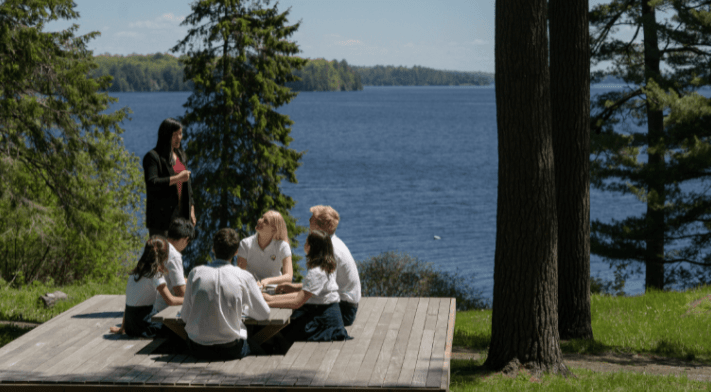









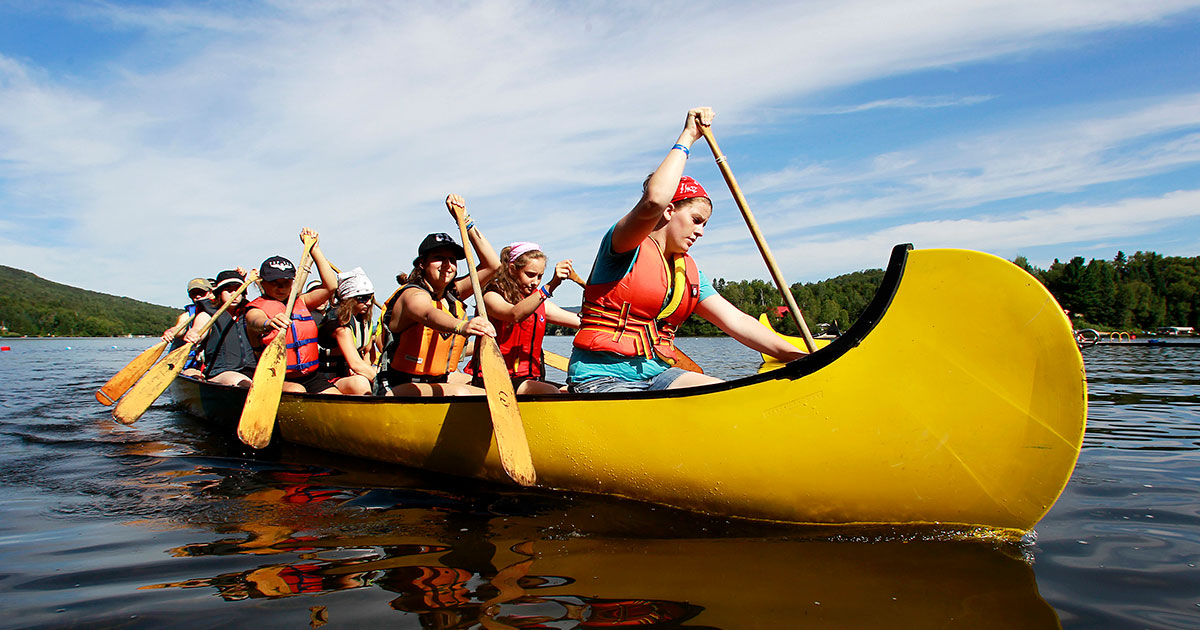





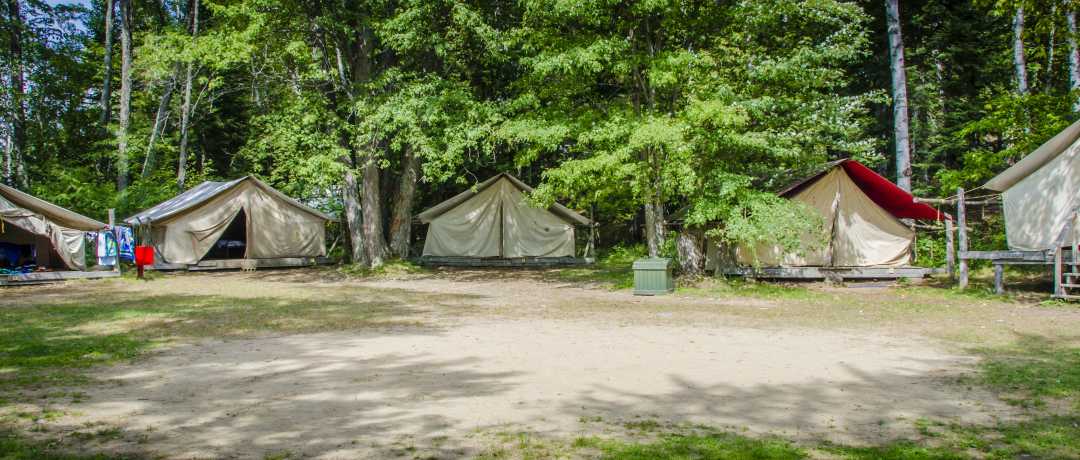
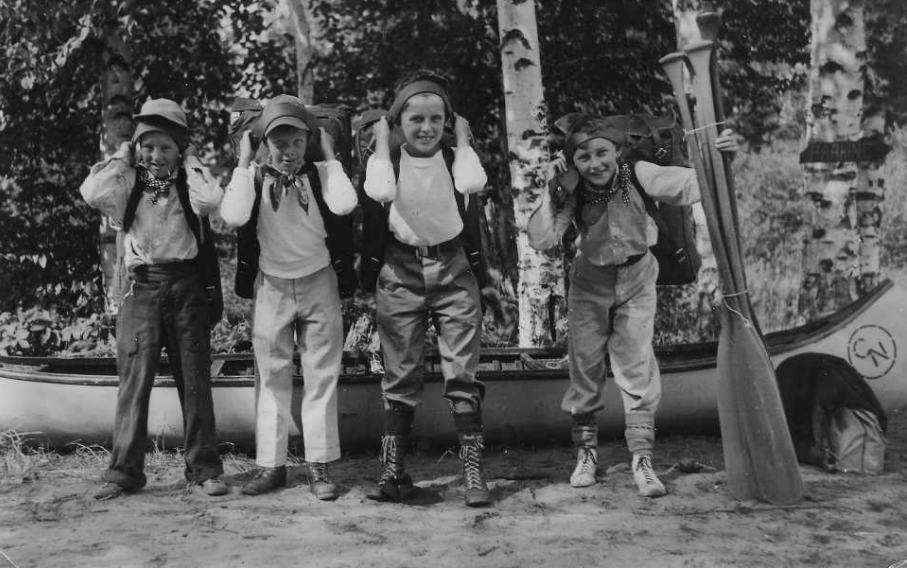






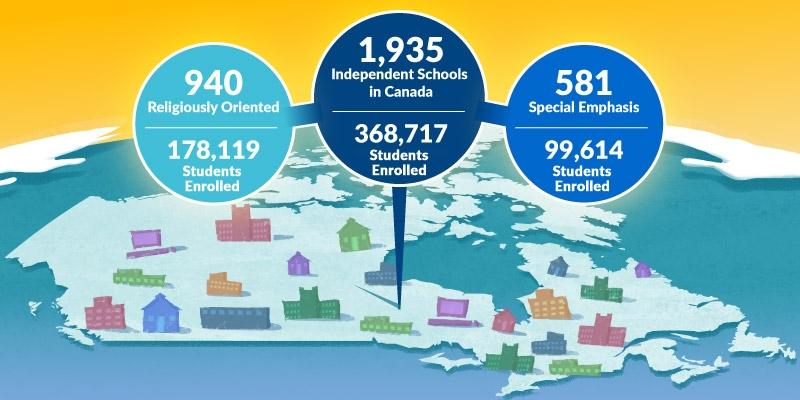
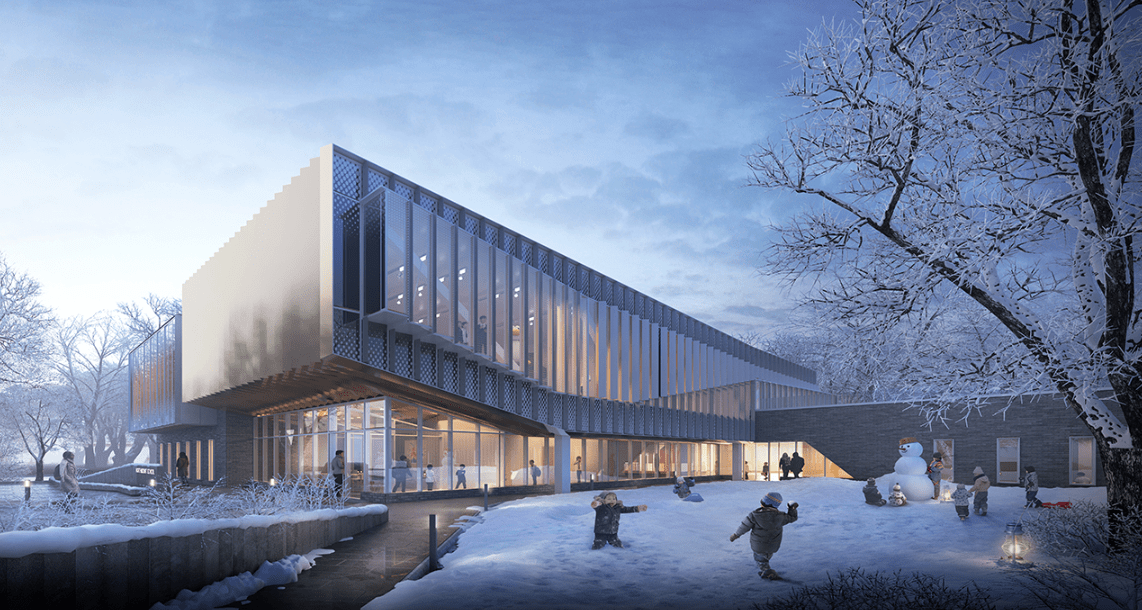
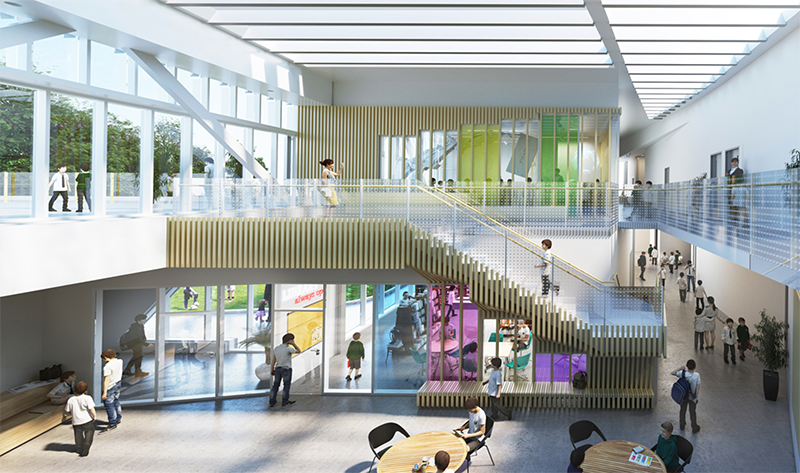

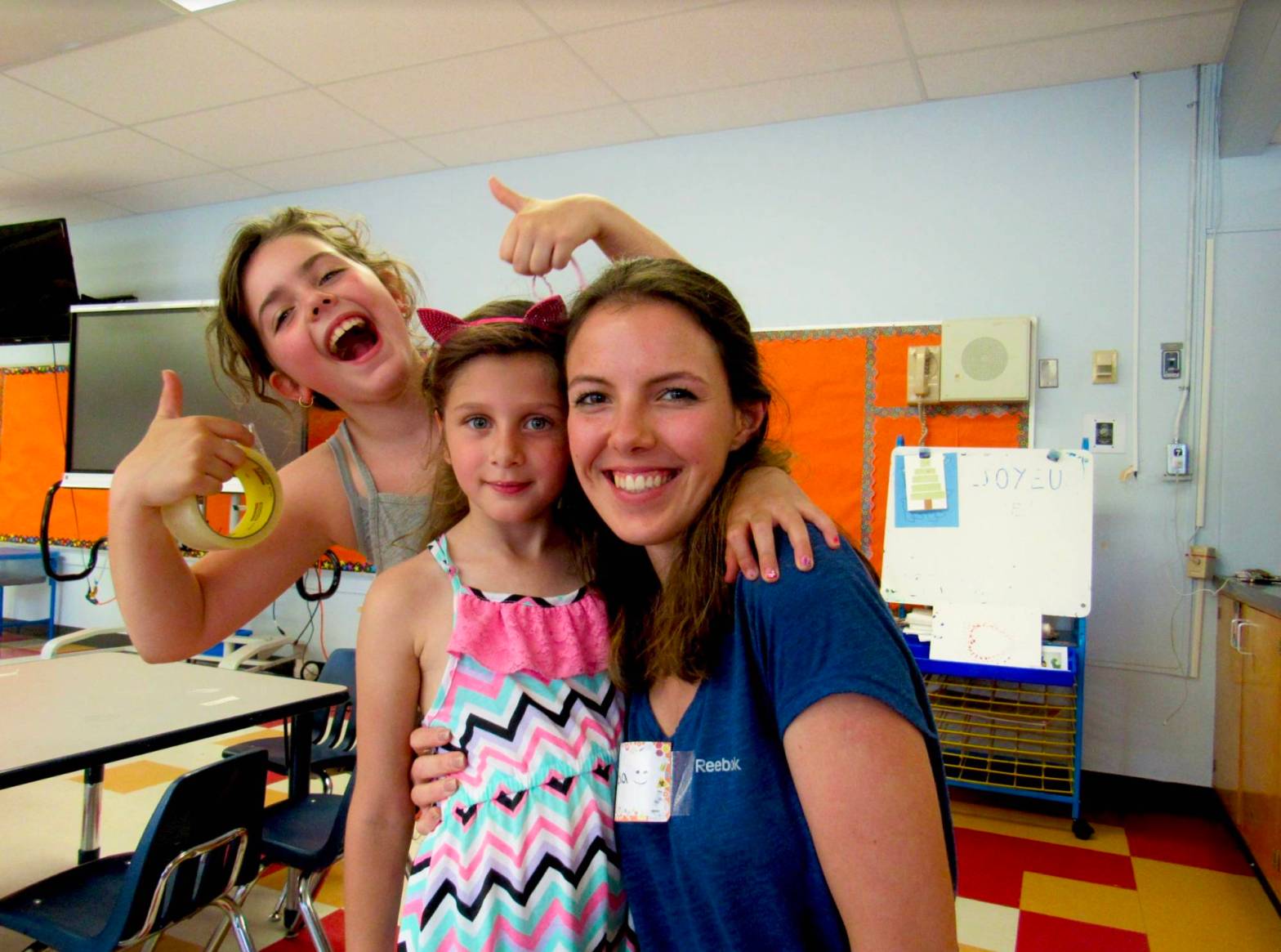

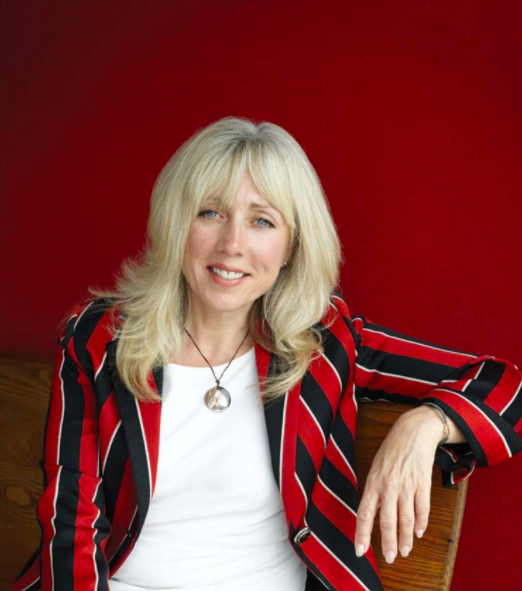




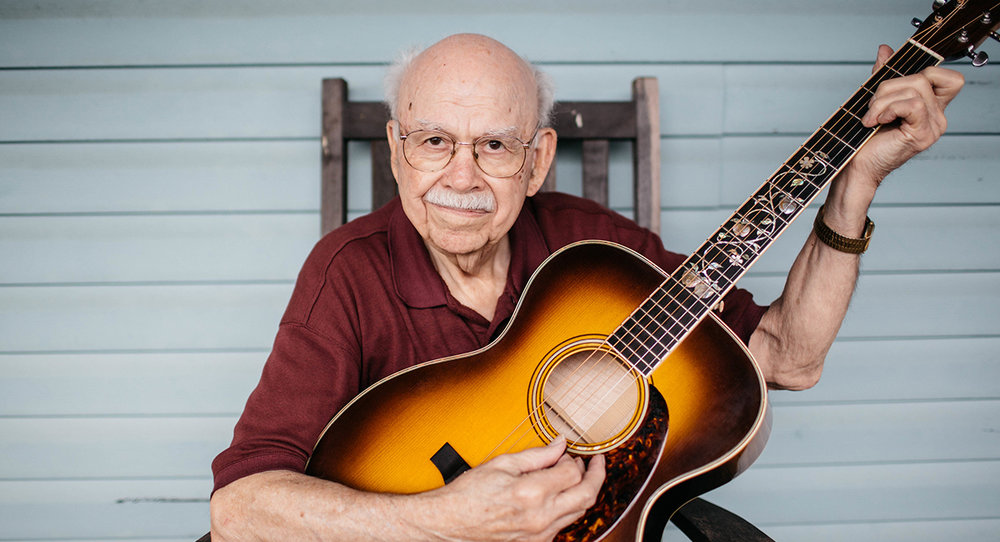


 Glen Herbert
