
“The school, pretty much at this time last year, was just an idea,” says Nadia Irshād, an administrator who has been with Glarea since it launched nearly five years ago. The idea was to offer students a uniquely immersive academic experience, one that would contribute to their understanding of themselves as learners and build the postures and behaviors for their success.
With construction all but completed on phase one, the school is positioned to realize the concept, in turn becoming a distinct and inherently visible institution within the Canadian education market. The rinks are perhaps the most obvious feature from the street: housed in the home of Excellent Ice, a focal point of the community for more than three decades, the school looks like a sports facility, which it was and, in many respects, will remain. The ice rinks—there are three full-size sheets—will be a key feature of the life of the school, from daily recreational skating to competitive hockey. But the space brings a symbolic history as well, one synonymous with resilience, cooperation, and achievement. That, too, will remain, as hinted by the name: Glarea is the Latin word for “grit.”
Living
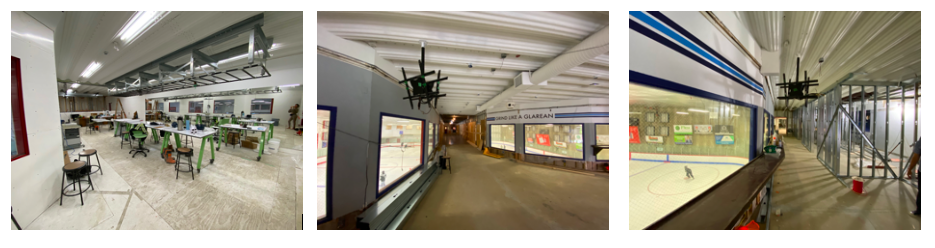
“It looks different than any other school I’ve been to,” agrees Principal Dr. NataŠa Sirotić, which is part of the charm of the concept. All schools defy the various stereotypes that the general population might have about private education, though Glarea is a particularly stark example of that. There are no ivy-covered walls, the hallways are wider, the entrance more fluid and casually inviting. Activity is foregrounded by the design and orientation of the instructional spaces: students step out of a classroom and onto the ice rink; on the way to math class, they’ll pass martial arts and dance studios.
Those things provide evidence of the ethos of the school. It’s about engagement, living, and learning within an environment that, says Irshād, maximizes students’ experiences, whether it be through arts, tech immersion, or sports. It’s intentionally designed to bring ideas, activities, and people closer together—there is even a residency program that brings area professionals into the school as mentors—allowing opportunities for students to follow existing interests just as easily as they find new ones. The term “elevated learning” is meant to underscore the sense of the school, says Irshād, as a place where “their passion and their purpose becomes easier to identify.”
Learning
The academic delivery continues the theme. Instructional spaces are larger than you’d find in a more typical academic setting, and also perhaps the first truly VR learning spaces in the country. When sessions begin in the fall, giant screens will allow students to conference in, interacting in real time with the students in the classroom. Teachers will be on mic, with an array of teaching tools close at hand, from traditional to technological. This in part because of the distancing protocols that we can expect to be in place for the remainder of this calendar year—Sirotić rightly notes that, while we hope there won’t be a second or third wave of the COVID pandemic, it’s nevertheless a good idea to be prepared to meet it if it does—but also in an awareness of the benefits that some aspects of remote learning can bring.
“There is an emphasis on multi-disciplinary synthesis,” says Sirotić, and cross-disciplinary instruction. Yes, the core competencies come first, and she is clear that the provincial curriculum provides the basis for all instruction, as of course it should. But she’s equally clear that those competencies are a point of departure, the baseline not the goal. Once mastered, they will be brought to bear on real-world tasks and problems, challenging students to apply skills, knowledge, personal interests, and investigative behaviours in collaborative and creative ways.
” … this is how success is built … “
“What it really comes down to is a child’s ability to approach every problem,” says Irshād, from isolating first principles, to gaining multiple perspectives, to acting on what they’ve learned. “Failure is a strong term, but falling short, or not completing a particular problem—or not finding a solution the first time—that’s not a bad thing. That’s a part of the process … this is how success is built.”
Administrators are clearly excited with what they are going to be able to offer, as well they should be. “This is going to give them a way to know their own strengths,” says Sirotić. “They will know how to ask the questions that matter, and work to find the solutions … the skill set will be there, but more importantly, the mindset will be there, one of lifelong learning, of being curious, of being empowered to know that there is no problem that we cannot solve.”
They’re also aware that, given the unique positioning of the school within the mosaic of academic offerings in the region, the school needs to be seen in person, first hand. Sirotić is right when she says that Glarea is unlike any other school. From the classrooms to the curriculum, it comprises an answer to a deceptively simple question: What do students need most? While it can be difficult to know what their professional lives might look like, it’s nevertheless clear that students will be required to work collaboratively; to engage effectively within both virtual and in-person settings; to think creatively, and to communicate their ideas effectively to others through a range of media; and to live active, healthy lives. They’ll also need, as we all do, to find joy in their lives, and to become aware of the pleasures, as physicist Richard Feynman once quipped, of simply finding things out about their world, their communities, and themselves. Glarea is positioned to become an important model in how to deliver all of those things and more in creative, active, uniquely engaging ways.
While group tours aren’t safe in the current context, private tours are available now. They’re also highly recommended. For more information or to book a tour, click here.
For Our Kids Media















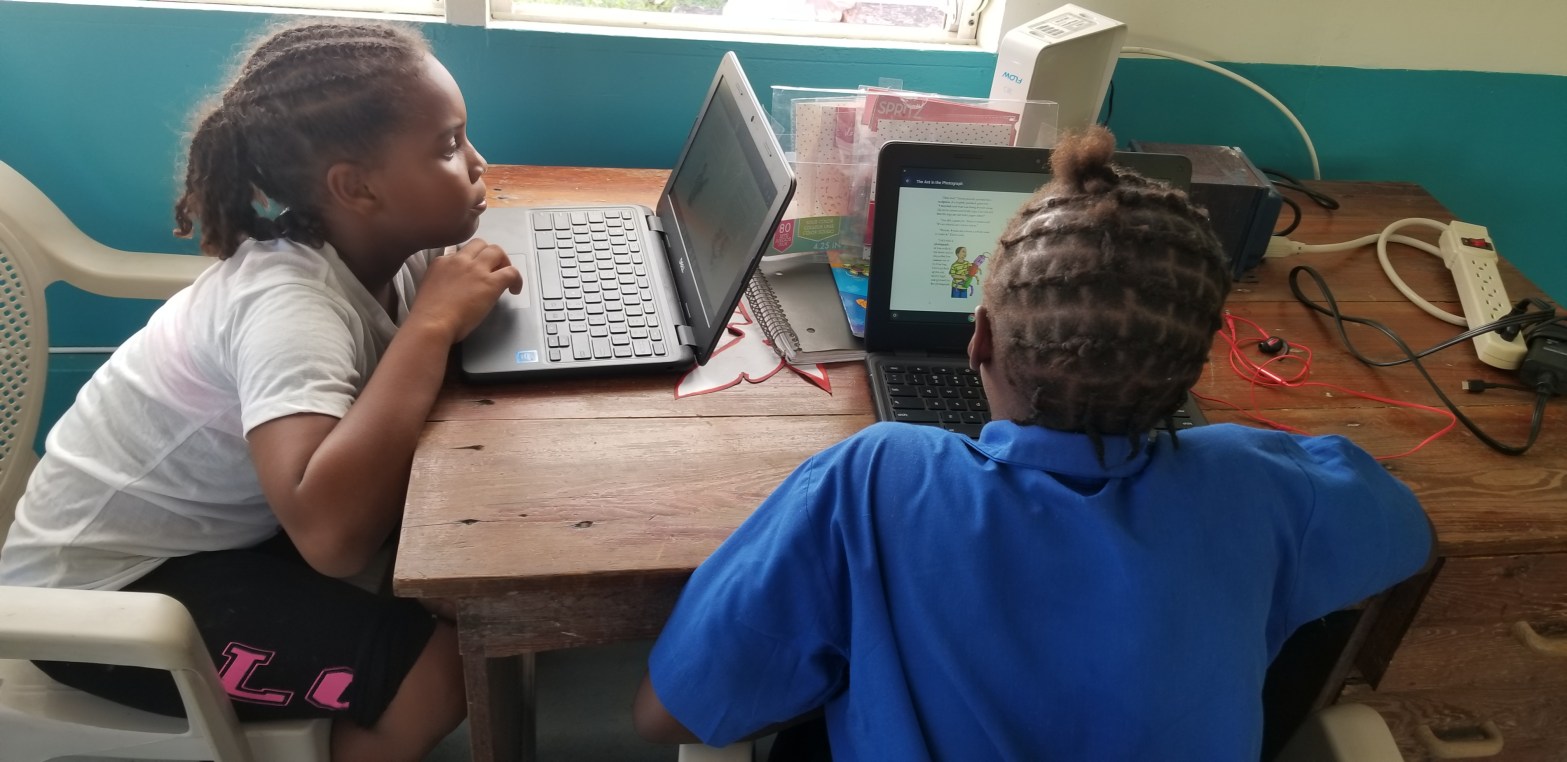




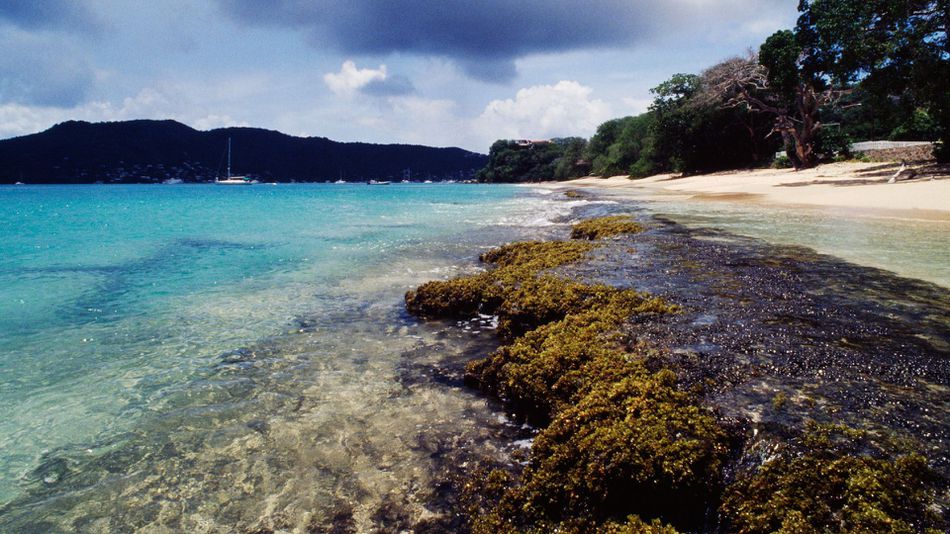
 We’ve partnered with Action Bequia and to submit an application for a major grant to the Global Partnership for Social Accountability (GPSA), a World Bank organization, targeting the problem. As noted in that grant application, this isn’t a one that can be solved easily, nor is it one that can be addressed without significant partnership across the island and throughout the region. We believe that education is an important first step, both on island and beyond. If you have any ideas for student programs, we’d like to hear them. As happens so often, it’s the work and the voices of children that can gain a unique purchase in the international commons.


 You have said that the character of Pa in Owl Moon is based on your husband. I wonder if you could tell me a little bit about your husband and the kind of father he was. Did he really go owling and talk with owls? Jane Yolen: David was born and brought up in the West Virginia mountains and knew woods and woodcraft from a young boy. Birds became a special favorite of his. He moved to NY after college to work for IBM where we met. He taught me everything I know about the woods and then he taught our children. They are all good birders and Heidi — our daughter who is the child in the book — now leads Audubon Christmas owl counts. As a college professor with much discreet time in-between classes and research, David was a hands-on father from the beginning and we had a wonderful 44 year marriage till his (much too early) death at age 69.

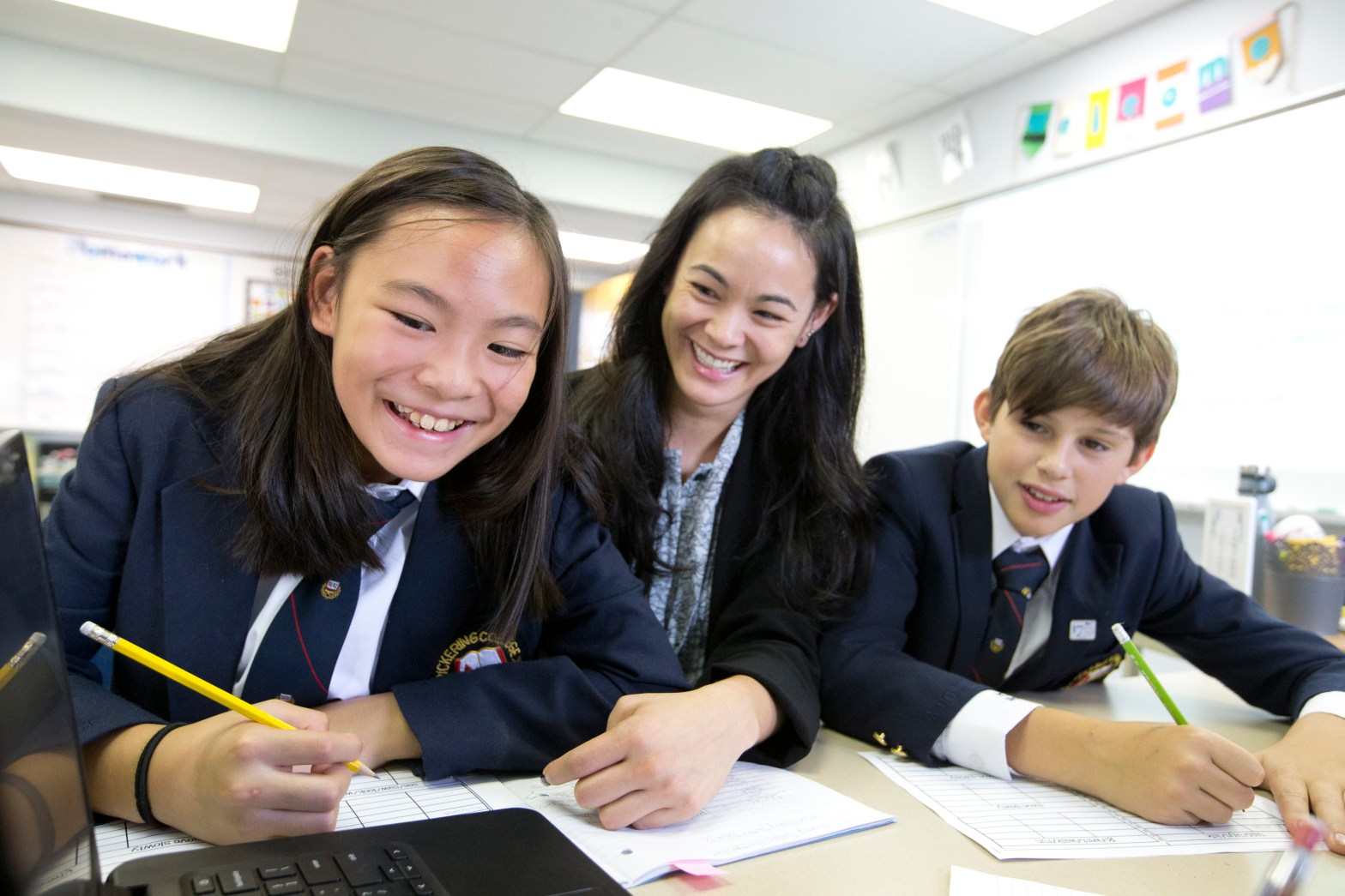




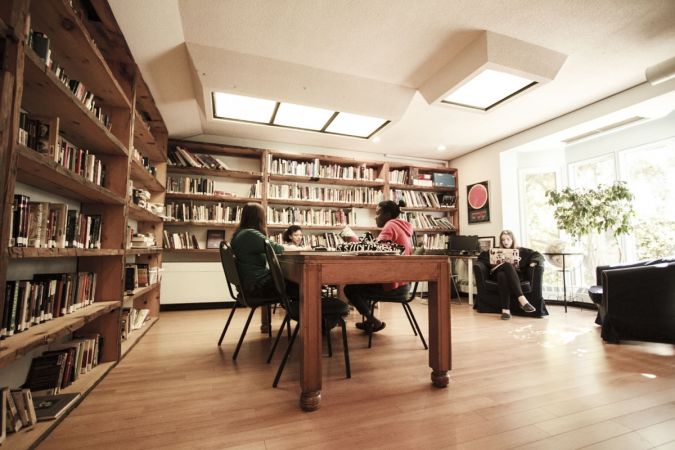


 Lauriel Stowe wants to be a volcanologist. “We had a geography class,” she says, recalling some years ago, “and [the teacher] was talking about plate tectonics, and I really found the topic interesting.” She did some of her own research and, among other things, learned that there is only one working volcanologist in St. Vincent and the Grenadines. “I was thinking about what would happen if this person was to get old and can’t do the work anymore? And I thought that’s what I’d like to do.”


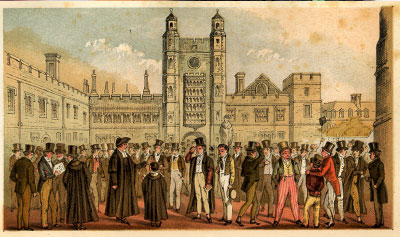
 Eton, founded in the 15th century by Henry VI.
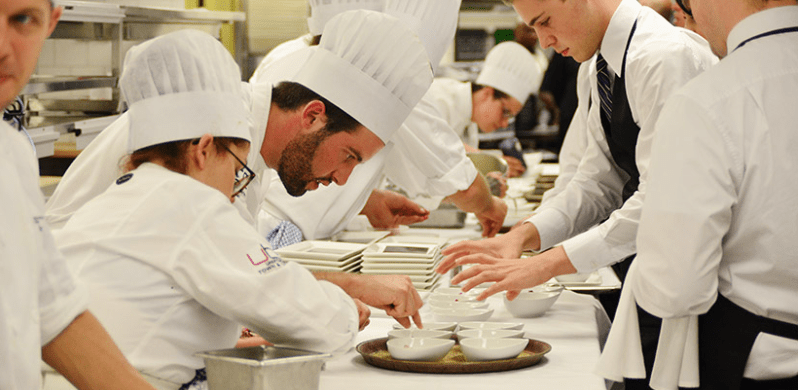


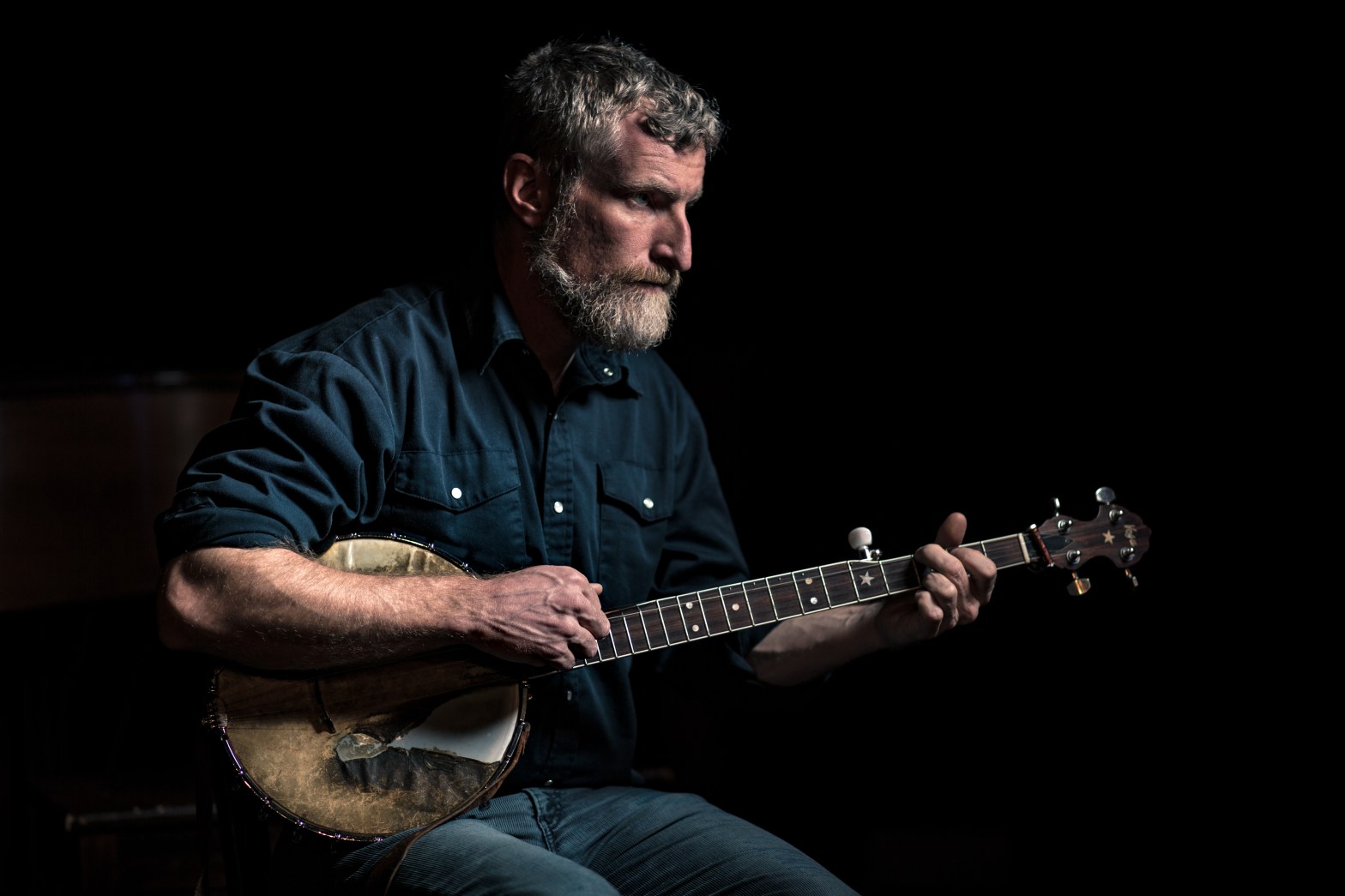

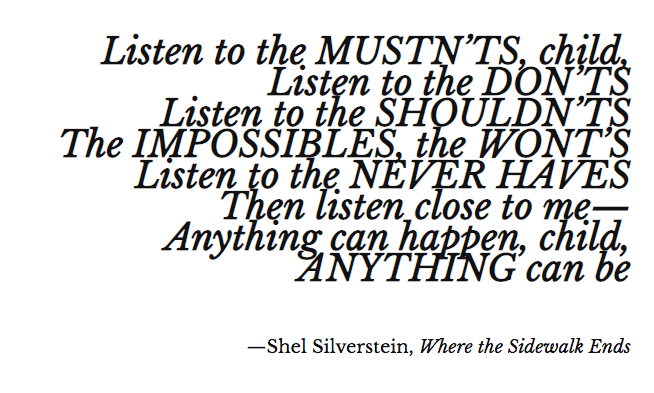 “On Bequia, if you tell someone that you are going to be a pilot, they don’t believe,” says Kadeen Hazell. “They think it’s just talk.” He feels that’s true for most people on the island: they don’t have a sense of real possibility.


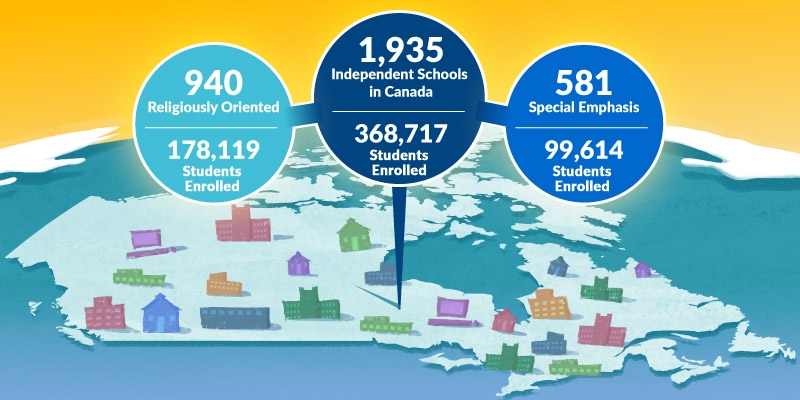 Graphic courtesy the Fraser Institute. Used with permission.
 Learning in the Canadian context
 This latest from the Grascals, Before Breakfast, finds the band right there, straddling the same line between profundity and parody. Bluegrass bands certainly don’t shirk from a cliché—who can get enough of a Lester Flatt G-run?—but if there are limits, some of them are here. The songs chart all the heart ache, lost loves, and loneliness that bluegrass is famous for, with nary a wink. The narrator of “Demons” finds his nemesis lurking in a bottle, high-heel shoes, rolling papers, and blues songs. The narrator of “I’ve Been Redeemed” has committed a wealth of sin which sadly goes unnamed. We’re left wondering what it was that he did. Must have been pretty bad. Though, unlike the narrator of “Lonesome,” it hasn’t landed him in prison, at least not yet anyway.
 The Wailin Jennys is one of those groups that causes lots of people to fall all over themselves with praise. And they’re absolutely right to. Truly, you can’t say enough good things about them. It starts here: “One Voice.” Their latest release will cause lots of praise too, just as it should. When I heard that they were doing a collection of cover songs, I’ll admit to feeling a bit disappointed. Sometimes covers are the things that people do when they are feeling a bit at sea. Not so with Fifteen. The songs here don’t all announce themselves as covers, which is part of the project. They’ve really brought their considerable powers of arrangement to these, and have chosen the tunes so well, that the project doesn’t feel like the presentation of other people’s work, but rather their work. That they do “Boulder to Birmingham” is itself a master stroke, and is masterfully done. “Loves Me Like a Rock” is a bit of a highwire act. It’s like they’re taking it on for the challenge it presents. “Think we can’t bring something new to this chestnut?” Think again. It brings shivers. The whole album does. I’m tempted to fall all over myself with praise, but better is just for you to listen to the work. You simply must. Crikey, these women are a national treasure, and this album just confirms it.
 Glen Herbert